
Wireless Private Network Solution for UAV Operations
With the development of society and advancement of science and technology, especially the increasing maturity of UAV technology and the reduction of manufacturing and operational costs, UAVs are increasingly being integrated into various sectors for production, supervision, command and dispatch, playing an increasingly important role. In a broad sense, UAVs include various robots and autonomous vehicles; the UAVs referred to in this paper, however, denote unmanned aerial vehicles in the narrow sense.
An unmanned aerial vehicle (UAV) is an advanced self-propelled aircraft that operates without a human pilot on board. A UAV inspection system is a sophisticated integrated system incorporating aviation, power, electronics, meteorology, telemetry and remote sensing, communications, geographic information systems (GIS), image recognition, and information processing technologies. It covers multiple cutting-edge technical fields such as flight control technology, airframe stability control technology, data link communication technology, modern navigation technology, airborne telemetry and remote sensing technology, rapid auto-focus imaging technology, and fault diagnosis. Modern UAVs are capable of high-altitude, long-distance, rapid, and autonomous operations, and can traverse mountains and rivers to conduct efficient line patrols, mapping, early warning, monitoring, and surveillance of power transmission lines. It can be said that the development of UAVs is still in its infancy, and their application scenarios and deployment scale will continue to expand in the future.
Unmanned operation, intelligence, and networking represent the inevitable trend of UAV technology development and in-depth application. The construction of a wireless private network serves as the foundation and prerequisite for the large-scale, networked, and intelligent application of UAVs. This paper presents a UAV networking solution launched by Guoxin Longxin, drawing on typical application scenarios of UAVs in government and enterprise sectors.
I. What Is a UAV?
The UAVs referred to in this paper mainly denote unmanned aircraft. Classified by flight platform configuration, UAVs can be categorized into fixed-wing UAVs, rotary-wing UAVs, unmanned airships, parachute-wing UAVs, flapping-wing UAVs, etc. At present, rotary-wing UAVs and fixed-wing UAVs are the most widely used types.
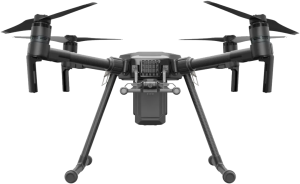
The mainstream rotary-wing UAVs are quadcopters, while multi-rotor UAVs are also available. Small-sized UAVs are less commonly used in industrial applications due to limitations in endurance and flight environment adaptability. Most UAVs adopted by industrial users are medium-to-large-sized quadcopters or multi-rotor UAVs, such as the DJI Matrice 300 (and its upgraded model, the Matrice 350). Rotary-wing UAVs feature relatively low flight speed and short endurance, but they can perform a variety of functions including hovering, follow-shot filming, and fixed-route patrolling, making them one of the most widely used UAV models in government and enterprise applications.
Fixed-wing UAVs come in a variety of configurations, most of which are custom-designed for specific operational scenarios. They generally feature long flight ranges and high cruising speeds, making them ideal for missions requiring long-distance patrols, large-area coverage, and high-speed, high-altitude aerial photography.

II. Industries and Networking Requirements for UAV Applications
UAVs can play an important role in many industries, including but not limited to the following:
- Energy Industry: Power line inspection, power grid inspection, power station inspection (hydropower stations, photovoltaic power stations, wind farms, etc.), oil pipeline inspection, smart mine monitoring and command, etc.
- Security Patrols: Border patrols, coastline patrols, highway patrols, traffic police law enforcement, event security, etc.
- Environmental Governance: River and lake chief patrols, water source protection, river embankment protection, pollution source monitoring, etc.
- Emergency Command: Firefighting, earthquake disaster relief, flood control and disaster relief, forest fire prevention, etc.
- Other Applications: Military reconnaissance and strike, 3D reality modeling and surveying and mapping, territorial monitoring and planning, forestry surveys, agricultural plant protection, etc.
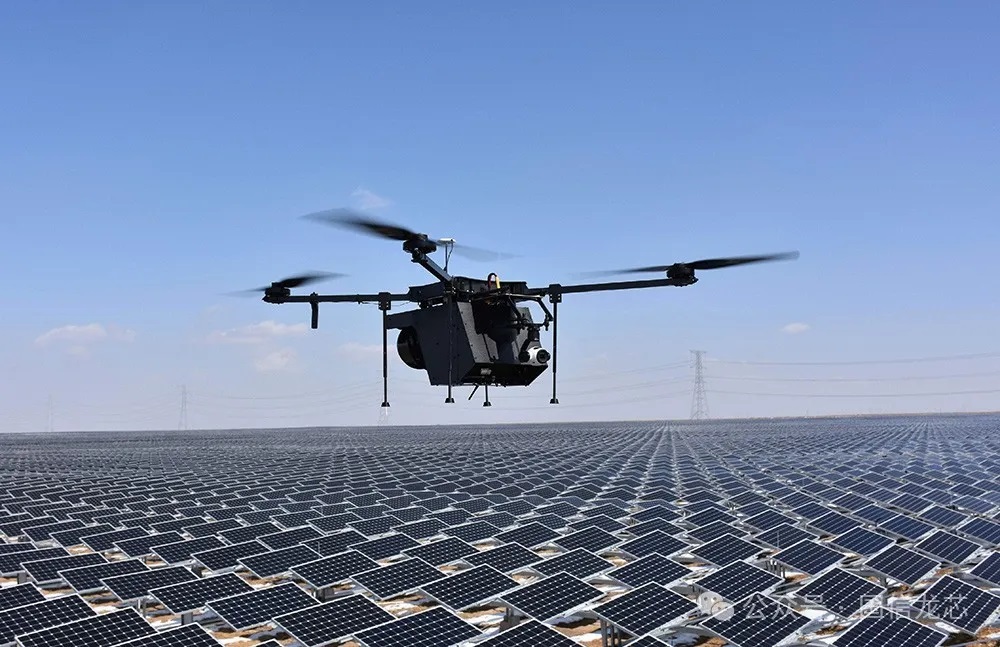
With the growing popularization and application of UAVs across various industries, their routine deployment is becoming increasingly prevalent. Scenarios that once relied on manual labor are undergoing profound transformations thanks to the integration of UAVs.Take power line inspection as an example. Traditional manual patrols can only identify potential safety hazards through visual observation, telescopes, infrared temperature measurement, and other such methods. Inspectors are required to stop and carefully examine each transmission tower on site. Their progress slows significantly when traversing farmland and shrubs, and they even have to take detours when encountering lakes and rivers. On average, patrolling dozens of transmission towers per day within a power supply area is the maximum workload achievable through manual means. By contrast, when inspectors use UAVs for aerial patrols, work efficiency can be doubled or even tripled. What’s more, UAVs can record videos and capture images, delivering far better inspection results. However, this still follows the mindset of scheduled patrols. If on-demand real-time patrols are required, the operator-dependent “UAV plus pilot” mode is still unable to meet such needs.
Another example can be found in scenarios like border patrols and water source protection. Real-time monitoring requirements cannot be satisfied merely by conducting one-off daily UAV patrols. UAVs have limited endurance, a problem that can be addressed by constructing UAV airports or nests to facilitate charging or battery swapping. While individual UAVs only fly over a target area once, quasi-real-time coverage can be achieved by increasing the number of UAVs or flight sorties to extend the coverage time window. That said, if a network is not established or proves unreliable, real-time data and video captured by UAVs cannot be transmitted back to the command center, which will significantly compromise the effectiveness of UAV operations.
The issue of UAV networking has become a major pain point for government and enterprise users. Drawing on Guoxin Longxin’s wireless technologies and professional systems, this paper presents optimal private network solutions for UAV networking, using oil pipeline inspection in the petroleum industry and power line inspection in the electric power industry as illustrative cases.
III. Wireless Technologies and Products for UAV Networking
Currently, Guoxin Longxin offers a diverse range of wireless network technology products to meet the networking requirements of UAVs across different scenarios:
1.Wireless Metropolitan Area Network (WMAN) Technology: The Guoxin Longxin iMAX-8000AI Series 5G iMAX Wireless Private Network System is adopted for this purpose. Characterized by its compact size, low power consumption, high bandwidth, and support for 5G broadband, products in this series can achieve a mobile communication transmission distance of 1–3 kilometers for a single base station under line-of-sight conditions. Multi-base station networking can meet the large-scale UAV networking needs within an area of several dozen square kilometers. The iMAX system’s high-capacity access capability, intelligent wireless networking technology, seamless roaming function, and other features can easily satisfy the private network networking needs of UAVs operating in fixed areas or along designated routes. Supporting multiple networking architectures including point-to-point, point-to-multipoint, centerless mesh network (MESH), and hot standby ring network, this product series is particularly suitable for constructing highly reliable private networks for operational UAVs.
2.Wireless Local Area Network (WLAN) Technology: For large-scale civilian-grade UAV networking, if the UAVs are already equipped with WiFi networking terminals, consideration can be given to deploying a special wireless WiFi base station system with a coverage range of up to 100 meters. Products such as the iSAP-2450 Series and the iMAX-ACG600 are carrier-grade wireless WiFi base stations operating on the 2.4GHz and 5.8GHz bands, compliant with IEEE 802.11a/b/g/n/ac standards, and featuring high power, high bandwidth, and high performance. Adopting a split-mount structure and supporting large-scale point-to-multipoint (PTMP) networking, they are ideally suited for networking a large number of civilian UAVs over short distances.
3.Wireless Wide Area Network (WWAN) 4G/5G Gateways: The Guoxin Longxin iMAX-4GW300 Series Dual-Mode Gateway System or the iMWB-5GW1000 5G Multi-Mode Gateway is available for this application. These wireless gateways support 4G/5G wide area networks, enable the establishment of virtual private networks via “SD-CX cloud switching + hardware VPN”, and support networking between UAVs and the command center, as well as excellent interconnection between UAVs themselves. They are well-suited for providing remote, secure, and reliable networking solutions that connect medium-to-large UAVs with the command center.
4.Low-Frequency Wireless MESH Ad-Hoc Network Communication-on-the-Move System: Guoxin Longxin’s Huanyou brand Low-Frequency Wireless MESH Communication-on-the-Move System is utilized here, among which the Flybird1400 UAV Wireless Terminal is custom-designed for integration with UAVs. The system typically operates at a frequency of 1.4GHz, with lower frequencies (e.g., 580MHz) available on a customized basis. Leveraging centerless mesh network technology and the long-distance transmission advantages of low frequencies (UAV flight control: maximum transmission distance of 60 kilometers; UAV HD video: typical transmission distance of 10–20 kilometers), it is ideally suited for constructing ultra-long-distance communication private networks for industrial line inspection UAVs.
Guoxin Longxin has launched dedicated UAV private network terminals compatible with DJI Matrice 300/350 or similar models (equipped with an OSDK interface). These terminals can directly fulfill the interconnection requirements between UAVs and base stations or the command center. With a high degree of customization, these products are extremely user-friendly.
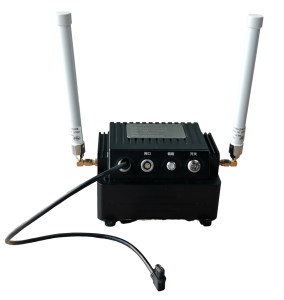
Given the extensive application of DJI Matrice 300/350 UAVs in the government and enterprise sector, it is evident that the high-performance Flybird1400 boasts excellent application prospects. We are continuously carrying out iterative development to reduce its power consumption and weight while enhancing transmission performance. Additionally, we have custom-developed a UAV centralized control platform software that interfaces with it, enabling the implementation of a centralized management, control and scheduling system for a large number of UAVs over a wide area.

There is no perfect technology, only a suitable solution. Each of the above wireless technologies has its own strengths and weaknesses, but all have their appropriate industry application scenarios. Moreover, all of them require customized solutions and even customized product modifications based on users’ actual needs. One of Guoxin Longxin’s core competencies is its in-depth and accurate grasp of users’ real requirements, helping users customize the most suitable solutions and providing worry-free after-sales services.
IV. Wireless Private Network Solution for UAV Inspection
1. Wireless Private Network Solution for Oil Pipeline Inspection
The petroleum industry has a large number of oil and gas transmission pipelines. As these pipelines have been buried underground for a long time and span long distances, regular inspection is particularly crucial. Take the management of long-distance oil pipelines as an example. Inspection is required to prevent threats to the pipelines posed by man-made construction activities and natural disasters, and more importantly, to curb illegal and criminal acts such as pipeline tapping and theft. Therefore, regular inspection is essential to ensure the safe operation of pipelines, and real-time or quasi-real-time pipeline inspection on a daily basis would be even more practical.
UAVs for pipeline inspection are generally deployed in remote areas such as deserts and Gobi, mountainous regions and basins, industrial and densely populated areas, plateaus and hills, woodlands and farmland. In these areas, the number of 4G/5G wireless base stations constructed by telecom operators is often limited, leaving a large number of coverage blind spots. Furthermore, if 4G/5G networks are used for HD video transmission, substantial data traffic fees will be incurred in the later stage. Take the DJI Matrice 300 as an example: a single video stream can generate an astonishing 43 GB of data in 8 hours, resulting in monthly traffic costs ranging from several thousand to tens of thousands of yuan. In addition, network unavailability may frequently occur due to public network coverage blind spots or “network congestion during peak hours”. Therefore, building a dedicated wireless private network for UAVs is an inevitable choice for users who need to conduct long-term UAV pipeline inspections.
Guoxin Longxin’s iMAX Wireless Metropolitan Area Network (WMAN) private network system, especially the miniaturized iMAX-8000AI system, is highly suitable for networking UAV nests, base stations and even UAV private networks. As a “private network” communication system, the iMAX wireless communication system can form an independent network without relying on typical telecom operator facilities. Designed to build wireless cities and address ultra-long-distance network interconnection in outdoor environments, it has great potential for application in the construction of UAV private networks. The iMAX wireless communication system supports essential WMAN networking technologies including VLAN, bridging, routing and firewall, and can be seamlessly integrated with optical fiber networks. Among the product lineup, the iMAX-6000 series serves as the backbone network for networking, while the iMAX-8000AI series is used for edge access networks of small robots or UAVs.
- Communication Distance: For fixed points (such as booster stations, valve chambers, UAV nests, etc.), under line-of-sight conditions, even the smallest iMAX-8000AI client system with integrated antennas can easily achieve a coverage radius of 10 kilometers or even 50 kilometers in point-to-multipoint mode. For mobile platforms such as UAVs and vehicle-mounted UAV nests, it can also meet communication requirements of 3–5 kilometers in point-to-multipoint mode.
- Transmission Bandwidth: The iMAX-8000AI is an access network communication system with a bandwidth of 300 Mbps/600 Mbps, and its bandwidth can be further stacked and expanded on demand to achieve larger bandwidth and capacity.
- Multi-service Capability: The iMAX-8000AI system can be integrated with metropolitan area backbone networks, and fully supports the hybrid transmission of various media information such as data, video and voice. Rich network features including RSTP, VLAN, VPN, QoS, software firewall and dynamic routing protocols ensure the “multi-network integration” of different user services. Its broadband characteristics, high bandwidth and high performance guarantee its ability to carry high-bandwidth services, especially HD video transmission of UAVs. Thanks to its excellent quality and strong communication stability, it ensures optimal application results in unmanned intelligent scenarios such as AGVs, robots and UAVs.
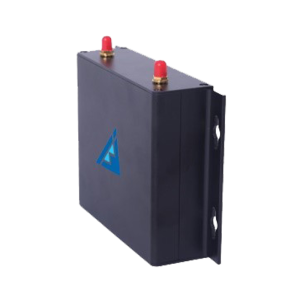
The iMAX Wireless Communication System is a true wireless private network system designed and manufactured for building wireless metropolitan area networks. Its reliability and stability have won high praise from users, and the iMAX-8000AI is regarded as one of the most suitable communication solutions for UAV private network connectivity.
If the number of UAVs is very small (i.e., the bandwidth requirement is low) and the demand for full-link wireless systems is also limited, the Huanyou Low-Frequency Wireless MESH Communication-on-the-Move System can be solely adopted and operated in the “centerless mesh network” mode to directly enable interconnection between base stations.
Typical Topology Diagram of Wireless Private Network for UAVs in Oil & Gas Pipeline Inspection:
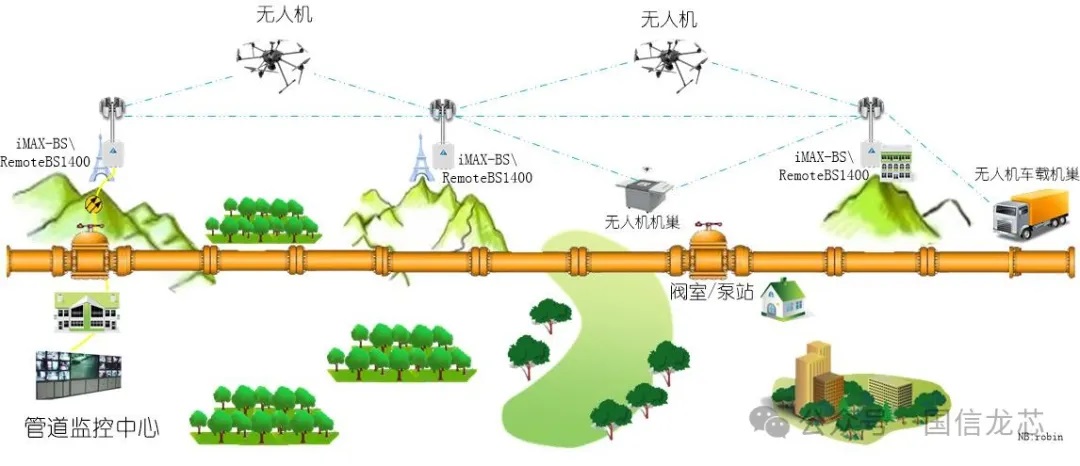
To customize a specific wireless private network solution, an in-depth analysis of actual requirements, as well as on-site surveys and electromagnetic measurements, are required to design the most optimal plan. For any solution customization needs, please contact Guoxin Longxin for further communication.
2. Wireless Private Network Solution for Power Line Inspection
Rotary-wing UAV systems are applicable to numerous scenarios such as power line inspection, transmission tower inspection, substation inspection, and cooling tower inspection. Specialized UAVs for the power industry equipped with thermal imaging sensors and video cameras can conduct more in-depth and comprehensive assessments during power line inspections. UAVs are capable of rapidly mapping an area, navigating through power lines while avoiding towers and other potential hazards. Owing to their agility, compact size, and lightweight design, UAVs can be deployed on a large scale across extensive areas when paired with UAV airports or nests. Moreover, UAVs not only reduce the frequency of hazardous work that exposes personnel to risks but also offer multiple benefits, including enhanced safety, reduced downtime, reliable data output, and improved operational efficiency.
With 3D mapping systems, UAVs can determine the most efficient flight routes. They are able to traverse an entire circuit between areas and complete complex data collection tasks, including photography, laser scanning, and infrared scanning. After data recording, data specialists or operators review the collected data to identify any potential issues. Typical data and information collected during UAV power line inspections include:
- Transmission Towers: Tower climbing, deformation, foreign object hanging, missing or loose bolts, and corrosion of tower components.
- Insulators: Severe insulator tilting, heavy contamination, damaged sheds, self-explosion, iron cap cracks, missing locking pins, and abnormal insulator temperature rise.
- Ground Wires, Conductors & Jumpers: Wire breakage, foreign object entanglement, hanging oscillation, excessive wind deflection; strand loosening, strand breakage, discharge burns, icing, corrosion, and abnormal conductor temperature rise.
- Line Hardware: Displaced spacers, shifted or detached vibration dampers, deformed damping wires, fractured clamps, deformed spacers; loose hardware bolts, corroded pins, and cracks in connecting plates, links, and other hardware components.
- Corridors & Other Aspects: Corridor inspection, damaged or missing auxiliary devices such as bird-prevention and lightning-protection facilities, illegal construction, unauthorized buildings; loose leads and bolts of auxiliary devices; fire hazards near power lines.
Thermal imaging and LiDAR can be used to assist in inspecting and monitoring power line and tower corridors. Compared with ground-based inspections, higher-resolution visual inspection data can be obtained. Towers remain operational during inspections without causing downtime. UAVs can collect the necessary data to identify and mitigate power distribution risks in advance; combining UAVs with backend AI automated inspection systems can significantly reduce inspection man-hours and costs.
For UAV networking in urban power line inspections, adopting 4G/5G networking methods will face a series of serious problems: many power inspection areas have no 4G/5G signal coverage; as 4G/5G are public networks shared by the general public, image transmission often suffers from severe lag even in areas with signal coverage; if video transmission relies on 4G/5G data plans, the monthly data consumption will reach the terabyte level based on daily UAV operational needs, making the exorbitant data fees unaffordable for long-term use; system latency is extremely high, measured in seconds, even up to 10 seconds—such high latency can easily lead to UAV crashes if remote control is required; the cost of building a 4G/5G wireless private network is prohibitively expensive, while directly connecting to the Internet without a private network completely fails to guarantee network security, which is a key concern for many government and enterprise clients. Therefore, the UAV private network interconnection solution is the preferred choice for power industry UAV applications.
Specifically for the networking of power industry UAVs (including nests), Guoxin Longxin’s iMAX Wireless Metropolitan Area Network private network system and the Huanyou Wireless MESH Communication-on-the-Move System dedicated to UAVs are mainly adopted. The specific selection depends on actual requirements such as application scenarios, communication distance, number of UAVs, and UAV payload requirements, so as to provide a tailor-made solution.
The typical application diagram of UAV private network construction for power line inspection is shown below:
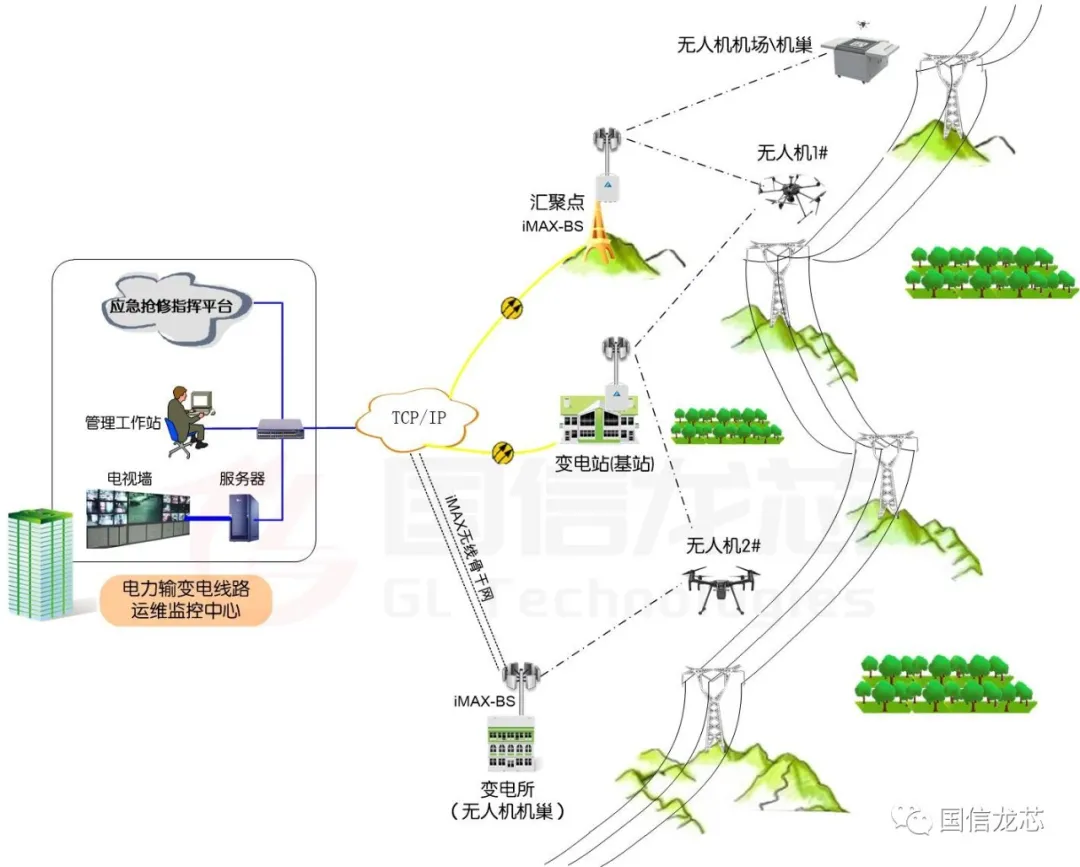
The iMAX Wireless Metropolitan Area Network (WMAN) Private Network System is primarily designed to enable networking between command and dispatch centers and ground base stations, as well as interconnection among ground base stations. The Huanyou Low-Frequency MESH Wireless Private Network System is mainly used for networking between UAV on-board terminals and ground base stations. These two systems complement each other and can be flexibly deployed on demand:
- iMAX Wireless Metropolitan Area Network Private Network: Featuring high bandwidth, ultra-long transmission distance, high reliability and high security, it can not only meet the networking and control needs of UAV ground base stations, but also support the networking of fixed monitoring points (e.g., video surveillance of power transmission towers) and UAV nests (airports). It can be described as a “multi-network integration” solution, boasting excellent practicality and scalability for both daily operations and emergency command scenarios.
- Huanyou Low-Frequency MESH Private Network: Characterized by ultra-long transmission distance, strong non-line-of-sight (NLOS) capability and robust self-healing and self-organizing features, it incorporates a number of pioneering designs and interfaces tailored for UAV on-board installation (currently compatible with multiple DJI UAV models). It can not only fulfill the requirements for real-time, high-speed networking, video transmission and flight control of UAVs, but also support emergency communication needs for temporarily deployed individual soldiers, vehicle-mounted and ship-borne terminals.
The integrated solution leverages the respective advantages of the two wireless private network technologies, and can fully meet the networking requirements of UAV operation scenarios.
V. Advantages of Guoxin Longxin’s UAV Wireless Private Network Solution
Guoxin Longxin’s UAV networking solution offers distinct advantages:
- Multi-Base Station Large-Scale Networking and Centralized Control: The multi-base station large-scale networking architecture can meet the networking needs of UAVs deployed along hundreds of kilometers of power lines, enabling real-time networking between multiple UAVs and the command and monitoring center, as well as centralized control of multiple UAVs through a single system platform.
- True Unmanned Operation: Through the integrated design and deployment of Guoxin Longxin’s UAV private network (addressing networking needs) and UAV nests/airports (addressing power supply needs), UAVs can break free from the constraints of pilots and operators, achieving true unmanned operation. The iMAX wireless private network system also enables the networking of UAV nests, and real-time acquisition of the nest’s operational data plays an important role in nest management and maintenance. The traditional operation mode—where pilots control UAVs to record videos and then return to analyze the footage—is destined to be a transitional form of UAV application. In the future, UAVs will surely realize unmanned operation, capable of on-demand flight, flexible scheduling and real-time task execution.
- Real-Time Command and Dispatch: The conventional approach—where UAV pilots collect data and then send the recorded videos to the command center for analysis—not only causes delays, but also prolongs the time to address potential issues. Real-time scheduling to handle problems, and even direct dispatching of UAVs to the scene for on-site operations (e.g., using flame-throwers to burn or cut off foreign objects hanging on power lines), will make the UAV system more practical, further improve operational efficiency and prevent accidents.
- AI Capabilities for UAVs: Once the real-time networking between UAVs and the command center is achieved, big data processing and AI computing can be further applied to the first-hand image and data transmitted back. This will enhance the practicality of the UAV system, improve operational efficiency and prevent accidents. Guoxin Longxin’s supporting UAV centralized control software platform comes with built-in AI function expansion capabilities, and can be customized to meet the actual needs of end users, or even integrated with third-party platforms deployed by users. The era of AI-enabled unmanned operation is approaching, which is a common demand of government and enterprise clients.
In summary, UAVs networked through Guoxin Longxin’s wireless system can transmit real-time images to the large screen of the command center, enabling users to process UAV images through an AI video platform and realize real-time disposal of issues.
VI. Customization Requirements for UAV Networking Wireless Systems
Based on years of experience in intelligent industry solution design and UAV project implementation, Guoxin Longxin has summarized several essential common requirements for UAV networking communication equipment, and provides customized services for users:
- Miniaturization: Guoxin Longxin’s UAV wireless devices feature small size and light weight, facilitating easy installation on UAVs. The Flybird1400 UAV on-board terminal (Ethernet port version) is only the size of a mobile phone, and weighs less than 0.5 kg when connected with standard antennas. Furthermore, the next-generation Huanyou Flybird1400S UAV on-board terminal, developed for integration with DJI Dock 2, will be even smaller and lighter.
- Low Power Consumption: Most mobile UAVs are powered by lithium batteries. Guoxin Longxin’s wireless devices for UAVs all have low power consumption characteristics—the power consumption of the iMAX-8000AI UAV-side device is less than 12W, and the typical power consumption of the Huanyou Low-Frequency MESH on-board terminal is 20W. In short, our wireless systems can be fully powered by new energy sources such as solar lithium batteries (solar power option available: iPower2000 Lithium Solar Power Supply System).
- High Reliability: Guoxin Longxin’s wireless devices prioritize safety and reliability in both design and production processes. Adopting proprietary wireless communication technologies and hardware architectures, they ensure excellent communication quality. Meanwhile, we fully consider system reliability in the solution design phase, further enhancing the overall reliability of the deployed system through optimized network architecture and solution design.
- High Mobility: Guoxin Longxin’s UAV wireless communication systems can be temporarily set up anytime and anywhere, and can be fixed using tripods, custom wall-mounted brackets and other fixtures to cover the activity areas of intelligent UAVs. Combined with Guoxin Longxin’s lithium battery power supply units, the power supply problem is perfectly solved.
- Customized Solution Services: Different UAVs have different application scenarios, with varying requirements for communication distance, bandwidth capacity, non-line-of-sight capability, antennas, etc. Guoxin Longxin will recommend or even customize the most suitable products according to user needs (e.g., the operating frequency band, power supply mode, interface type of the Huanyou Low-Frequency MESH System can all be customized on demand), and further develop the most suitable customized solutions.
For more technical details about intelligent UAV wireless communication equipment, or to customize private network construction solutions for intelligent UAVs in different industries and scenarios, please contact Guoxin Longxin.