Networking and Power Supply Solution for Fishery Administration & Fishing Ban Management
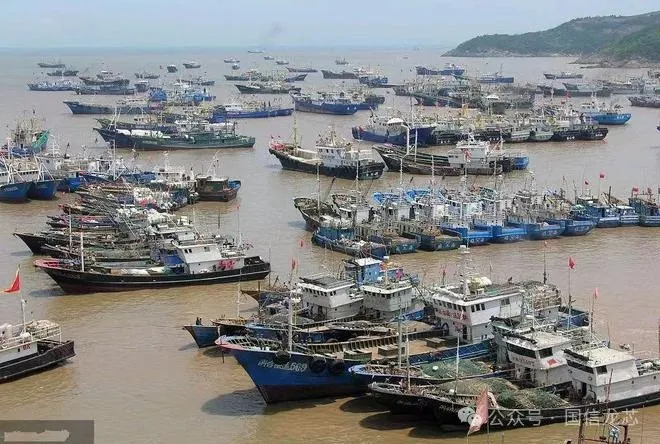
Fishery administration is the primary competent authority for fishing ban law enforcement. Traditional fishery supervision relies on manual patrols by fishery law enforcement vessels. When the supervised river basins or sea areas cover an excessively large area, this manual, non-real-time and intermittent approach is obviously unable to meet regulatory requirements. Restricted by limited law enforcement resources, fishery authorities must keep pace with the times, adopt technological means to detect problems in a timely manner, improve supervision efficiency, and achieve all-weather and uninterrupted law enforcement.
- Information lag: It is often difficult to obtain information in the first place. When follow-up measures are taken, the fish ecology has already been damaged, with extremely high recovery costs and losses, and in some cases, irreversible damage.
- Evidence collection difficulties: Vessels operating along coastal and river areas leave no records. Without on-site detection, it is impossible to verify the exact fishing volume, resulting in difficulties in evidence collection and law enforcement.
- Challenges in fishing vessel management: Fishing vessels vary in size and are widely scattered. Delayed information statistics make scientific and rational arrangement and control impossible. Meanwhile, fragmented and random management fails to deter illegal activities, and a unified and holistic supervision platform must be established.
We first analyze the core requirements of fishery law enforcement supervision:
- Key area monitoring: Critical locations such as fishing ports and docks require round-the-clock uninterrupted monitoring. Mastering this key point enables 24/7 scientific management of fishing vessels and will undoubtedly drastically reduce illegal fishing incidents.
- Function of law enforcement vessels: Fishery patrol law enforcement vessels need network connectivity, which not only enables image acquisition to solidify evidence of illegal acts, but also facilitates communication with the backend command center, allowing leaders to grasp on-site situations in real time and make timely scientific command decisions.
I. Wireless Networking Solution for Fishery Law Enforcement Supervision
1. Wireless Metropolitan Area Network (WMAN) private network system
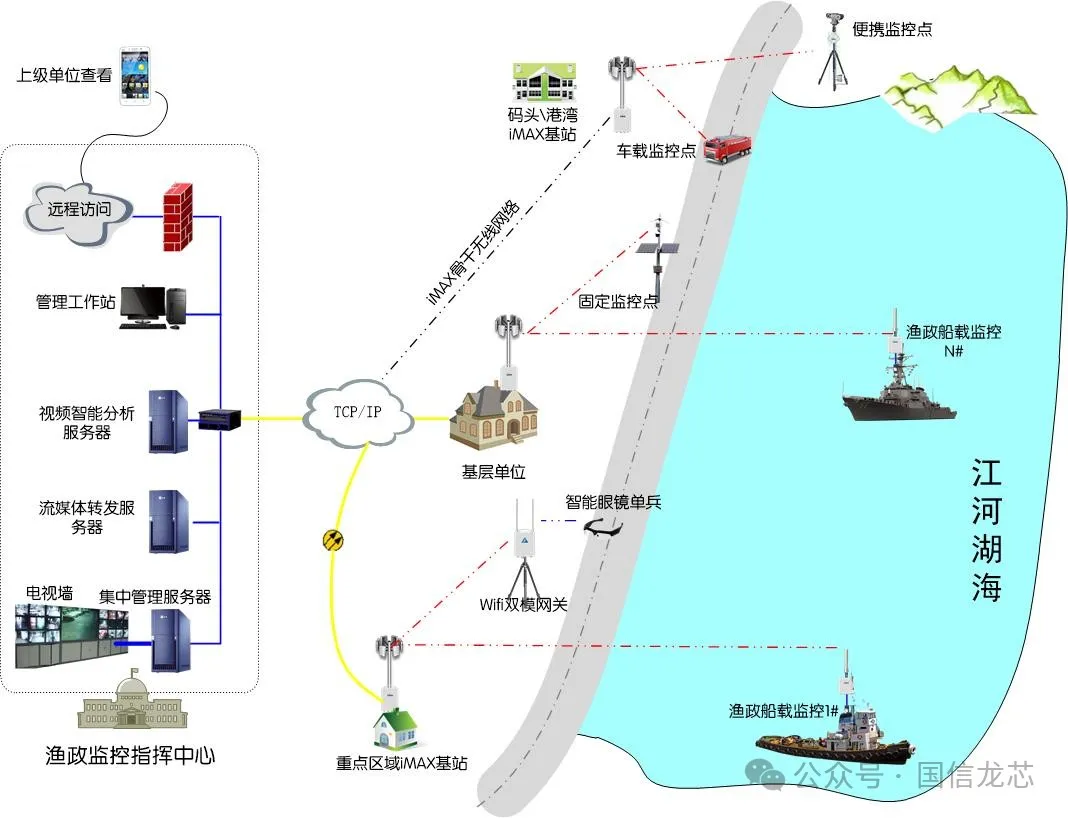
Features of the Wireless Metropolitan Area Network (WMAN) System
- iMAX-8000H: 600 Mbps point-to-multipoint communication system
- iMAX-8000S: 100 Mbps point-to-multipoint communication system
- iMAX-6000: 150/300/600 Mbps point-to-point communication system
- FibeAIR high-frequency microwave: Up to 20 Gbps bandwidth
2. 4G/5G Wireless Wide Area Network (Public Network) Technology
① Excessively high data traffic costs
② Inadequate security assurance
③ Uncertain availability
④ Low reliability
Application Recommendation for 4G/5G Technology
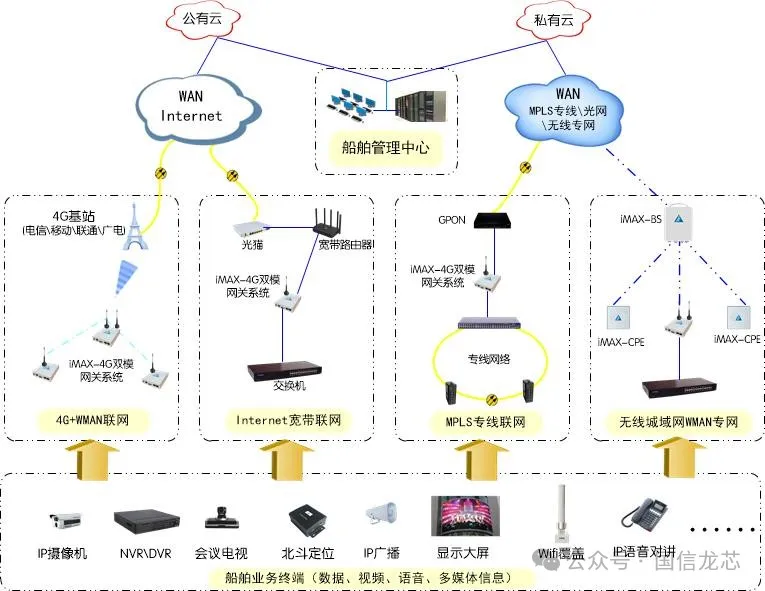
A major highlight of Guoxin Longxin’s intelligent networking solution for fishery administration vessel & fixed-point systems based on 4G/5G public networks is “security”. By combining private cloud-based cloud interconnection SD-CX technology with VPN tunnel encrypted communication technology, it helps users build a quasi-private network over a regular wide area network, thus greatly enhancing system security and improving network stability. The key lies in providing customized designs tailored to user needs, which can save users on network rental and data traffic costs through various application details, and enable large-bandwidth services such as video surveillance to become optional modules for data collection.
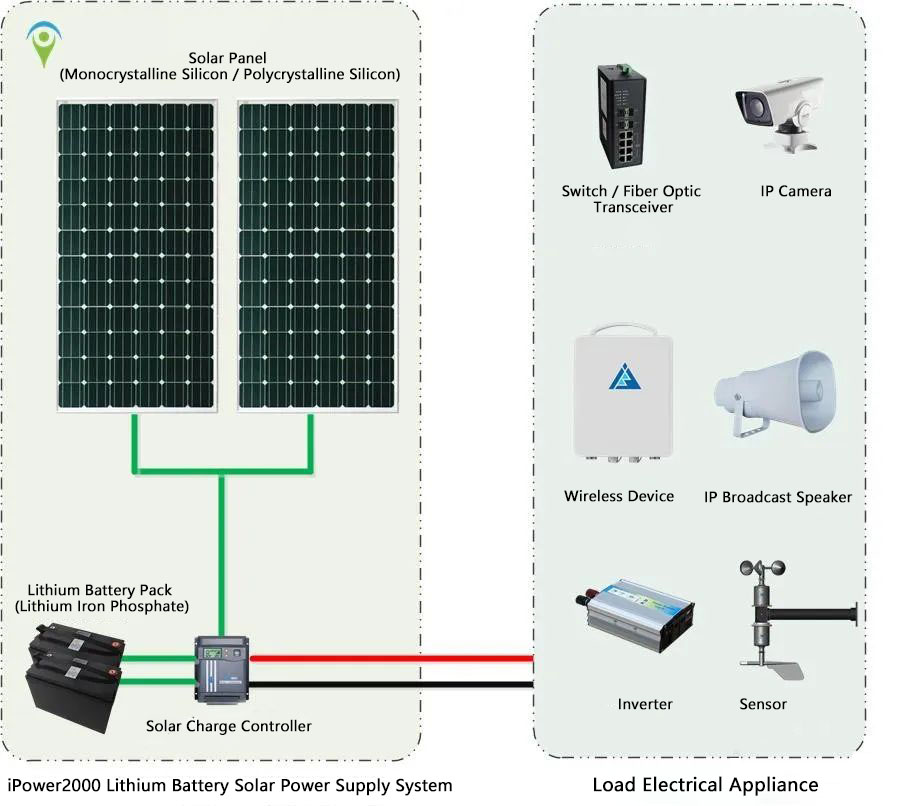
II. Lithium Solar Power System: Solving the Power Supply Problem for Field Base Stations and Fixed Monitoring Points