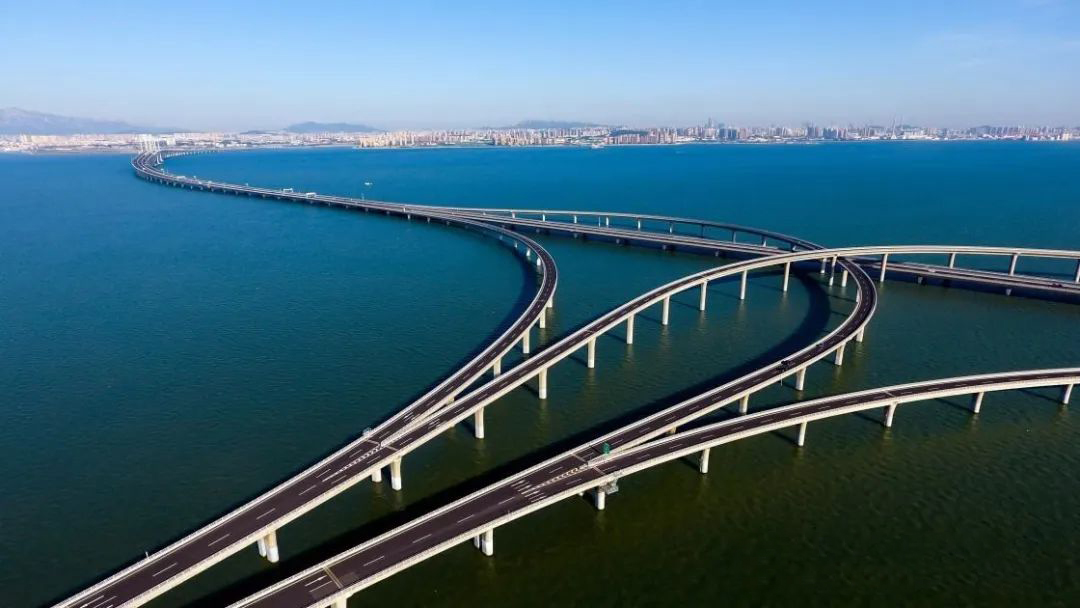
To prevent theft, fire and accidents, the primary monitoring needs include video surveillance, environmental monitoring and geological disaster monitoring.
Large construction sites house a large number of facilities (e.g., scaffolding, cables) and construction materials. Valuable as these items are, they have become targets of theft. At sites without video surveillance, managers cannot supervise round the clock, leading to rampant theft during late nights and early mornings.Installing infrared cameras for 24-hour monitoring at construction material storage areas, coupled with alarm linkage functions, can provide clues for police investigations, effectively deter thieves and minimize property losses.
After bridges and tunnels are completed, real-time monitoring and protection are imperative to safeguard all facilities against theft and vandalism, as well as to pre-alert and promptly address risky behaviors. Such intelligent supervision must rely on a reliable, secure and stable network system.
Unsafe human behaviors, unsafe conditions of construction machinery (e.g., tower cranes) and adverse environmental factors are classified as secondary hazard sources, which account for the vast majority of dangers and harmful factors at construction sites.Establishing a work safety monitoring system (including real-time status of mechanical equipment and operation command records) helps detect illegal operations and mechanical abnormalities in a timely manner. The presence of an integrated monitoring system also raises operators’ safety awareness and prevents accidents.
Bridge and tunnel construction sites involve numerous work vessels, heavy machinery (e.g., shield machines, tower cranes) and work vehicles, posing great challenges to coordinated operation. Especially for large-scale sites such as cross-sea bridges and mountain-crossing tunnels, even the slightest error of participating work vessels and machinery must be strictly controlled, otherwise severe consequences will ensue.
These vessels, machinery and vehicles are all mobile, making wired communication clearly unsuitable for networking. Due to signal coverage limitations, bandwidth requirements, security and reliability demands, and economic considerations, only wireless private networks are feasible—operator-provided 4G/5G networks are also clearly inappropriate for such scenarios.
After bridges and tunnels are put into operation, dedicated UAVs are commonly deployed to perform functions such as video patrol and 3D scanning, providing first-hand data for bridge and tunnel management. This also requires a reliable and stable wireless network system for support.
Bridge and tunnel construction sites are progressively advancing work sites: bridges are generally constructed in sections, and tunnels are excavated step by step. If fixed monitoring points are installed in the same way as urban surveillance, the monitoring of construction faces— the top concern of management—will often face “loss of control” as the work front advances.
After bridges and tunnels are operational, in the event of vehicle accidents, natural disasters and other emergencies, monitoring points must be deployed immediately to transmit on-site conditions to superior management departments and remote rescue experts. This is also inseparable from portable or vehicle-mounted monitoring points.
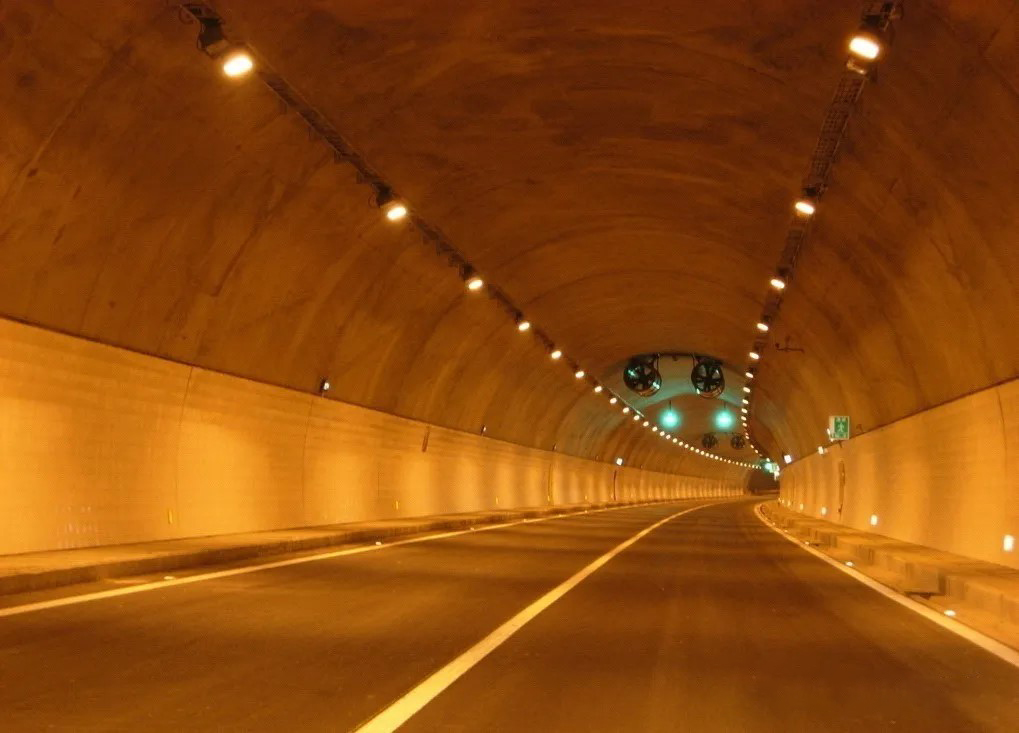
Collaborative office needs mainly include telephone interconnection, network connectivity and terminal access between the site, project department and management departments. On-site requirements such as video surveillance, equipment monitoring, UAV scanning and personnel positioning all rely on a reliable and stable wireless private network for support.
Based on the analysis of networking requirements at bridge and tunnel sites, the wireless solution must be reliable, secure and stable – a wireless metropolitan area network (WMAN) with exclusive private network deployment is the only option that can meet such demands.
Combining years of industry experience in bridge and tunnel projects, Guoxin Longxin offers the following targeted product series:
Large-scale construction sites for bridge and tunnel projects are often located in remote areas. Even for fixed-point access, wired communication (e.g., optical fiber cables) not only disrupts construction work, but is also highly prone to damage from scraping or excavation, resulting in communication outages. For mobile nodes such as vessels, vehicles and heavy machinery, only a reliable wireless communication system can ensure stable networking performance.
Guoxin Longxin’s iMAX wireless metropolitan area network system features unique technological advantages and outstanding performance, including support for high-reliability network architecture design, ultra-long-distance transmission (meeting the needs of building private networks spanning hundreds of kilometers), high bandwidth, easy installation and convenient maintenance – advantages unmatched by other wireless broadband devices.
Designed to build wireless cities and enable ultra-long-distance outdoor network interconnection, all product series of the WMAN system support extended communication ranges. For urban backbone networks, the portfolio includes the iMAX-6000 and FibeAIR high-frequency IP microwave systems; for edge access networks, it covers various iMAX-8000 series products.
✅ Communication Range
Under line-of-sight conditions, even the compact iMAX 5G dedicated communication system with integrated antennas allows the iMAX-8000H (point-to-multipoint mode) to easily achieve coverage with a radius of over 10 km; the iMAX-6000 (point-to-point mode) supports transmission up to over 100 km.
✅ Transmission Bandwidth
- iMAX-8000H: 300/600 Mbps point-to-multipoint communication system
- iMAX-6000: 150/300/600 Mbps point-to-point communication system
- FibeAIR high-frequency IP microwave system: Ultra-high bandwidth backbone network with 1G–20Gbps transmission capacity
In summary, upon resolving wireless networking and communication at bridge and tunnel sites, it becomes straightforward to implement network interconnection, video surveillance and further informatization construction.
Portable and detachable monitoring points at bridge and tunnel construction sites must integrate power supply, networking and monitoring modules, with flexible design and customization tailored to specific monitoring environments.Guoxin Longxin’s portable and detachable monitoring points, specially developed for such cyclically mobile monitoring scenarios, are the ideal solution for these applications. The two most common integrated monitoring point systems designed by Guoxin Longxin are as follows:
Schematic diagram of the portable monitoring point composition is as follows:
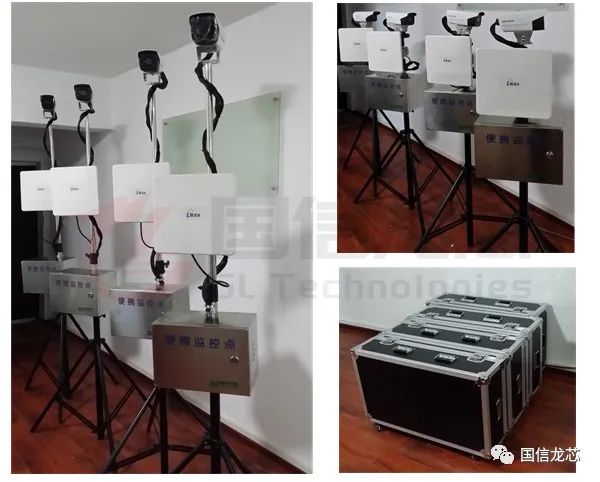
The iPMVS series portable monitoring point system consists of an IP HD video surveillance camera, an iMAX wireless metropolitan area network terminal, a high-performance lithium battery power supply, and supporting tripods. Despite its integrated components, it can be neatly packed for transport and relocated as needed.With a professional integrated design, the system is suitable for outdoor operation (waterproof, wide temperature tolerance, etc.), and simultaneously fulfills HD video surveillance, power supply and IP network connectivity requirements. It is an ideal choice for temporary emergency deployment of video surveillance points.
Schematic diagram of the detachable monitoring point composition is as follows:
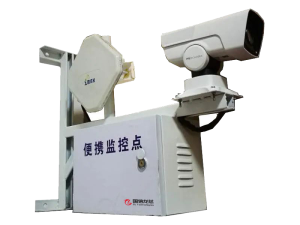
The iCMVS-3010 detachable monitoring point system comprises an IP HD video surveillance camera, an iMAX wireless metropolitan area network terminal, a high-performance lithium battery main unit and supporting tripods. Despite its comprehensive functionality, it can be compactly packed, easily installed, and disassembled and relocated at any time. With a professional integrated design, the system is adapted to outdoor working conditions (waterproof, wide temperature resistance, etc.), and simultaneously fulfills the requirements of HD video surveillance, power supply and IP network connectivity. It is an ideal choice for the temporary emergency deployment of video surveillance points.
For vehicle-mounted, ship-borne and tunnel communication systems, the Huanyou low-frequency mobile MESH wireless metropolitan area network system is applicable. This system is flexible and maneuverable, ideally suited for the construction of temporary vehicle-mounted/ship-borne/airborne networks and fast roaming mobile applications. Specific solutions need to be tailored to actual requirements and network scale, and will not be elaborated here.
Another major challenge in building a remote monitoring system for bridge and tunnel construction sites is difficult power supply. Most temporarily built monitoring points are located on watchtowers, reefs, mountain tops and other such locations. If mains power cables are used for connection, the cost of laying cables from the foot to the top of a mountain can easily reach millions of yuan, and the construction cost and cycle are also unacceptable. Some monitoring points are situated in dense mountain forests, making power access an extremely arduous task. Therefore, the optimal power supply solution for such fixed-point monitoring systems is Guoxin Longxin’s iPower2000 new energy power supply system.
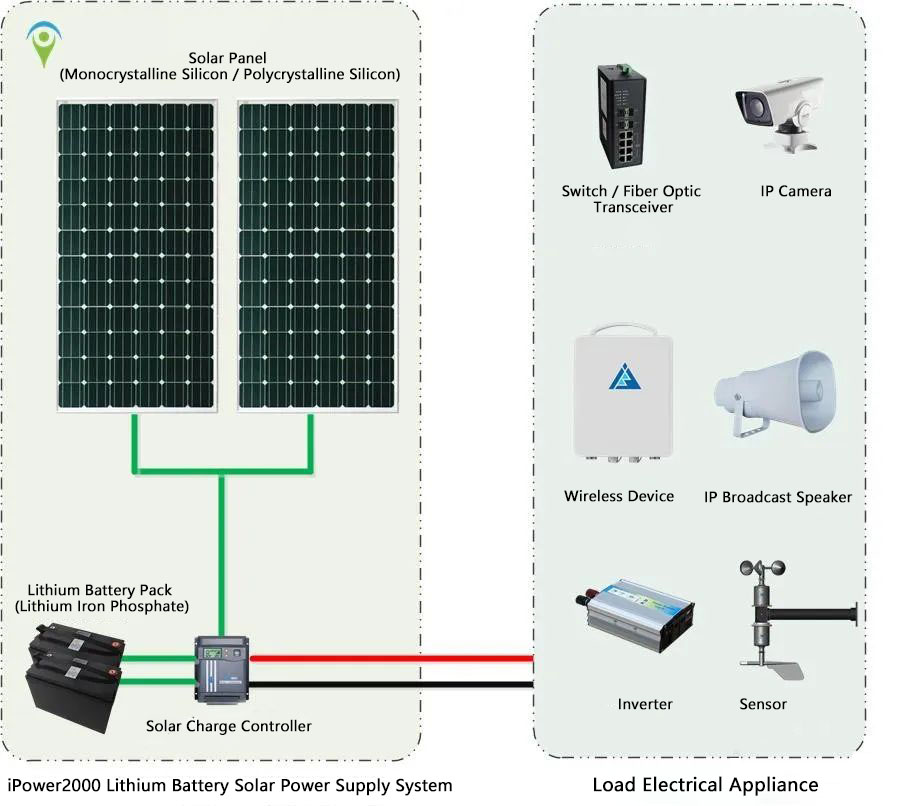
The iPower2000 new energy power supply system is an integrated off-grid new energy power supply system, applicable to field environments such as bridge and tunnel construction sites. It conforms to the green and eco-friendly construction concept, and solves the power supply problem for scattered devices such as wireless network systems and video surveillance points in field conditions.
This product series effectively addresses the long-term or temporary power supply needs of outdoor video surveillance points and information monitoring points. With a lithium battery system centered on lithium-ion batteries and high-performance monocrystalline silicon solar panels, the system boasts advantages including simple structure, compact size, light weight and long service life compared with conventional solar power supply systems using lead-acid or gel batteries. It is an ideal choice for long-term power supply in the construction of IT systems in field environments.
The schematic diagram of a typical lithium solar power supply application system connection is as follows:
Wireless private network system support is essential for bridges and tunnels, both during the construction phase and for intelligent management after commissioning.
Upon the realization of wireless private network access for bridges and tunnels, the current mainstream IP digital network video surveillance system can be adopted for video monitoring.
Bridge and tunnel monitoring points are generally limited in quantity with relatively short storage requirements. Therefore, configuring IP network cameras (IPCs) at front-end monitoring points and using network video recorders (NVRs) for storage delivers the highest cost-effectiveness. To meet the demand for 24/7 uninterrupted monitoring, IPCs are ideally infrared integrated bullet network cameras or infrared high-speed dome network cameras, paired with compatible NVR systems.
Similarly, with wireless private network access enabled for bridges and tunnels, telephone communication can be achieved through a VoIP network telephone system. The key advantages of an IP network telephone system are zero call charges for internal network communications and telephone reachability wherever the network is available. Deployment becomes extremely convenient when integrated with the iMAX wireless system.
For practical deployment, an IP-PBX telephone switch is installed at the construction site project department, and IP phones are deployed at all locations requiring telephone service. The capacity of the IP-PBX telephone switch can be selected according to actual needs.
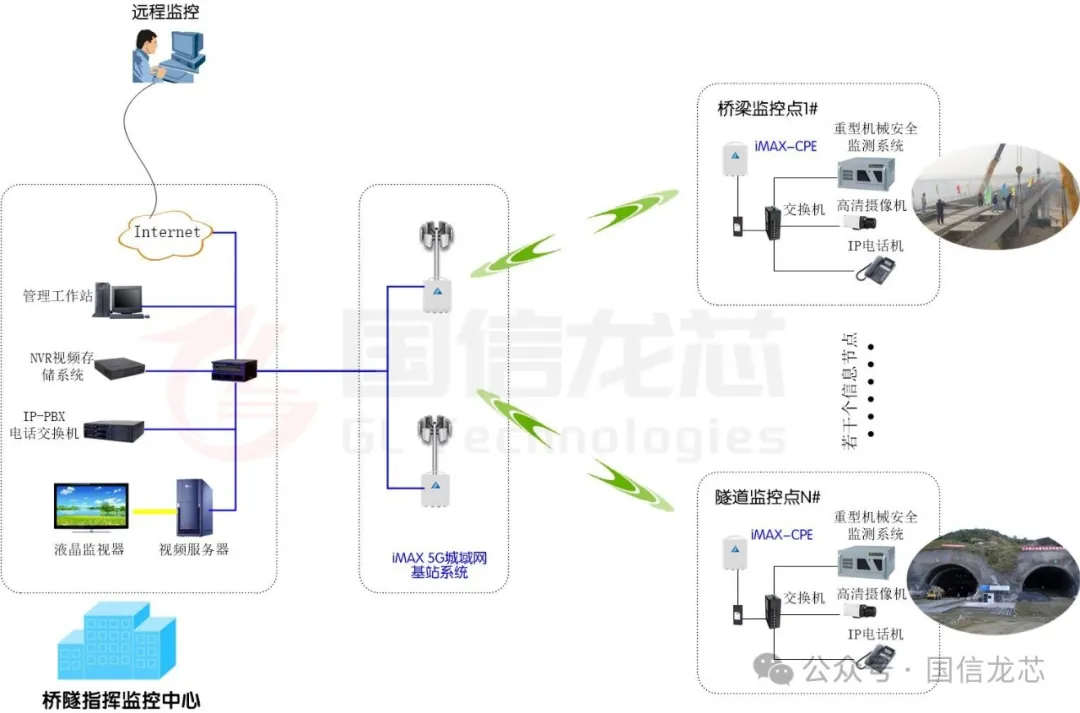
For mobile communication networking, when integrated with vehicle/ship-borne mobile nodes, detachable and fixed monitoring points inside tunnels, and UAV video transmission, the application of comprehensive monitoring and management systems for large bridge and tunnel infrastructure construction sites and their post-operation phase will become more complex and diverse, imposing higher requirements on wireless systems and technical capabilities – and this is precisely Guoxin Longxin’s core strength. For details on the applicable wireless communication systems, please refer to the All-Scenario Mobile Monitoring Solution.
Over the years, Guoxin Longxin has assisted our integrator partners in successfully delivering numerous wireless networking projects for bridge and tunnel construction sites, accumulating valuable project experience. We can tailor the optimal customized design and provide the most suitable solutions for customers.