The Decision of the CPC Central Committee on Deepening the Reform of Party and State Institutions adopted at the Third Plenary Session of the 19th CPC Central Committee states that deepening the reform of party and state institutions is a profound transformation to advance the modernization of the national governance system and governance capacity. Among them, the establishment of the Ministry of Emergency Management (MEM) has attracted great attention from both practical and academic circles.
The MEM has integrated emergency management-related functions previously scattered across the State Administration of Work Safety, General Office of the State Council, Ministry of Public Security (Fire Department), Ministry of Civil Affairs, Ministry of Land and Resources, Ministry of Water Resources, Ministry of Agriculture, State Forestry Administration, China Earthquake Administration, as well as the Flood Control and Drought Relief Headquarters, National Disaster Reduction Commission, Earthquake Relief Headquarters, and National Forest Fire Prevention Headquarters. This integration largely enables full-process and all-round management of all disaster types, and helps enhance public security guarantee capacity.
As a newly established department, the MEM is of great significance for governments at all levels, enterprises and the public in China to cooperate, efficiently integrate and allocate resources, timely handle sudden man-made or natural disasters and dangerous situations across the country, and conduct effective rescue command. With the advent of the Internet Plus era, the introduction of high-tech means to grasp first-hand information at the early stage of disasters, fully understand disaster-stricken areas after disasters, and conduct scientific command and decision-making is crucial for disaster relief and emergency management. Guoxin Longxin’s Remote Integrated Command Solution for Disaster Relief and Emergency Management is proposed precisely to meet such demands.
The first step for scientific emergency management command is to fully adopt IoT technology and realize the interconnection of images, data and audio from hazard source areas, disaster sites and disaster relief areas with the command center. For areas with identified hazard sources, fixed hazard monitoring and detection methods can be adopted to grasp the status of hazard sources in real time for regular management, enabling immediate response in the event of a disaster. For most hazard disposal, disasters tend to occur randomly and accidentally, and it is difficult to achieve full coverage of target areas with fixed points. Rigid blanket prevention and defense is inflexible, and mobile monitoring and detection means are required for effective control. Guoxin Longxin’s solution integrates the design of monitoring, detection and communication in various mobile forms including vehicle-mounted, shipborne, airborne, portable and individual soldier systems, adopting a unified TCP/IP standard. It is fully compatible with the same software platform as fixed-point monitoring and detection, upgrading the passive fixed-point “stationary guarding” mode to an active “proactive response” mode combining fixed points and full-coverage mobile points. The greatest advantage of integrating fixed and various mobile terminals on a single software platform is the organic unification of daily management and emergency response, avoiding a series of problems caused by unskilled operation of commanding personnel.
The core of Guoxin Longxin’s Remote Integrated Command Solution for Disaster Relief and Emergency Management consists of the company’s proprietary wireless network system, lithium battery & solar power supply system, and integrated mobile monitoring point systems (vehicle-mounted, shipborne, airborne, portable and individual soldier). All multimedia information such as video, data and voice that complies with the TCP/IP network protocol can be transmitted, and the software platform can fully adopt the user’s existing or any third-party software system.
The foremost challenge to be addressed in disaster relief and emergency management is the difficulty of networking. At disaster sites, daily basic telecom communication means such as 4G/5G (e.g., mobile phones) are often damaged. Relying solely on the emergency repair capacity of telecom operators can hardly meet disaster relief needs; a private network system independent of public network means is essential to ensure disaster relief operations.
The three most common emergency communication methods are as follows:
The iMAX series WMAN system under the iMWB brand is one of the ideal solutions for such applications. The iMAX wireless communication system is designed to build a wireless city (private network), with all series of devices featuring ultra-long communication distances. Among them, the iMAX-6000 series serves as the urban backbone network, and the multi-series iMAX-8000 serves as the urban access network.▸ Communication Distance: Under line-of-sight conditions, the iMAX 5G dedicated communication system can easily achieve coverage with a radius of 10 to 50 km, and customized design can meet point-to-point communication needs of over 100 km.▸ Transmission Bandwidth: The iMAX-8000H is a 600Mbps point-to-multipoint communication system, and the iMAX-6000 is a point-to-point communication system with 150/300/600Mbps bandwidth. Both support multi-mode design to double the bandwidth.
In addition to the iMAX WMAN series, Guoxin Longxin also offers the Huanyou Low-Frequency MESH Mobile Communication-on-the-Move System, designed to meet the ultra-long-distance mobile communication needs of vehicles, ships, UAVs and other mobile carriers; as well as the FibeAIR High-Frequency & High-Bandwidth Microwave Communication System, which addresses backbone network connection needs with bandwidth ranging from 1G to 20Gbps.
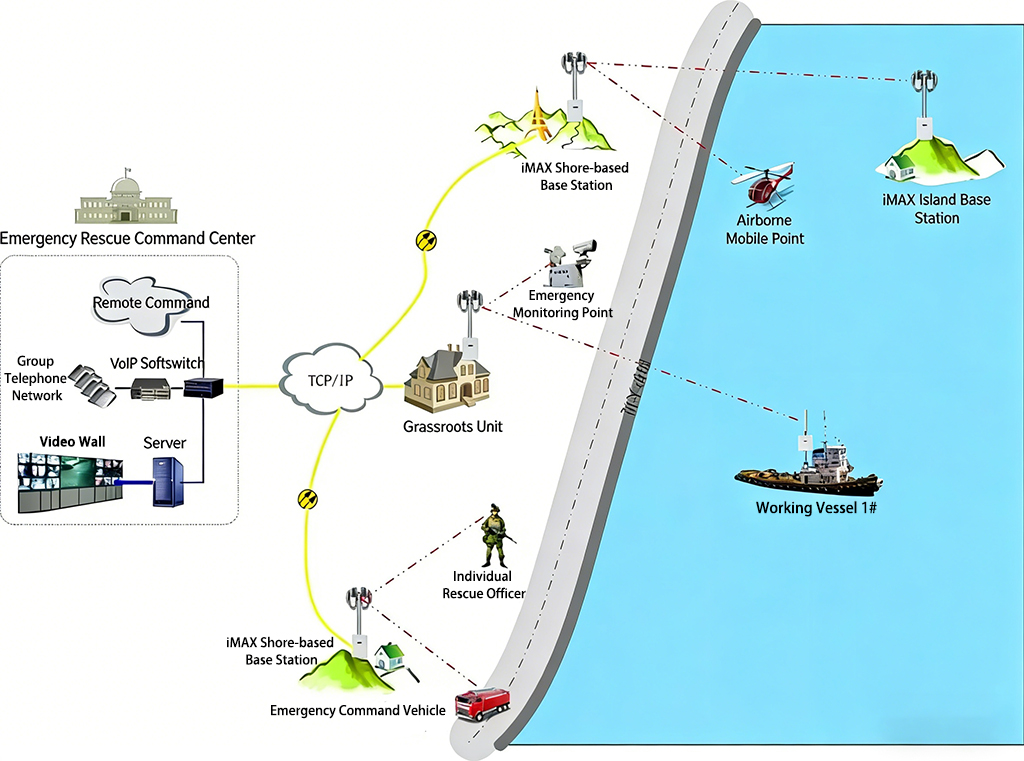
The topology diagram of Guoxin Longxin’s Emergency Communication MAN Networking Solution is as follows:
Stable and High-efficiencyThe bandwidth of iMAX broadband wireless products ranges from several megabits to hundreds of megabits, fully meeting the real-time networking bandwidth requirements of emergency management systems. With excellent operational stability and high reliability, these devices support true 7×24-hour uninterrupted operation, featuring stable bandwidth and strong anti-interference capability.
Superior MobilityThe iMAX broadband wireless system delivers exceptional mobility, and includes multiple sub-series products tailored to different requirements for moving speed, communication distance, service type, size and weight, to satisfy diverse application needs.
Secure and ReliableIt supports access control, data encryption, VLAN and VPN technologies, providing multi-level and high-standard protection for the security of transmission networks.
Cost-effectiveIt requires a one-time investment with lower costs than network leasing, and offers significant investment protection (supports free relocation). The easy and fast installation, short construction period and simple maintenance further enhance the system’s cost-effectiveness.
Fast, Flexible Installation & MaintenanceThe devices are compact, lightweight and can be installed within 1-2 working days. Their maintenance and relocation are extremely convenient.
In addition to the above advantages, leveraging the high-bandwidth feature of this WMAN system, extended applications are available to carry other services (e.g., alarm monitoring, environmental monitoring, VoIP network phones, e-government networks, mobile office, IP broadcasting, video conferencing, etc.), further improving its comprehensive utilization value.
The major limitation of this technology is its high customization requirement, making it more suitable for the construction of high-reliability private networks with clearly defined social target areas and specific demands.
To address emergency communication needs, Guoxin Longxin’s second technical solution is based on SD-CX Cloud Switching technology.
Guoxin Longxin’s SD-CX is a cloud platform-based Internet solution, deployable on private cloud, public cloud (e.g., Tencent Cloud) or hybrid cloud. Network interconnection based on cloud systems is referred to as SD-CX (SDN-based Cloud Exchange). Specifically, Guoxin Longxin’s SD-CX solution customizes the integration of WWAN + WMAN + LAN + VPN technologies and enables cloud interconnection, among which VPN technology and cloud interconnection are the core technologies ensuring the solution’s security and stable operation.
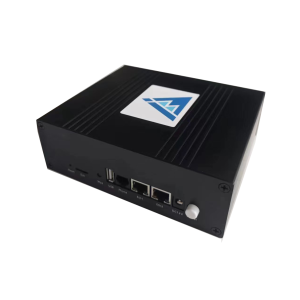
The iMAX-4GW300 is an innovative product that uniquely integrates iMAX wireless WMAN with 4G LTE wireless technology. It can serve as an integrated switching gateway platform supporting multiple access methods, including optical fiber access (equipped with Guoxin Longxin’s FiberDC-IDU), LAN interconnection, MPLS dedicated line access, Internet broadband access, iMAX wireless WMAN private network and 4G public network access.
The iMWB-5GW1000 is a 5G multi-mode wireless gateway system that supports both 5G WWAN (SA & NSA) and WiFi6 WLAN coverage (2.4GHz & 5.8GHz) simultaneously, with two Ethernet interfaces provided for use as an edge VPN access gateway for cloud switching platforms. While achieving high bandwidth, high reliability and large capacity via WiFi6 wireless technology, it also supports 5G public network access from telecom operators, flexibly providing users with the optimal wireless networking solution.
Virtual Private Network (VPN) technology creates a private network over a public network (or an encrypted private network over a dedicated network to enhance security) for encrypted communication. VPN technology mainly relies on tunnel encryption protocols, with typical ones including PPTP, L2TP and IPSec. Guoxin Longxin’s solution is constructed as a VPN server + VPN gateway architecture, primarily using embedded hardware VPN devices, which undoubtedly delivers superior reliability and security for remote management and maintenance.
This solution is a cloud platform-based Internet solution. Users can choose a private cloud, public cloud or hybrid cloud, and integrate dispersed information point networks into a single private network over the wide area network (WAN) via VPN tunnel encryption technology. Moreover, Guoxin Longxin’s solution adopts the VPN server + VPN gateway architecture centered on hardware VPN devices, which undoubtedly ensures higher reliability and security.
The topology diagram of Guoxin Longxin’s Emergency Communication WAN Networking Solution is as follows:
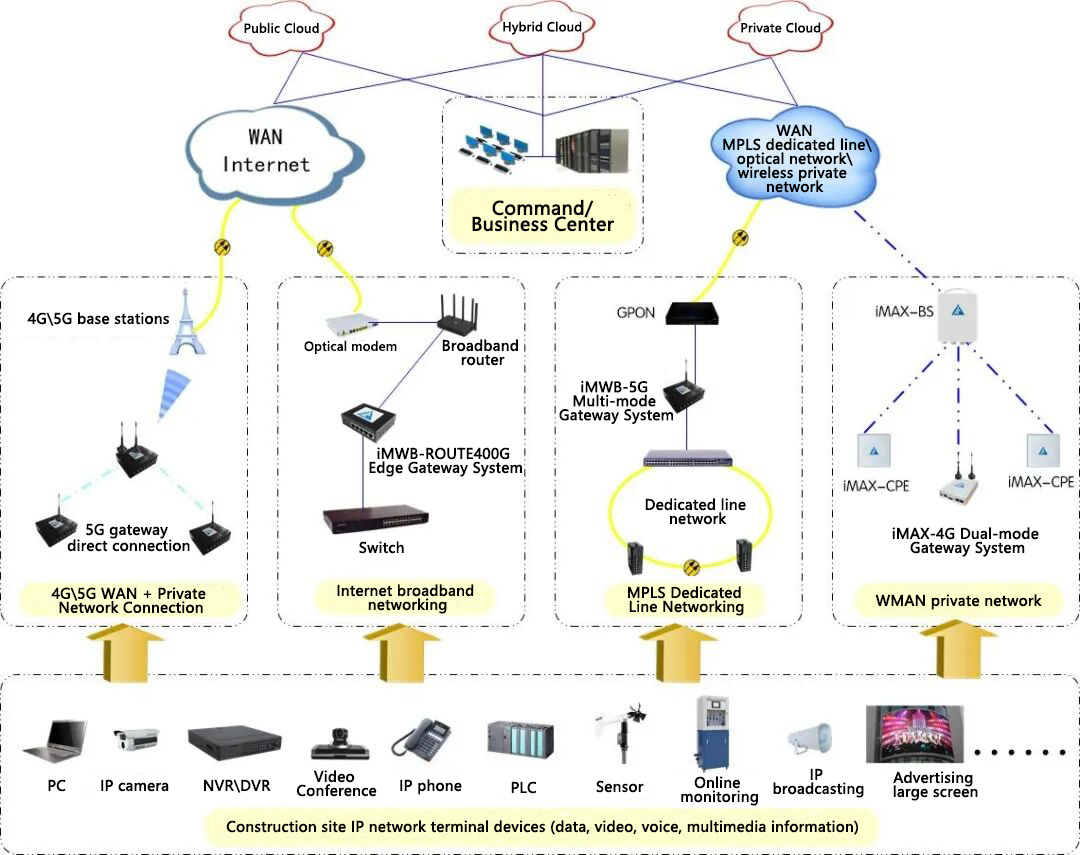
Guoxin Longxin’s SD-CX Cloud Interconnection Solution enables remote network management of devices, including but not limited to servers, switches, IP cameras, PLCs, sensors, IP broadcasting equipment, large advertising screens, wireless communication devices, optical communication devices, etc. To a certain extent, any device managed based on TCP/IP network protocol can adopt this solution to achieve remote cross-site networking.
The major limitation of this technology is that it relies on telecom operators’ 4G/5G networks or other lines, which is prone to the problem of “poor performance with heavy user traffic, and worse performance in emergency situations”. It is more suitable for IT system construction scenarios with unclear application areas and requirements, low usage frequency, and modest bandwidth and traffic demands.
Satellite mobile communication-on-the-move is an important technical means in emergency communication. Satellite transmission features maximum coverage, minimal blind spots and excellent mobility. New-generation IP network-based satellite communication systems support common network communication services, with greatly improved adaptability. However, satellite systems have obvious inherent limitations:▸ Size and Weight: Satellite communication terminals are usually large and heavy, do not support portable terminals (laptops and mobile phones), and are difficult to deploy portably – only satellite phones are generally available. The industrial chain maturity is low, with very few product options.▸ Latency and Equipment: The minimum latency of satellite systems is hundreds of milliseconds, which is uncomfortable for many users and even hinders the access of many real-time systems (e.g., video surveillance). Specialized hardware systems are mandatory, all with high costs.▸ Leasing and Costs: Using satellite systems requires channel leasing or pay-per-traffic billing. Currently, there are few domestic satellite operators, with scarce leased channel resources and high costs. Additionally, usage requires official filing, causing inconvenience for emergency deployment.
Generally speaking, satellite mobile communication-on-the-move has the most limitations, along with high deployment and operational costs, so it is usually the last resort when no other options are available.
In emergency communication scenarios, a single technical method can hardly meet the all-weather operation requirements of various scenarios (forest fire prevention, flood, landslide, earthquake, etc.). No technology is perfect, and each has its application limitations. So, how to build a truly reliable and practical emergency communication network?
Based on years of project experience, Guoxin Longxin proposes a multi-route solution integrating the above three technologies – namely, “superimposing” the three technologies, and realizing multi-network convergence for different services through priority setting and multi-routing. The topology diagram for multi-network convergence application is as follows:
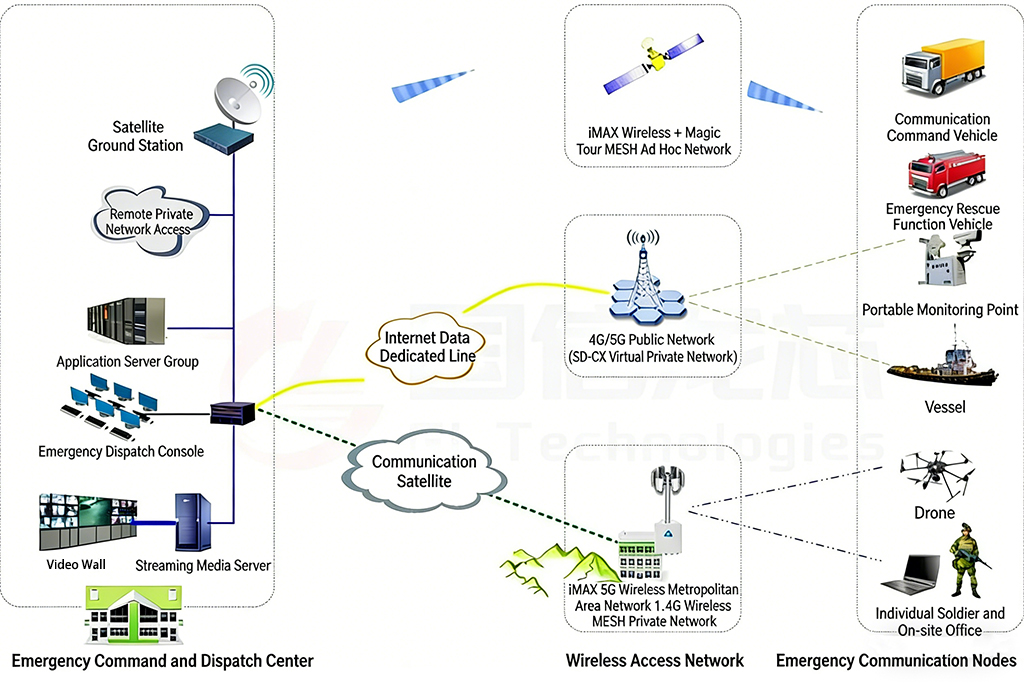
This design involves a variety of professional wireless communication technologies and must be customized according to the actual needs of specific users, so it will not be elaborated further here. However, leveraging the respective advantages of multiple technologies and integrating various wireless communication technologies can truly meet the communication networking needs of emergency communication, especially in disaster relief scenarios.
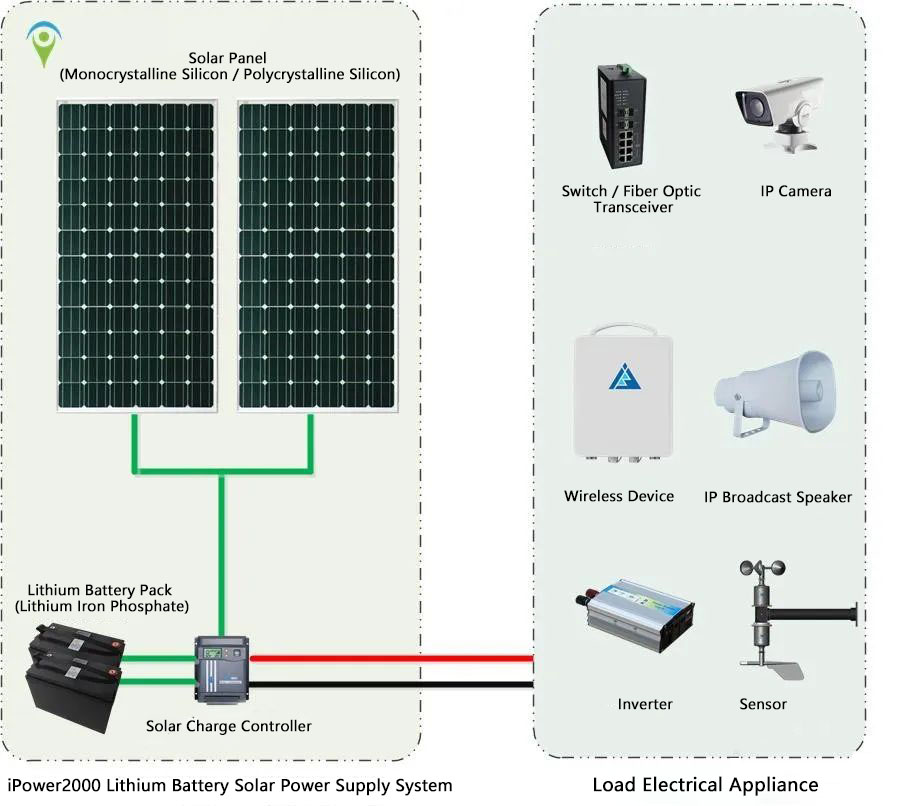
Guoxin Longxin’s lithium battery wind-solar hybrid power supply system addresses the critical “power supply difficulty” in disaster relief and emergency management. At disaster sites, daily basic power supply is often disrupted, and emergency repairs by power departments can hardly meet the need for real-time disaster situation assessment. A temporary emergency off-grid power generation system independent of municipal power supply is essential to ensure disaster relief operations, and the iPower lithium battery new energy system is one of the ideal solutions.
The mobile systems supported by Guoxin Longxin’s Remote Integrated Command Solution for Disaster Relief and Emergency Management include a variety of mobile terminal points, which can be called a full mobile solution.
Among them, vehicle-mounted (shipborne, airborne) surveillance points support real-time mobility, featuring fast moving speed and emergency deployment; portable mobile video surveillance point systems and movable surveillance point systems are customized products developed by Guoxin Longxin according to specific user needs, serving as a powerful supplement to fixed-point surveillance systems; the individual soldier system mainly realizes local storage of real-time images and audio from frontline disaster relief staff, and real-time network transmission within the coverage of iMAX wireless base stations or 4G/5G networks.
Mobile vehicles, ships (vessels) and other carriers act as temporary front-end communication nodes or even temporary command centers, requiring two-way audio and video transmission, so the wireless mobile terminals installed on board are also crucial.
Vehicle mobile nodes are the most common type. For professional emergency command vehicles, necessary modifications must be made. Three optional solutions are available:
This can be achieved by installing an electric vehicle lifting mast, which can be laid flat when not in use and erected for rotation when in operation, making it highly suitable for medium and large police vehicles. As shown in the diagram below:
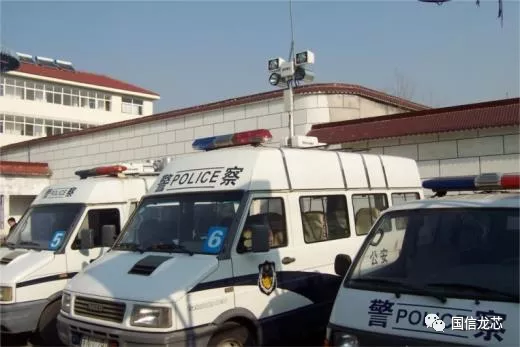
For small police vehicles, due to limited space and cramped installation positions, a fixed vehicle-mounted suction cup antenna is the only option for mobile communication-on-the-move. The roof-mounted camera can be installed above or behind the police light.
These vehicles typically operate for long hours at a fixed location instead of moving in real time, even in a semi-fixed state. In addition, mobile police vehicles need to transmit multiple channels of high-definition images. Therefore, they are suitable for using the iMAX 5G CPE integrated with a directional antenna to connect to wireless base stations, with necessary antenna alignment required during operation.
In comparison, the first modification solution delivers excellent performance but entails higher costs. The specific solution to be adopted shall be flexibly matched and customized according to the actual usage scenarios of the mobile police vehicles. The vehicle-mounted surveillance system also includes vehicle-mounted IP network cameras and vehicle-mounted network video recorder (NVR) systems. The installation of a UPS uninterruptible power supply and solar panels shall be determined based on user requirements.
The shipborne mobile communication system has higher and more specific requirements for wireless communication, and must be tailored for targeted needs, which will not be elaborated here. For specific project requirements, please consult Guoxin Longxin.
2. UAV (Aircraft, Robot) Mobile Surveillance Points
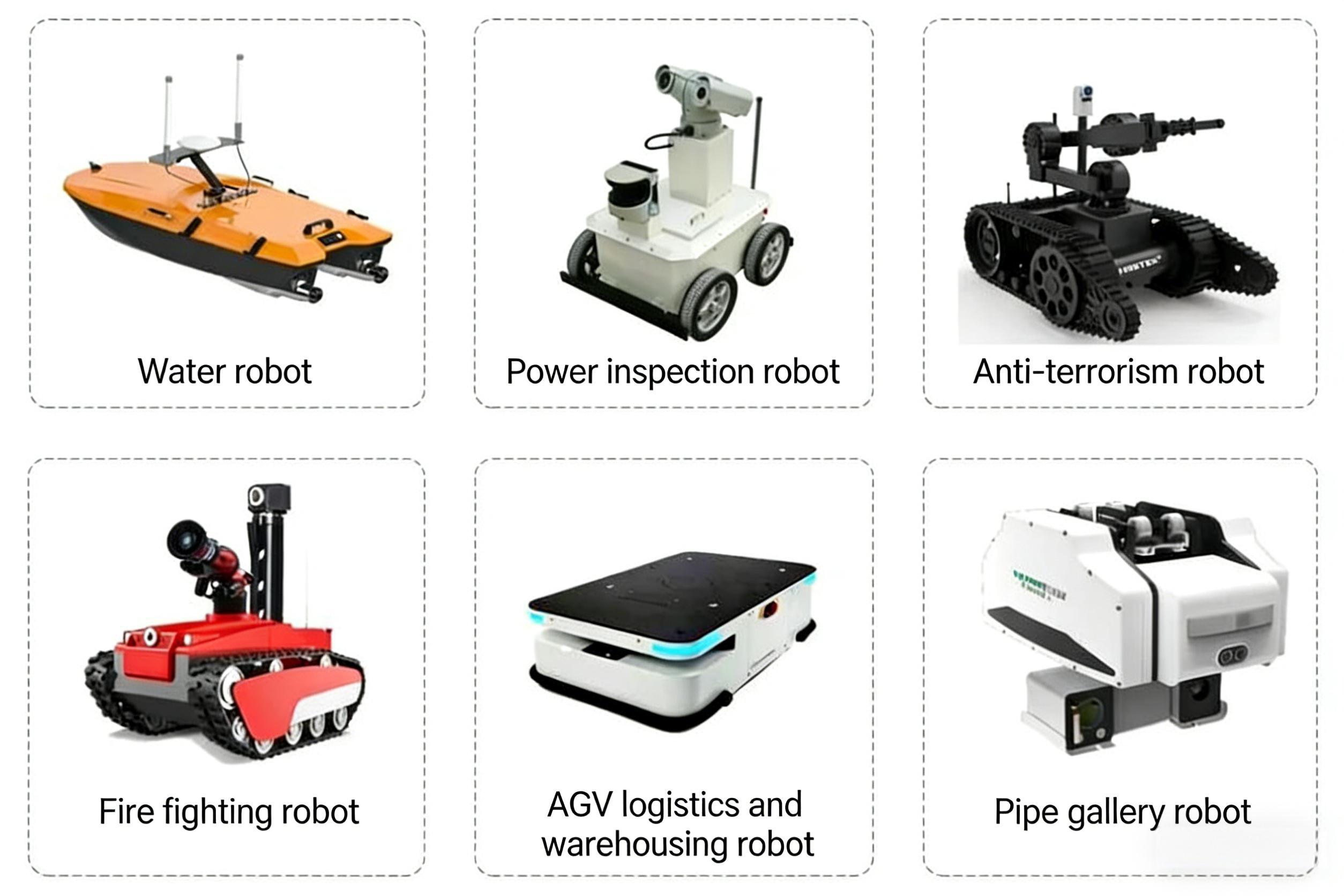
UAVs and robots, featuring small size and light weight, have unique advantages in emergency command and dispatch scenarios, but they also face application limitations such as difficult networking and short communication distance. To extend the operating radius, improve the usability and reliability of UAVs and robots, Guoxin Longxin’s wireless communication networking system can also provide an optimal solution.
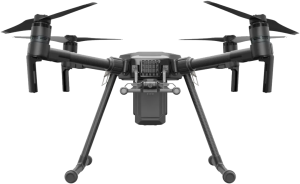
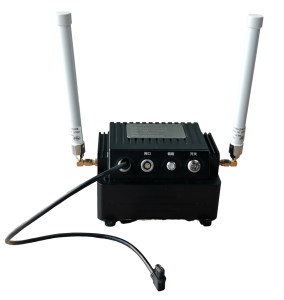
For high-reliability IP networking of robots, the iMAX-8000AI is the ideal choice.Designed to meet the communication networking requirements of mobile robots – including small size, light weight, low power consumption, rapid movement and high-speed roaming – it effectively resolves common challenges in mobile scenario applications such as high bandwidth, large system capacity, high-speed mobility and seamless roaming across multiple base stations.In particular, its technical features including ultra-long communication distance, high speed, high bandwidth, high reliability and high-performance image processing make it a standout solution for robot wireless networking.
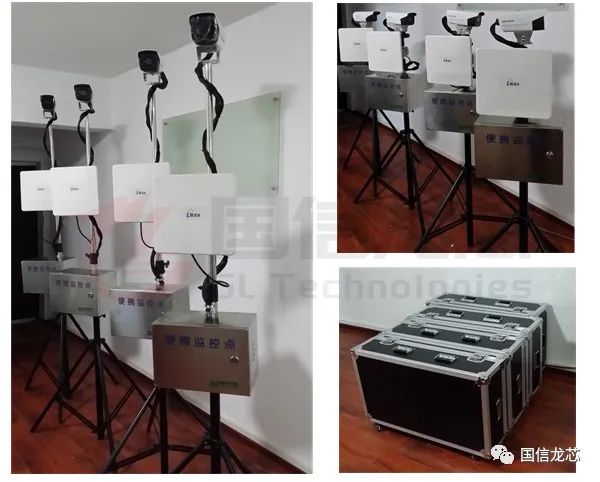
Portable mobile node systems and detachable surveillance node systems adopt a nomadic mobility mode, which is essential as an effective supplement to fixed nodes in disaster relief scenarios.The physical diagram of the portable mobile surveillance node integrated with an IP HD camera and wireless CPE is shown below:
Guoxin Longxin’s iPMVS Portable Surveillance Node System and iCMVS Detachable Surveillance Node System both adopt a modular design, which can be customized according to user requirements to fully meet personalized needs.
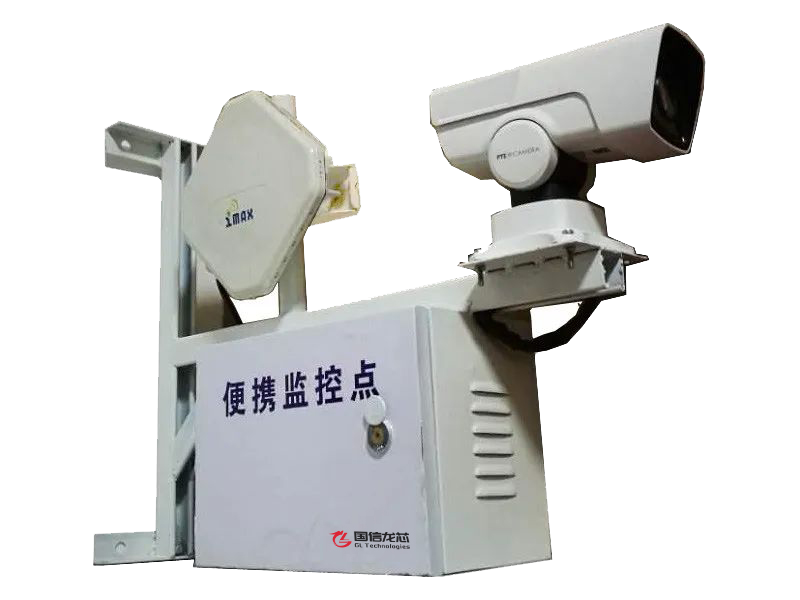
The iPMVS-1010 Portable Surveillance Node System and iCMVS-3010 Detachable Surveillance Node System are each composed of an IP HD video surveillance camera, an iMAX wireless metropolitan area network (WMAN) terminal or 4G dual-mode terminal, a high-performance lithium battery host, and a supporting tripod. Despite its integrated components, the system can be neatly packed into a case and relocated as needed. Through professional integrated design, it is adapted to outdoor working conditions (rainproof, wide temperature tolerance, etc.), and simultaneously fulfills HD video surveillance, power supply and IP network connectivity requirements. It is an ideal choice for the temporary emergency deployment of video surveillance nodes.
Guoxin Longxin’s individual soldier surveillance node is a backpack-mounted system, designed to meet the requirement of transmitting on-site visuals back to the command center when individual personnel, teams or robots operate deep in disaster-stricken areas.
In terms of communication networking, unlike many manufacturers that rely entirely on telecom operators’ 4G networks, Guoxin Longxin’s individual soldier surveillance node adopts a WMAN + 4G LTE dual-mode communication networking mode. Within the coverage of the iMAX 5G private network, it prioritizes the high-bandwidth, low-latency and large-capacity wireless metropolitan area network (WMAN); outside the iMAX 5G private network coverage, it can access telecom operators’ networks via 4G LTE and further connect to the public Internet. This multi-mode design further enhances the reliability of wireless data transmission.
The individual soldier system is equipped with a tactical helmet, a helmet-mounted pinhole IP camera, a mini NVR with a mobile hard drive, and a high-power lithium battery, mainly addressing the needs of real-time video recording and transmission for single mobile personnel. Meanwhile, network interconnection lays a foundation for the expansion of the individual soldier system, and Guoxin Longxin can conduct further functional development according to user requirements.
It is important to emphasize that the cameras adopted by Guoxin Longxin for the above mobile terminals are widely compatible with mainstream products from Hikvision, Uniview, Tiandy, Dahua, KEDACOM and other leading manufacturers. The collected audio and video streams are transmitted to the backend platform via the iMAX wireless MAN or 4G dual-mode gateway, then centrally integrated, stored and viewed, with convenient retrieval and access enabled. This represents in-depth integration, rather than simple assembly.
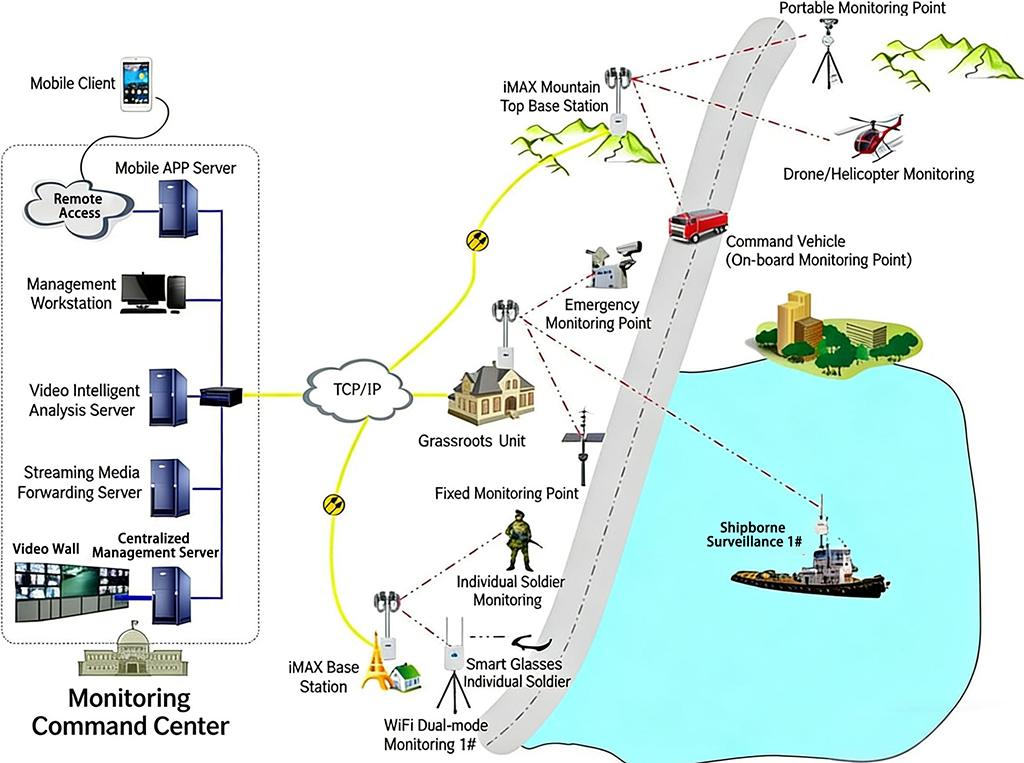
Guoxin Longxin’s Remote Integrated Command Solution for Disaster Relief and Emergency Management, based on the iMAX wireless MAN and Huanyou low-frequency MESH system, can meet the emergency command and disaster relief needs of various scenarios. The application topology diagram is shown below:
Backed by solid technical strength and years of experience in mobile communication projects across various industries, Guoxin Longxin can customize the optimal mobile communication and surveillance system design, conduct bespoke development, and deliver the most suitable integrated solutions for customers.