
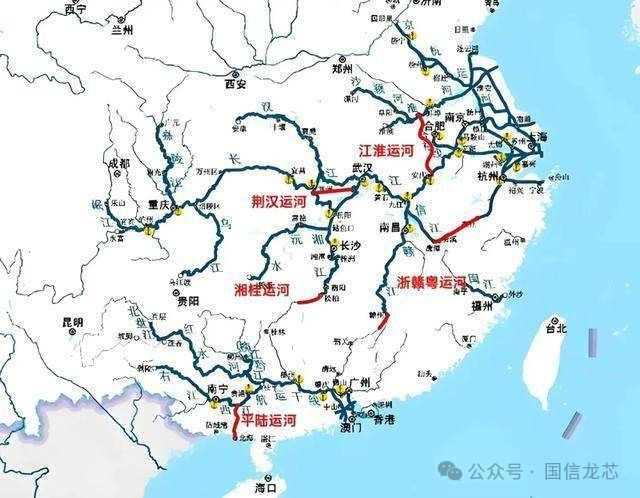
I. Grand Canal Construction Phase: Resolve Networking Challenges for Construction Scenarios
(1) Full-Coverage Video Surveillance Networking to Strengthen Control Over Materials and Construction Safety
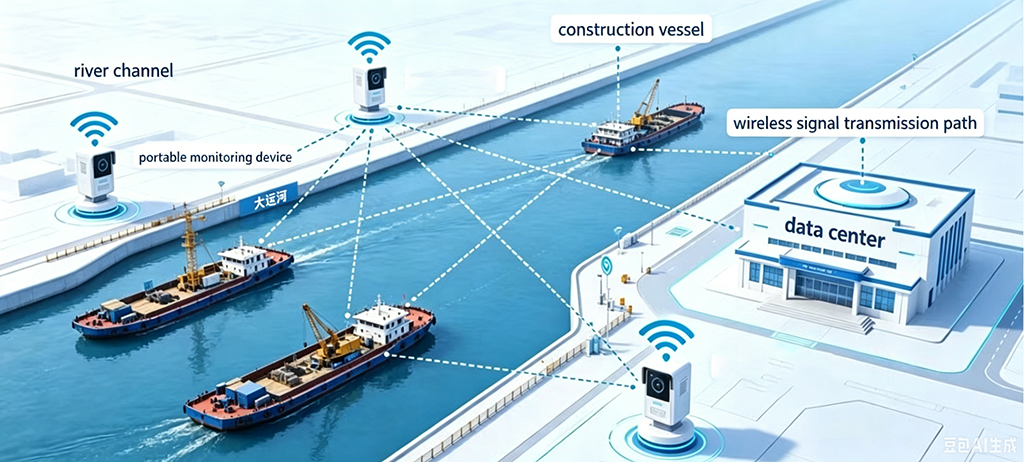
(2) Networked Dispatching of Engineering Vehicles and Waterborne Machinery
- Land-based engineering vehicles: Build a dedicated iMAX wireless vehicle networking private network to transmit real-time data including vehicle positioning, driving tracks, on-board video and fuel consumption. This prevents fuel theft and reckless driving, and enables collaborative dispatching of multiple vehicles. The low-latency feature of the private network supports remote vehicle management and communication for unmanned driving assistance.
- Waterborne working vessels: Dredgers and patrol vessels adopt dual-mode networking.
- When operating within a fixed river section, vessels connect to shore-based iMAX wireless metropolitan base stations to realize two-way transmission of high-definition ship-shore video and operational data.
- For wide-range mobile or cross-section operations, the Huanyou low-frequency MESH self-organizing network system is deployed. Featuring strong non-line-of-sight transmission capability, the system extends communication coverage via multi-hop cascading and supports centerless mesh networking. Failure of a single node will not disrupt the whole network, making it perfectly suited for flexible vessel operations.
(3) Networking for Temporary Offices & Cross-Section Collaborative Operations
- Intra-section office networking: Deploy BreezeAir industrial-grade wireless APs and iMAX-ACG600 dual-mode gateways to deliver both local Wi-Fi coverage and short-distance private network transmission spanning 10–15 kilometers. The system supports networking for laptops, IP phones, video conferencing and office management systems, and accommodates high-concurrency access in dense clusters of temporary prefabricated buildings.
- Remote cross-section collaboration: Adopt the SD-CX cloud switching + hardware VPN virtual private network solution, paired with multi-mode gateways including iMWB-5GW1000 and iMAX-4GW300. The system integrates local wireless private networks with public 4G/5G networks to build encrypted virtual transmission tunnels. Construction data, conference feeds and engineering reports from all sections can be securely uploaded to the general headquarters. This eliminates the need for costly operator leased lines and delivers cross-regional interconnection at far lower costs as a replacement for traditional dedicated lines. The gateways support multi-network convergence and are compatible with all TCP/IP terminals such as PLCs, sensors and broadcast equipment, realizing “one network for multiple services”. For detailed implementation plans, see How to Achieve Low-Cost Remote Site Networking via 4G/5G?.
(4) Signal Blind Zone Coverage for Enclosed Spaces Such as Tunnels and Sluice Chambers
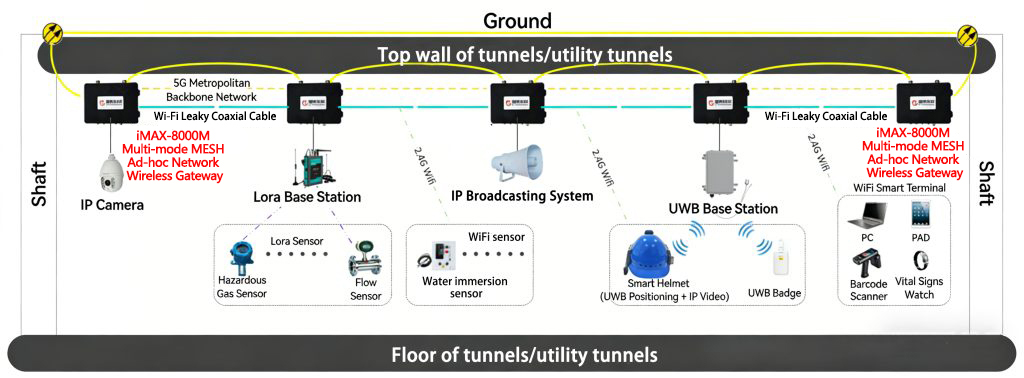 For detailed solutions, please refer to Wireless Network Solution for Tunnels and Pipe Galleries.
II. Grand Canal Operation & Management Phase: Support Long-Term Smart Governance to Cut Costs and Boost Efficiency
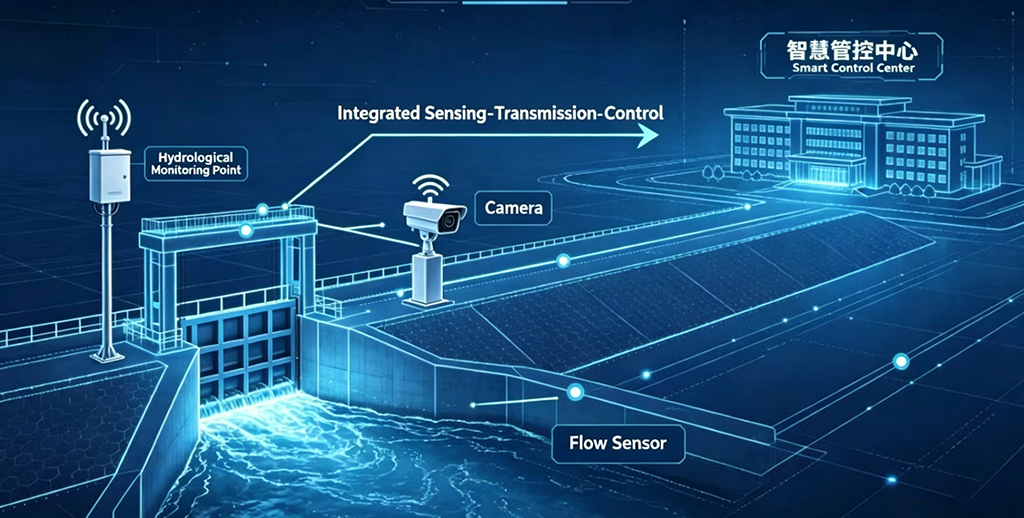
(1) Intelligent Networking for Water Conservancy, Hydrology and Sluice Station Governance
- Data and video transmission: Deploy iMAX 5G wireless MAN base stations at high ground along waterways, and install wireless MAN CPE terminals at surrounding monitoring sites. Sensor data including water level, flow velocity, rainfall and water quality, together with high-definition surveillance footage from sluice stations, are transmitted in real time to the water conservancy control center via private networks. The wireless MAN delivers sufficient bandwidth to carry thousands of monitoring data streams and HD video simultaneously, with zero data traffic fees. Compared with public 4G/5G networks, it cuts massive annual traffic expenses.
- Intelligent remote dispatching of sluices and pump stations: Featuring low latency and high reliability, the private network enables the control center to send remote commands to sluices and pump stations for unmanned gate opening/closing and pump startup/shutdown, forming an integrated smart water conservancy system of “perception-transmission-control”. The network supports VLAN, firewall, data encryption and other functions. Monitoring data and control commands are physically isolated from the public Internet to eliminate risks of hacker attacks and data leakage.
(2) Waterway Vessel Networking & Shipping Safety Supervision
- Vessel networking for mainstream waterways with fixed shipping routes: Prioritize the iMAX wireless metropolitan private network. Docks, navigation beacons and shore monitoring stations are all connected to the network. On-board ship terminals automatically access base stations along the channel, transmitting real-time vessel video, navigation status and location data. As ships travel across multiple base stations, the network supports seamless roaming without interruption of video and voice services, ensuring continuous shipping supervision.
- Remote tributaries & cross-regional long-distance vessels: Adopt the 4G/5G + hardware VPN solution. Gateway devices such as the iMAX-4GW300 and iMWB-5GW2000D are deployed to construct encrypted virtual private networks over operator public networks. This leverages the wide coverage of public networks while securing data via encrypted VPN tunnels to eliminate risks of unprotected data transmission over public networks. It fits tributary waterways with moderate bandwidth demands and sparse monitoring points, lowering upfront network construction investment.
- Integrated high-precision vessel positioning: Paired with Guoxin Longxin ICSE1000 integrated communication-sensing system built-in with Beidou positioning and attitude sensing modules, the system can be upgraded to centimeter-level RTK high-precision positioning. It accurately identifies vessel heading, speed and mooring status, assisting maritime authorities in penalizing illegal mooring and overloaded navigation, and preventing ship collision accidents.
(3) Full-Coverage Security & Ecological Monitoring for Dykes and Shorelines
- Fixed security monitoring points: High-definition cameras, vibration sensors and soil monitoring devices are deployed at critical dyke sections, cultural heritage protection zones and ecological reserves, all connected to the iMAX wireless private network. The system delivers 24-hour security surveillance and ecological data collection to deter illegal sand mining, unauthorized construction and heritage vandalism.
- Intelligent UAV patrols: For long-distance shorelines and remote waterways, UAVs equipped with wireless private network modules conduct regular patrols. UAVs transmit high-definition aerial footage via the iMAX private network or Huanyou MESH system, free from public network bandwidth constraints. Patrol data is uploaded in real time; paired with AI analysis, the system rapidly detects dyke damage, water pollution and vegetation degradation. This replaces large-scale manual patrols and cuts labor costs.
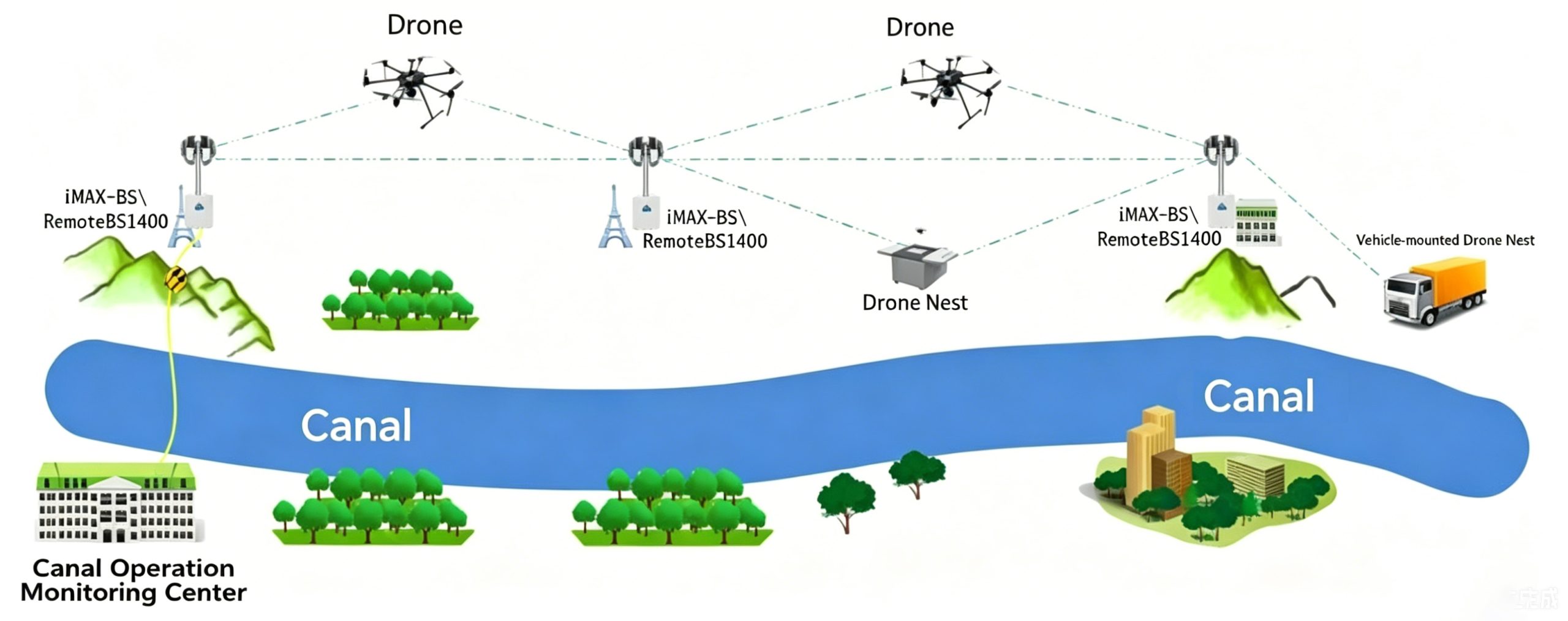
(4) Cross-Regional & Multi-Department Collaborative Networking
The Grand Canal spans multiple provinces and municipalities, and its administration involves authorities of water conservancy, transportation, culture & tourism, environmental protection, emergency response and other sectors. This brings prominent challenges including poor data interoperability and inconvenient remote management.Higher-level government authorities can adopt the SD-CX cloud switching virtual private network solution to integrate regional wireless private networks, local broadband and 4G/5G networks, and build a unified hybrid cloud interconnection platform. Business systems, surveillance footage and monitoring data from all regions and departments can be shared within the encrypted private network, breaking down information silos and enabling full implementation of the “One Platform for Canal Governance” model.This solution eliminates the need to deploy costly dedicated lines along the entire waterway. The network can be established merely through upgrading existing wireless equipment, perfectly matching the requirements of cross-regional collaborative management across multiple departments.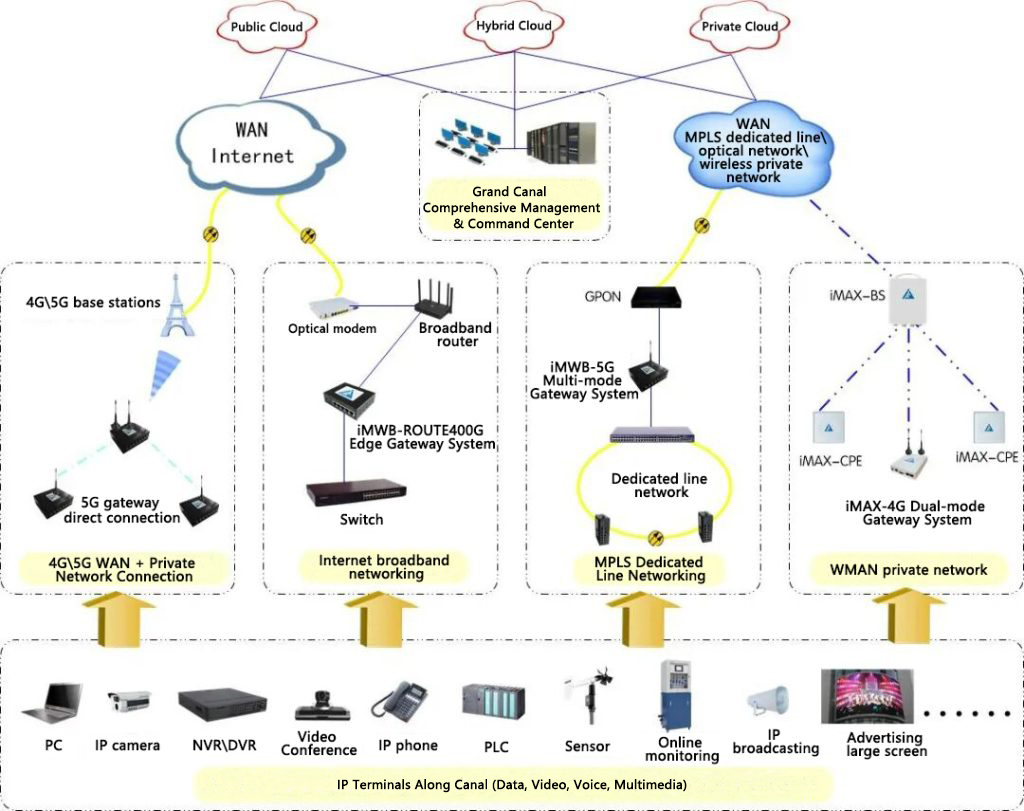
(5) Emergency Communication & Flood Prevention and Rescue
The Grand Canal lies within a monsoon climate zone, where floods, embankment seepage, landslides and other disasters frequently occur during flood seasons. Under extreme conditions, operators’ public networks are prone to congestion and breakdown.- Routine emergency response: Leverage the iMAX wireless private network or Huanyou low-frequency MESH system, which have delivered remarkable performance during the construction phase. These systems enable rapid network access for emergency command vehicles, portable monitoring stations, individual soldier communication devices, law enforcement patrol vessels and other equipment. Hazard footage and on-site data can be transmitted in real time to support the command center in conducting remote real-time dispatching and emergency rescue operations.
- Extreme disaster scenarios (three-outage conditions): Deploy the Huanyou low-frequency MESH emergency self-organizing network system or the iMAX-8000M multi-mode medium-frequency MESH satellite-on-the-move system. They rapidly establish a centerless mesh network for manpack, vehicle-mounted, shipborne and fixed communication terminals. Independent of base stations, optical cables and other infrastructure, the systems guarantee unobstructed voice, video and data transmission in areas suffering from the “three outages”: broken roads, network blackouts and power failures. This drastically cuts emergency response time and builds a solid communication line of defense for flood prevention and rescue.
A typical schematic diagram of emergency networking based on the MESH system is shown below: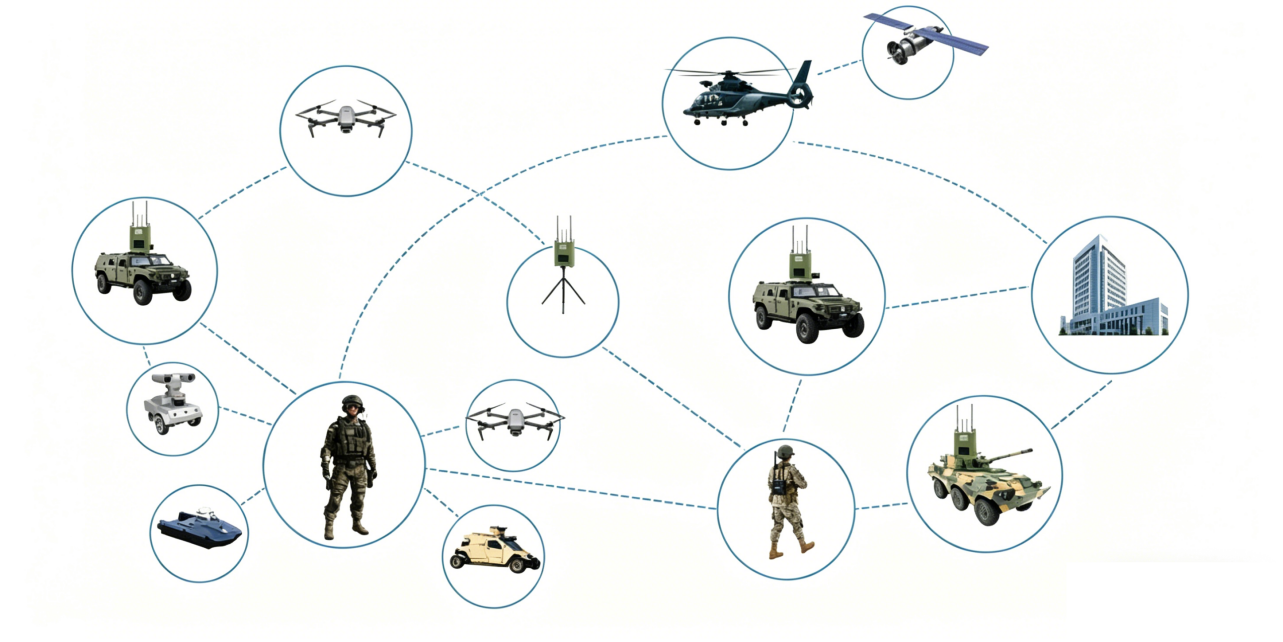 For a collection of emergency scenario cases of Guoxin Longxin, please refer to Collection of Typical Emergency Communication & Command Cases.
III. Supporting Power Supply and Overall Cost Advantages
Most field monitoring and surveillance points along the Grand Canal have no access to municipal power supply. Running separate power cables for these sites would incur extremely high costs.Guoxin Longxin provides the iPower lithium battery off-grid solar power supply system, which centers on lithium batteries and monocrystalline silicon solar panels. Compared with traditional lead-acid battery power supply systems, this solution features smaller size, longer service life and freedom from frequent maintenance, perfectly matching the power demands of wireless terminals deployed in the wild.The combined solution of “wireless private network + solar power supply” enables one-time construction for both communication and power supply. No cable laying or municipal power renovation is required throughout deployment, making it an optimal low-cost combination for networking and power supply at remote field sites.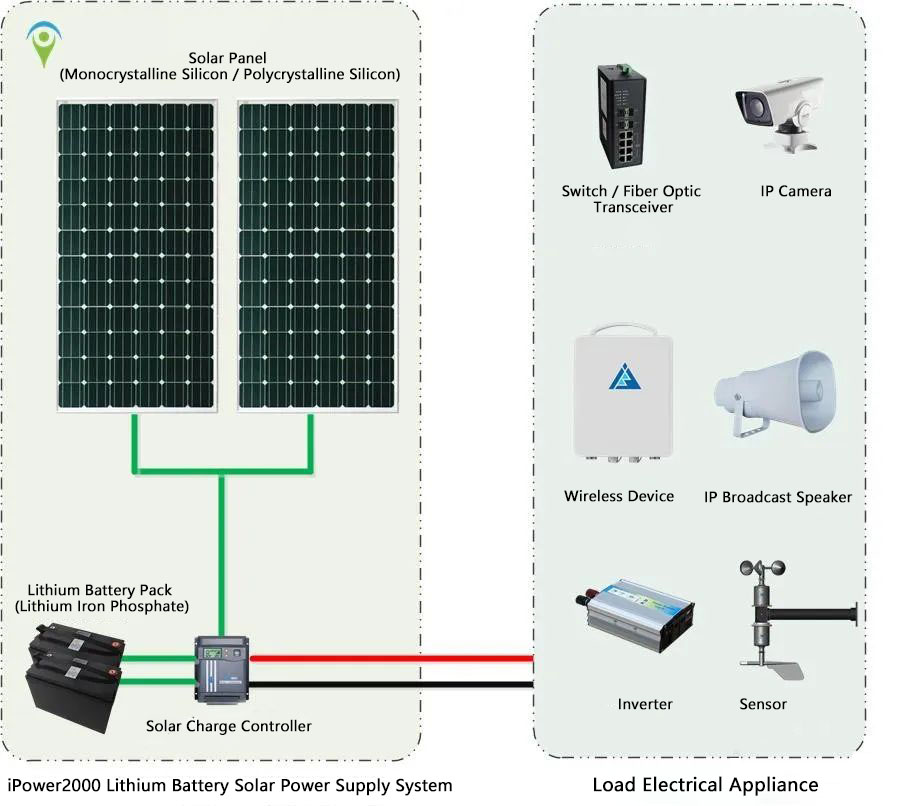 Overall, Guoxin Longxin’s wireless network system adopts layered device selection tailored to diverse scenarios of the Grand Canal:
- Main trunk channels, dense monitoring zones and high-definition video sites: Deploy the iMAX 5G wireless metropolitan area network to build a secure, reliable and stable private network. It only requires one-time capital investment (usually 1/3 or even 1/10 of the cost of optical cable wired construction), with zero data traffic fees and no recurring rental charges. It delivers the lowest long-term operating cost alongside top-tier security and stability.
- Remote tributaries, sparse monitoring points and cross-regional remote management: For low-traffic terminal sensing points, the 4G/5G + VPN virtual private network solution is adopted to cut upfront network construction costs while balancing coverage and data security.
- Mobile operations, flood emergency rescue and enclosed spaces: Specialized systems including Huanyou MESH and leaky coaxial cables are deployed to fill communication gaps in special working scenarios.
This complete solution can be organically integrated with optical fiber cabling, greatly avoiding the drawbacks of full optical fiber networking such as high overall cost, poor mobility and weak adaptability. The equipment features simple installation, easy maintenance and strong anti-interference performance. It fully supports all service scenarios including engineering construction, shipping administration, water conservancy dispatching, ecological protection and emergency command, and fits the Grand Canal’s management characteristics of long linear layout, multi-scenario coverage and cross-regional governance. It stands as the optimal low-cost networking solution for smart management of the Grand Canal.IV. Product Portfolio and Customized Solutions
Guoxin Longxin boasts over 20 years of experience in wireless communication product R&D and project delivery. Its product lineup covers five major categories: wireless metropolitan area networks, Huanyou low-frequency MESH self-organizing networks, FibeAIR high-frequency microwave, 4G/5G multi-mode gateways, and BreezeAIR industrial Wi-Fi. All devices adopt industrial-grade design to withstand harsh outdoor river conditions including high humidity, drastic temperature swings, strong winds, heavy rainfall and lightning strikes.Our team has delivered numerous real-world projects covering river channels, reservoirs, large infrastructure and vessel networking. For water conservancy industry cases, please refer to Sharing of Wireless Private Network Cases for Intelligent Water Conservancy Projects. A wealth of construction site networking cases can be viewed on the official Guoxin Longxin video account.Different canal sections feature varying terrain and business demands. To design a targeted networking plan for specific projects, integration partners need to provide information such as coordinates of monitoring points; in some cases, our field survey team will conduct on-site inspections to formulate fully customized schemes.Guoxin Longxin provides one-stop services covering scheme design, equipment supply, installation & commissioning, and post-operation maintenance. Whether for partial site renovation or full-scale new smart network construction along the entire waterway, flexible matching solutions are available to minimize construction and operational costs, empowering the Grand Canal to realize full-process, full-scenario intelligent integrated management.