Wireless Networking Solution for Cranes

I. Overview of Crane Networking Requirements

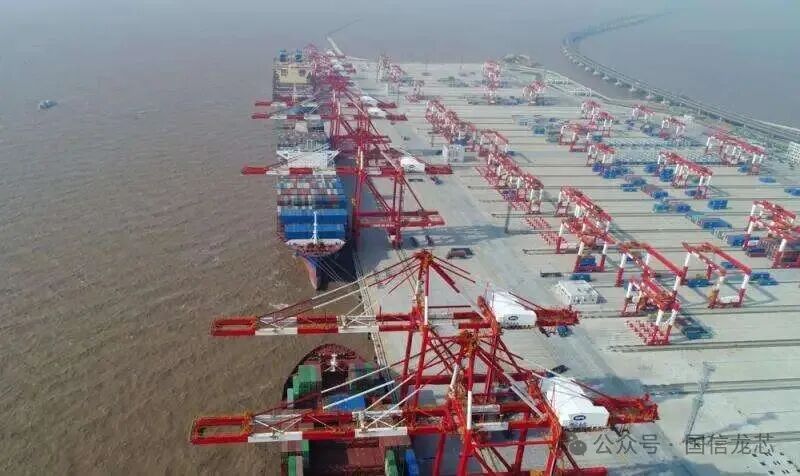
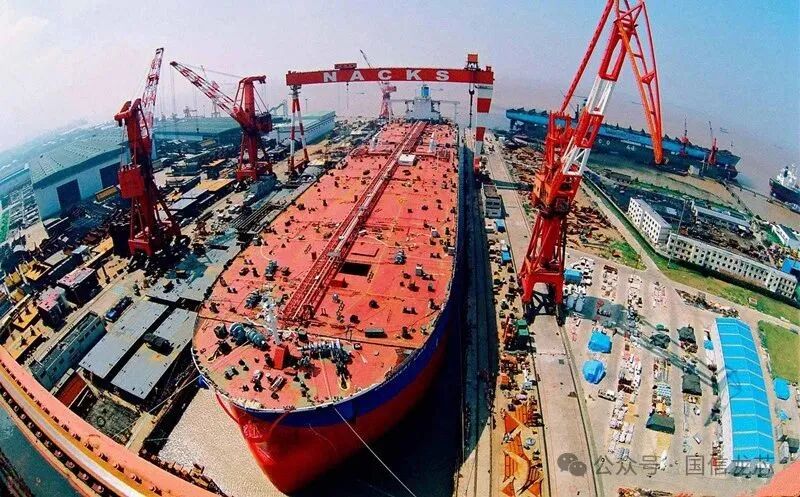
Cranes are widely deployed in ports, railways, heavy industry plants, logistics parks and other scenarios. The equipment includes but is not limited to quay cranes, rubber-tyred gantry cranes, rail-mounted gantry cranes, gantry cranes, portal cranes, industrial overhead travelling cranes, ship loaders, ship unloaders and straddle carriers, which undertake core operations such as cargo loading and unloading, yard transportation and hoisting of heavy components.
A reliable, secure and stable network is one of the critical prerequisites for crane dispatching, administration, operation & maintenance, as well as unmanned operations. Given the mobility of cranes, wireless networks stand as the preferred connectivity option.
Cranes typically operate in extremely harsh environments. Coastal ports suffer from corrosive salt fog, high humidity, strong winds, thunderstorms and other harsh weather conditions. Factory plants and cargo yards feature dense steel structures and densely arranged operating equipment, resulting in severe electromagnetic interference and drastic temperature fluctuations. Such complex communication environments are typical scenarios where conventional wireless networks are widely adopted yet fail to deliver sufficient reliability, security and stability.
Traditional wired trailing cables are repeatedly pulled and strained as equipment moves over long-term operation, making them prone to damage and breakage. This leads to high operation & maintenance costs and heavy production downtime losses. Conventional commercial Wi-Fi features poor anti-interference performance and laggy roaming handover, which makes it incapable of supporting industrial control services. Operator public 5G networks suffer from bandwidth contention, unstable latency and insufficient security, rendering them unsuitable for private production networks.
This solution leverages three categories of wireless technologies from Guoxin Longxin: Wireless Local Area Network (WLAN), Wireless Metropolitan Area Network (WMAN) and Wireless Wide Area Network (WWAN). The covered wireless products and technologies include the iMAX wireless metropolitan network, multi-mode MESH, integrated communication-sensing, millimeter-wave networks, leaky waveguide tubes, medium & high-frequency leaky coaxial cables, etc. The applicable scenarios cover common services such as RCMS equipment management & control, high-definition surveillance, remote network management, remote operation and unmanned work, as well as special intelligent scenarios including anti-collision protection, intelligent spreaders, electronic fencing, digital twins and tandem lifting with two cranes.
The overall design adheres to the principles of independent private network, service isolation, redundant hot standby and stability priority, to meet communication demands for intelligent and unmanned upgrading of both new and existing cranes.

II. Wireless Product Portfolio and Technical Selection

(1) Wireless Local Area Network (WLAN): Wi-Fi Terminal Access Layer

As an extension of local area networks, WLAN mainly provides internet access for edge intelligent terminals, and does not carry core industrial data such as equipment control and safety monitoring. It delivers network connectivity for on-site inspection tablets, smartphones, RFID scanners and office PCs to fulfill lightweight demands including data collection, account entry and on-site office work. Its core applied technologies and products include Wi-Fi APs and wireless bridges.
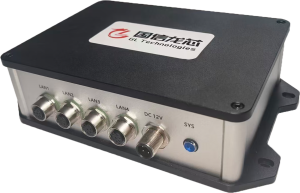
  • iMAX-ACG600 Dual-Mode Wi-Fi Gateway: Supports both metropolitan network backbone backhaul and 2.4 GHz Wi-Fi coverage simultaneously. A single unit delivers wide coverage, satisfying the construction of Wi-Fi coverage systems for large-scale yards and factory zones. Separate backhaul optical cables are not required; data can be automatically transmitted back via the wireless metropolitan network. It effectively cuts construction workload and O&M costs with simple and stable networking, ideal for low-cost networking in wide-area scenarios.
BreezeAIR Industrial-Grade Wireless Bridge: Adopts military-grade outdoor industrial design with IP67 high-level protection. It withstands extreme environments including salt spray corrosion, high & low temperatures, heavy dust, thunderstorms and intense sunlight exposure, perfectly fitting harsh deployment positions such as crane high elevations and open-air yards.
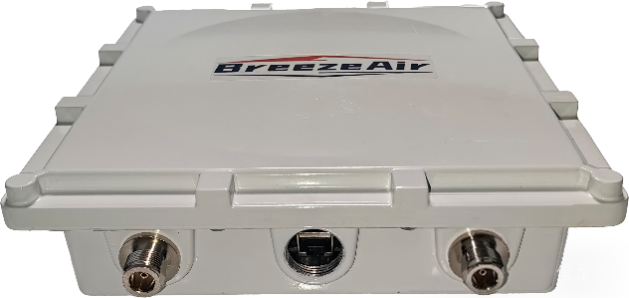
Scenarios & Model Selection:For local Wi-Fi coverage of cranes, adopt the iMAX-ACG600 dual-mode Wi-Fi gateway.For crane networking scenarios without remote control functions, with low requirements on reliability and security yet tight cost constraints, the BreezeAIR wireless bridge solution is applicable.(2) Wireless Metropolitan Area Network (WMAN): Construction of High-Reliability Private Networks for Cranes

The iMAX wireless MAN system serves as the core solution for building private networks of crane intelligent control systems. It supports independent dedicated networking without reliance on operator base stations, eliminating bandwidth contention and public network interference.

The system supports multiple networking modes including point-to-point, point-to-multipoint, VRRP hot standby, routed ring networks and centerless MESH mesh networks. Its maximum line-of-sight transmission distance reaches 50 kilometers, with a single base station coverage radius up to 10 kilometers (the typical communication radius of base stations for mobile crane scenarios is 5 kilometers), making it ideal for clustered crane networking in large ports, factories and industrial parks.

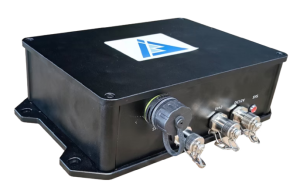
  • Backbone Series — iMAX-6000: Single-hop bandwidth ranges from 150 Mbps to 600 Mbps, with built-in multi-frequency multi-mode hot standby capability. As the core aggregation node of the park, it uniformly collects data from all front-end devices and connects to core equipment in the machine room.
  • Access Series — iMAX-8000:
    1. iMAX-8000S: A 100 Mbps high-reliability outdoor MAN networking device featuring low power consumption and strong anti-interference performance. Suitable for scenarios with low bandwidth demands such as RCMS data transmission of medium & small overhead travelling cranes and portal cranes.
    2. iMAX-8000H: Delivers bandwidth of 300–600 Mbps, capable of carrying numerous 4K high-definition video streams and high-precision remote control commands simultaneously. Adapted for high-definition video transmission of quay cranes, rubber-tyred gantry cranes and rail-mounted gantry cranes.
    3. iMAX-8000W: A dedicated waveguide communication system matched with leaky waveguides, designed to build highly reliable networks for remote control and unmanned operation of rail-mounted unmanned cranes, applicable to operation sites with heavy signal blockage and severe electromagnetic interference.
    4. iMAX-8000M: Adopts multi-frequency multi-mode MESH architecture, suitable for centerless mesh networking requiring ultra-high reliability.
The system supports network technologies including VLAN, QoS, RSTP, VPN, hardware firewalls and dynamic routing. It achieves service isolation among control signals, video streams and sensor data, prioritizes the transmission of control data, and enhances the security, stability and reliability of the private network.

(3) Wireless Wide Area Network (WWAN): Networking for Off-Site Remote Operation & Maintenance

WWAN addresses remote interconnection across factories and regions, applicable to group-wide multi-site management, remote equipment maintenance by manufacturers, cloud data synchronization and other scenarios.

The solution adopts hardware VPN + SD-CX cloud switching technology to build encrypted virtual private networks over public networks. It replaces costly operator leased lines, enables secure communication between off-site worksites, group cloud platforms and headquarters machine rooms, cuts networking costs and improves the efficiency of remote maintenance.

  • iMWB-5GW1000 5G Multi-Mode Gateway: Compatible with SA/NSA dual-mode 5G and Wi-Fi 6, acting as an edge VPN access device. It connects to the local iMAX private network and transmits encrypted data to the cloud via 5G public network, supporting remote equipment debugging, fault troubleshooting and status monitoring at off-site locations.
  • iMAX-4GW300 Dual-Mode Gateway: Integrates the iMAX private network and 4G LTE network with high cost performance, suitable for regular remote management of scattered cranes across multiple factories of small and medium-sized enterprises.
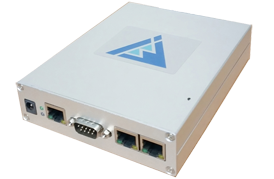
The entire wide area network adopts hardware-level IPSec and L2TP tunnel encryption. The private network is logically isolated from the Internet, which effectively defends against external network attacks and data tampering, ensuring secure and stable off-site operation and maintenance.
(4) Specialized Featured Wireless Products & Technologies
1. Multi-Mode MESH Wireless Products
The newly launched iMAX multi-mode MESH system iMAX-8000M is deployed to construct a centerless self-organizing network. Cranes, AGVs and ground base stations can all serve as relay nodes, and any node can establish direct connections.Each device supports up to 4 parallel links. If any link fails or suffers signal occlusion, data will automatically switch to alternate links for rerouting. The system enables seamless roaming to maintain uninterrupted remote operations.The equipment supports multi-mode access including private network, Wi-Fi and leaky coaxial cables, featuring flexible networking and high fault tolerance. It is applicable to crane networking scenarios with extremely high reliability requirements and severe signal obstruction, such as aging yards and underground mining machinery retrofitting projects.


2.Integrated Communication-Sensing Wireless Terminal System
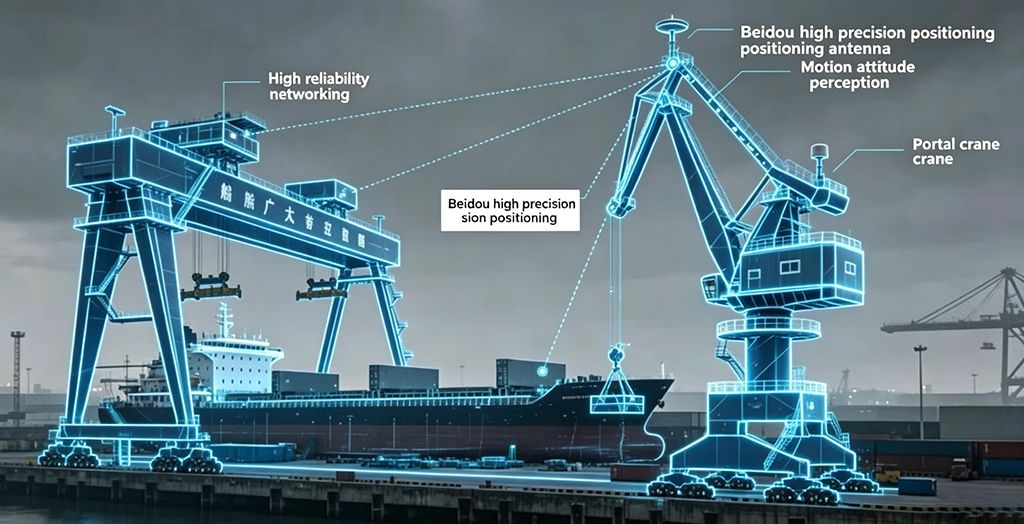
This system integrates highly reliable wireless private network, high-precision satellite positioning and motion attitude sensing functions, and is installed on key positions such as crane spreaders and trolley frames. It can simultaneously complete the backhaul of position data, anti-collision monitoring, motion speed and other status sensing.
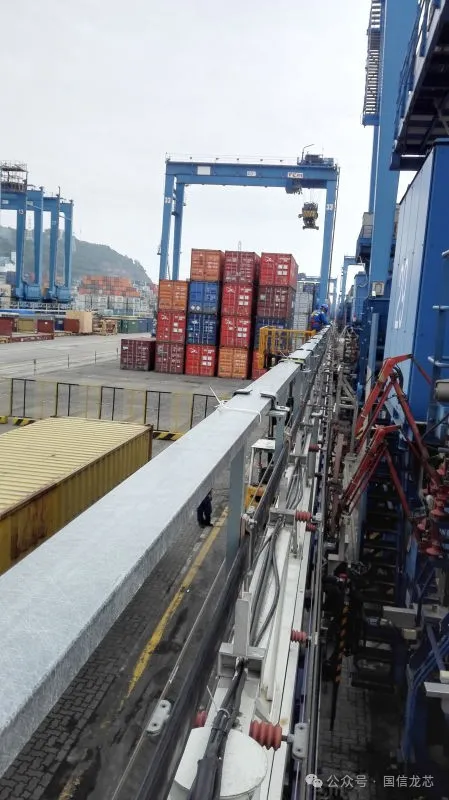
It realizes the integration of network communication and sensing, simplifies the front-end hardware architecture, and provides development APIs and program samples. It delivers a cost-effective solution that cuts costs and boosts efficiency for intelligent systems including crane remote control & unmanned operation, anti-collision protection, electronic fencing and digital twins.3.Millimeter-Wave Wireless System
Adopting industrial high-frequency millimeter-wave technology (60 GHz and E-band), this system boasts advantages of large bandwidth, low latency, strong anti-interference capability and high synchronization performance. It can support high-bandwidth services such as digital twin modeling for cranes and 4K/8K ultra-high-definition video transmission, effectively resist electromagnetic interference in port and factory zones, and is applicable to intelligent unmanned hoisting operations of gantry cranes.

4.Leaky Waveguide Wireless Technology

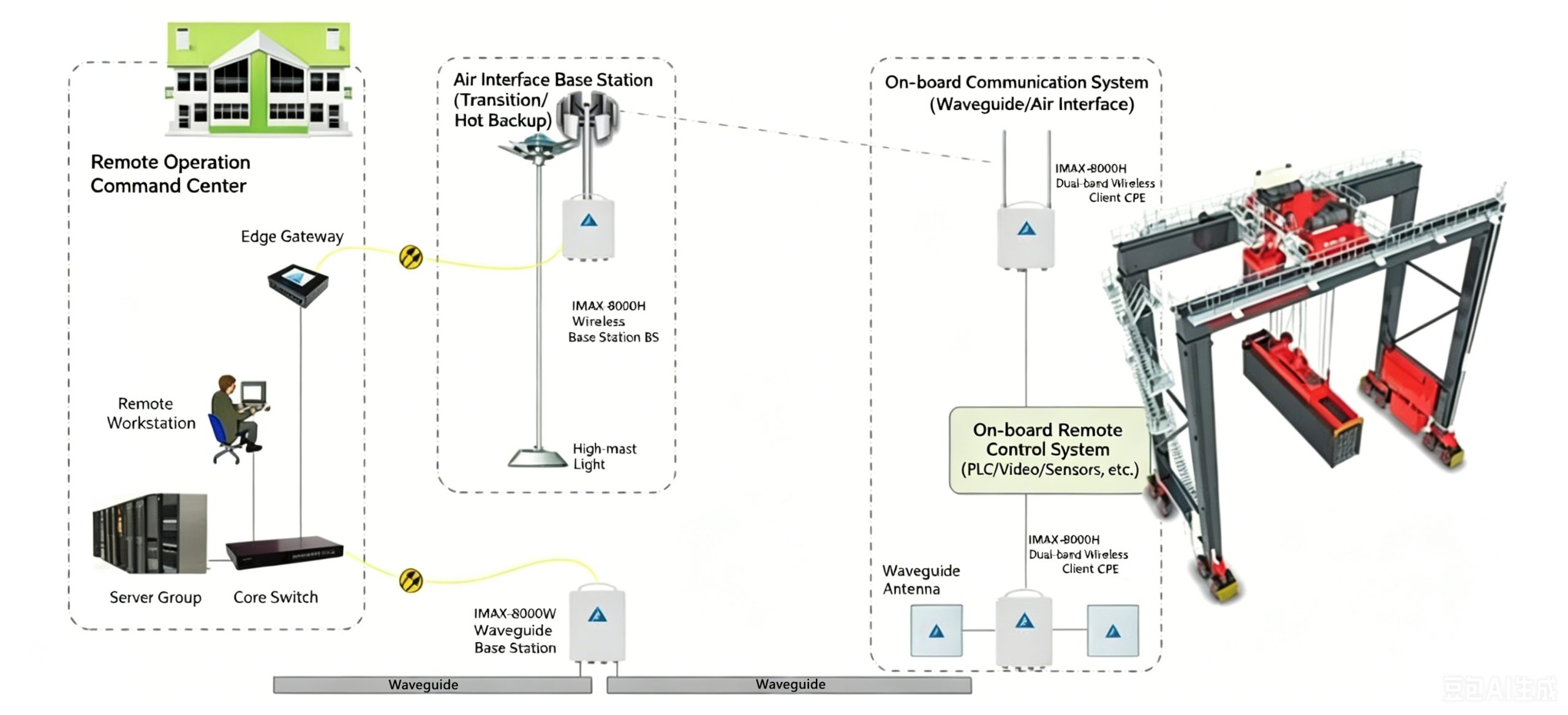
This anti-interference and high-reliability networking solution is tailor-made for rubber-tyred gantry cranes, rail-mounted gantry cranes, overhead travelling cranes and other equipment. Customized leaky waveguides are laid along the equipment tracks, which form dedicated closed communication links in coordination with the iMAX-8000W system, while air interface wireless links are deployed for hot standby redundancy design.

Wireless signals propagate inside the waveguide and leak directionally through slits, free from signal blockage caused by steel structures, containers and other obstacles. It delivers outstanding anti-interference performance, resulting in an extremely low packet loss rate and guaranteed stable bandwidth. Combined with wireless air interfaces to build dual-link hot standby, it serves as the preferred communication method for unmanned operation of various cranes in anti-interference scenarios.

For key technical points regarding waveguide technology applied to cranes, please refer to Application of Waveguide Communication in Intelligent Control of Heavy Machinery.
5. Medium & High-Frequency Leaky Coaxial Cable Technology
Leaky coaxial cables integrate signal transmission and antenna radiation capabilities, featuring easy installation and lower costs. Matched with the iMAX-8000S or iMAX-8000AI system, this technology satisfies data transmission, video surveillance and unmanned remote control demands for overhead travelling cranes, semi-jib cranes, electromagnetic cranes and other lifting equipment. It is suitable for intelligent crane control scenarios with severe electromagnetic interference, limited budgets and low bandwidth requirements.

III. Solutions for Conventional Crane Service Scenarios

(1) Networking for RCMS Crane Remote Control & Management System

RCMS is a standard core system equipped on cranes, which mainly collects equipment PLC operating parameters, fault codes, energy consumption data and maintenance records, imposing strict requirements on network real-time performance and stability.
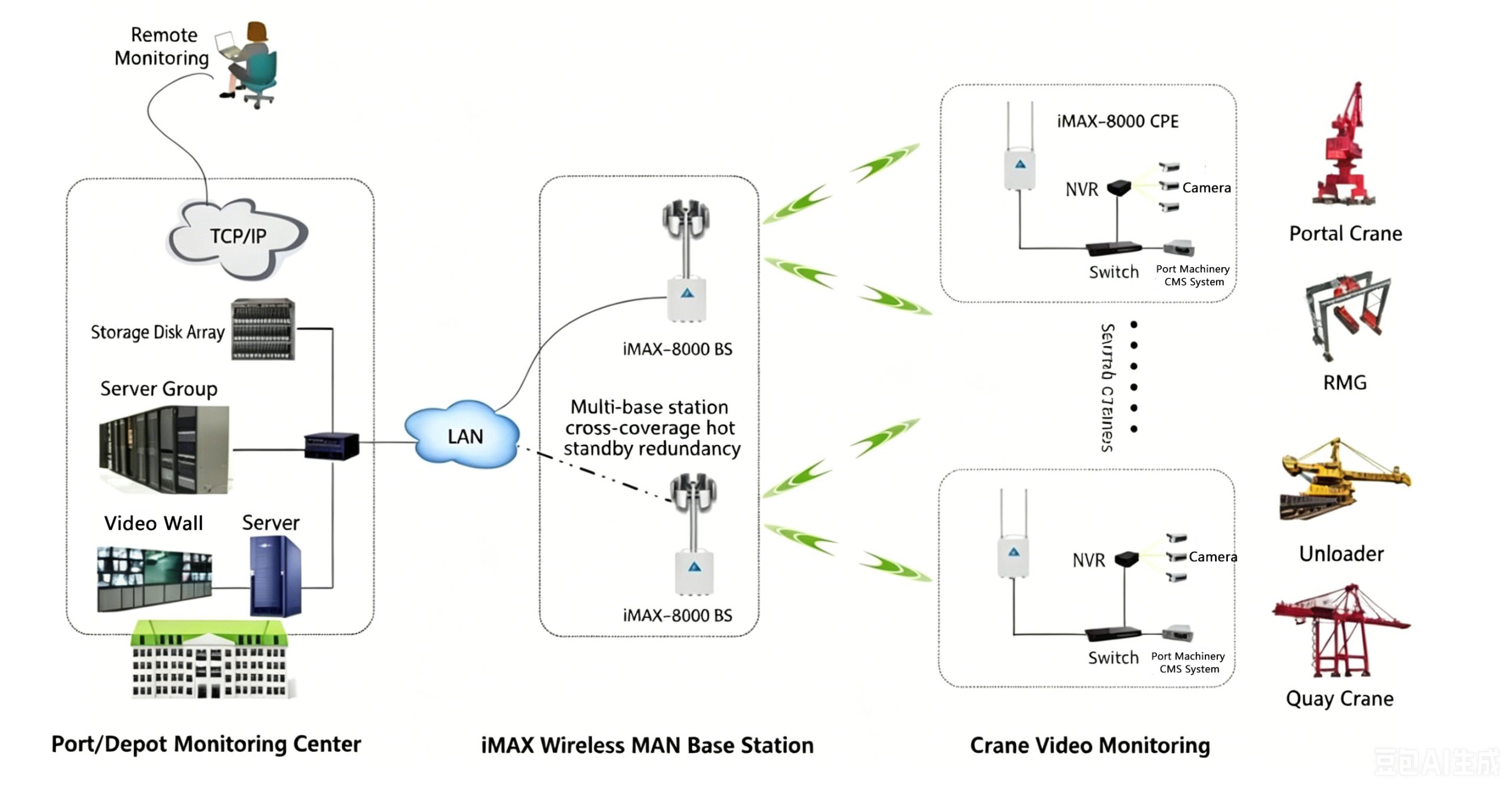
Guoxin’s solution adopts a point-to-multipoint converged networking architecture of “central base station + on-site CPE”. iMAX backbone base stations are deployed in central control rooms or on high lighting poles, with multiple base stations (BS) arranged to deliver overlapping cross coverage across operation zones. Each crane is equipped with a dedicated dual-mode wireless CPE terminal connected to the control cabinet to realize highly reliable networking.
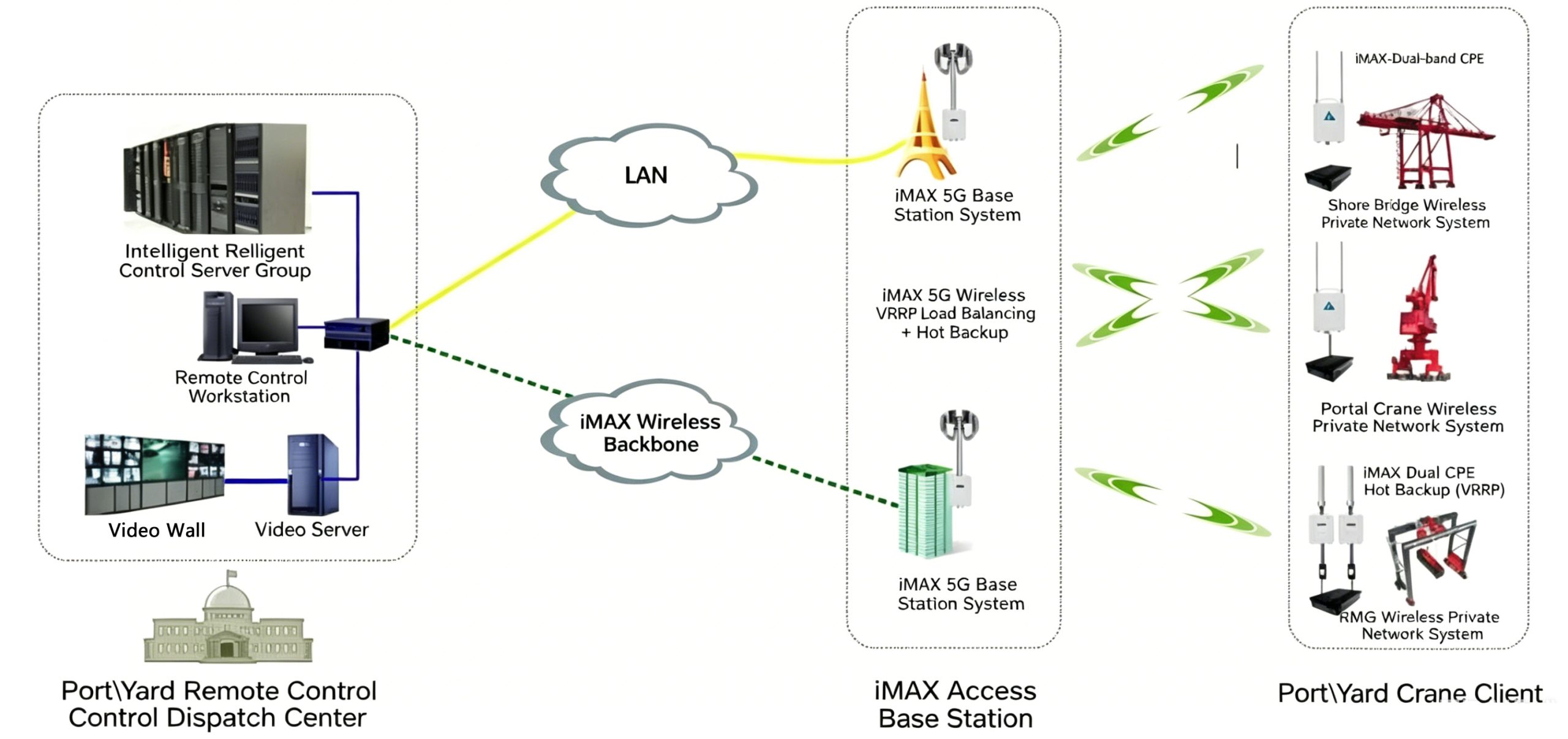
Dual omnidirectional antennas or even four omnidirectional antennas can be installed on portal cranes to completely eliminate signal blockage caused by equipment rotation. RCMS data is assigned to an independent VLAN to achieve isolation from other service traffic. Routing ring networking enables seamless roaming and automatic failover for devices. If base stations are customized with integrated 4G/5G wireless modules, they can also support remote operation & maintenance, fault troubleshooting and equipment status monitoring.
Our official video account shares RCMS networking cases of dozens of cranes at major domestic ports as well as overseas RCMS projects, which you may search and view on your own.

(2) Networking Solution for High-Definition IP Video Surveillance of Cranes

This solution supports networking for crane high-definition video surveillance systems, capable of transmitting all ultra-high-definition video formats including 1080P, 2K and 4K. Cameras are mounted on spreaders, trolley frames and surrounding operation zones to facilitate remote visual operation, on-site safety supervision and AI intelligent analysis.
Multiple video streams are aggregated via iMAX wireless MAN equipment and transmitted back to NVRs and monitoring display walls in the machine room in a unified manner. The system integrates video surveillance, voice intercom and emergency broadcast into one converged network. It can interconnect with an AI intelligent analysis platform to automatically identify hazards such as illegal hoisting, personnel boundary crossing and equipment abnormalities, and trigger early warning alerts.

(3) Network Deployment of Remote Management and Operation & Maintenance System for Cranes
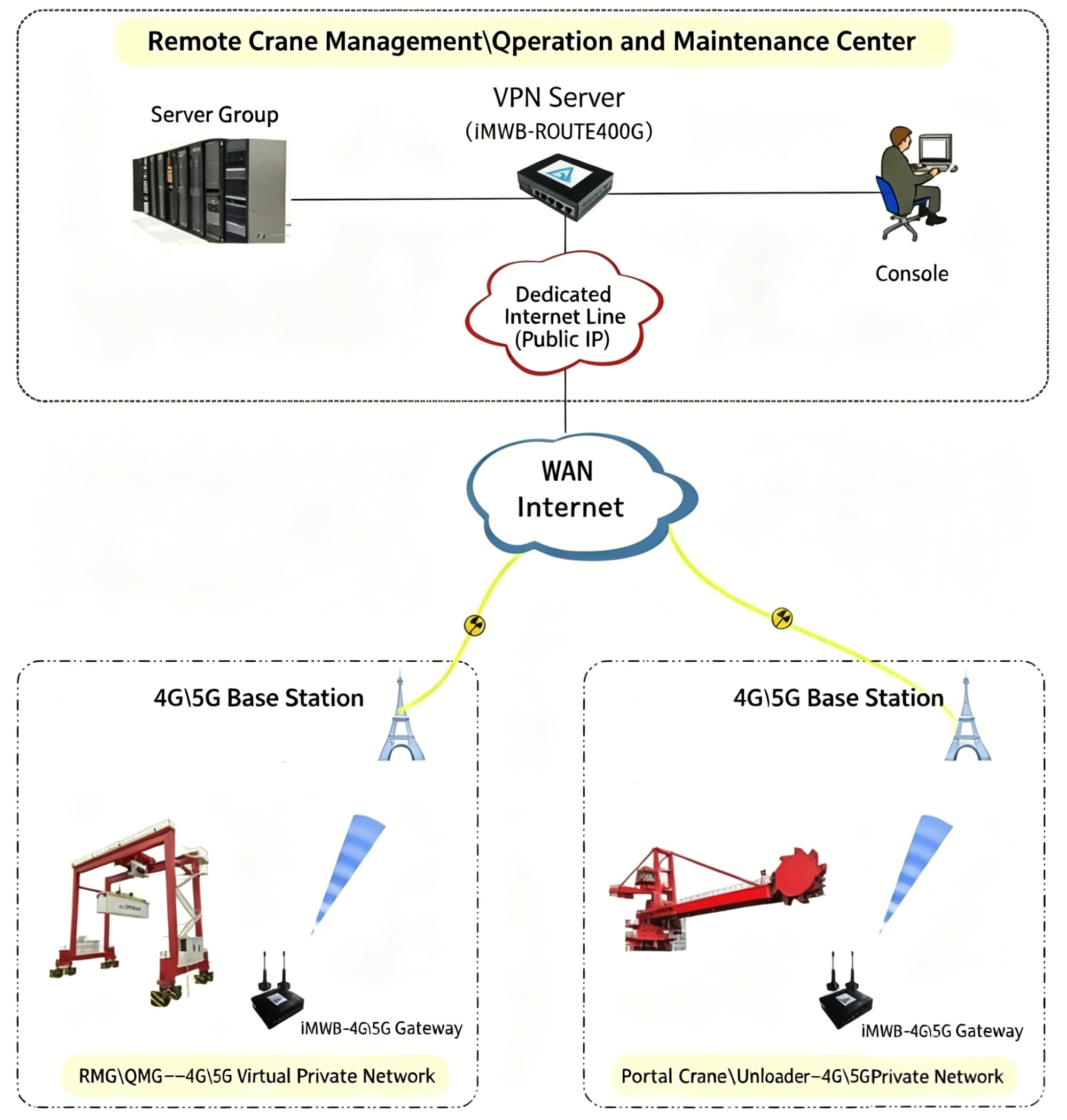
Crane manufacturers require centralized remote network control for system management, operation and maintenance of cranes. However, adopting operator private data lines comes with excessive costs and complicated coordination. The low-cost 4G/5G virtual private network solution from Guoxin Longxin is an ideal option for networking geographically dispersed cranes.
Furthermore, the on-site system can be designed and deployed in synchronization with the iMAX wireless private network system. Simply replace the iMAX client device of a crane with a dual-mode gateway integrated with 4G/5G modules to achieve full network connectivity for all on-site cranes. For the detailed solution, please refer to How to Realize Low-Cost Remote Networking via 4G/5G.
(4) Network Architecture for Remote Control and Unmanned Operation of Cranes
Remote control and unmanned operation impose stringent requirements on network latency, reliability and link redundancy.
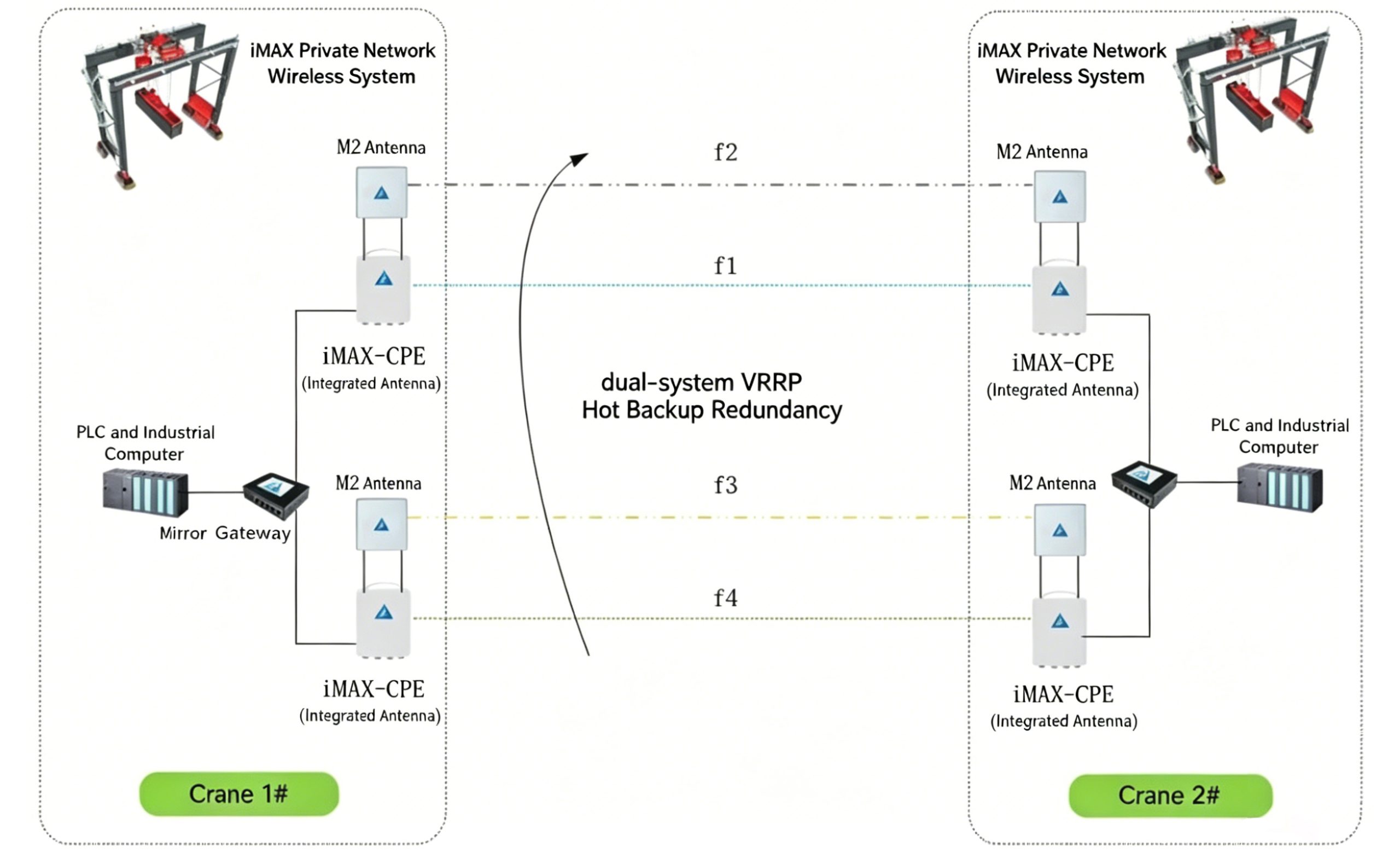
For newly built small-scale remote control and unmanned crane systems, pure wireless air interface networking is the preferred option. Dual-band CPE or dual-CPE with dual base stations can be deployed to implement VRRP load balancing and hot standby redundancy. Link switching can be completed within seconds in case of link failures, which reduces packet loss rate and improves anti-interference performance. The typical network topology diagram is shown below.
For rubber-tyred gantry cranes, rail-mounted gantry cranes and other crane types that are deployed in large quantities with high bandwidth demands, wired networking solutions such as optical cables are unreliable and lack durability. A highly reliable solution combining waveguide systems and air interface hot standby redundancy is recommended. It effectively mitigates signal blockage and electromagnetic interference to guarantee stable and controllable unmanned operations. The typical network structure diagram is shown below:
For successful cases of large-scale rubber-tyred gantry crane networking based on waveguide systems, please refer to Case Sharing of Intelligent Remote Control and Unmanned Operation for Heavy Machinery. Relevant reports are also available on the WeChat Channel.
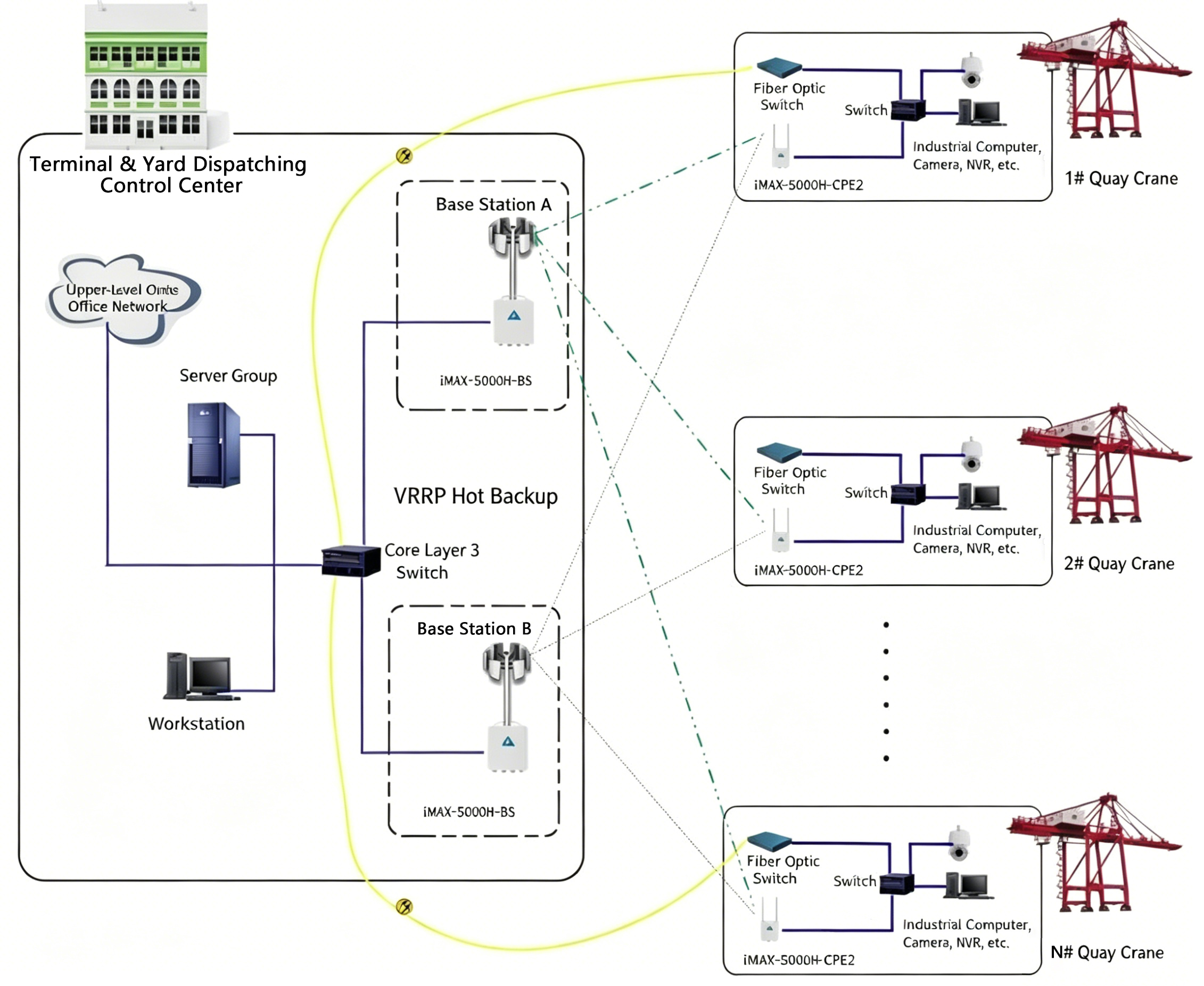
For quay cranes, gantry cranes and other equipment models, especially existing renovation projects with pre-installed dragged optical cable networks, the original optical cables can serve as the primary link, while the newly deployed iMAX wireless private network acts as a hot standby link. This solution prevents equipment shutdown failures caused by aging or broken optical cables. The typical network topology diagram is shown below:
For successful networking cases of cranes adopting wireless metropolitan private network as hot standby for optical fiber links, please refer to High-Reliability Redundant Networking Cases of Optical Fiber and Wireless for Intelligent Crane Control.

IV. Solutions for Special Intelligent Scenarios

(I) Networking for Crane Anti-Collision System
Multiple cranes frequently operate in cross-modes at ports and industrial yards, bringing common safety hazards such as equipment scraping, collisions and spreader interference. Traditional manual observation and walkie-talkie communication feature slow response and low fault tolerance, failing to adapt to automated cluster operations.
This solution builds a low-latency, high-reliability industrial sensing network based on iMAX 5G private network, MESH self-organizing network or integrated communication-sensing terminals. Each crane is equipped with sensing and positioning devices to collect real-time data including equipment position, travelling speed, lifting height, spreader posture and equipment spacing. All data is uploaded to the central control platform within milliseconds via the private network.
Platform software integrators can independently program intelligent algorithms to proactively predict risks such as equipment crossing, close-range interleaving and spreader overlapping, and trigger protective measures in advance including early warning, speed limiting and emergency braking.
In cases of steel structure occlusion, weak signal and other unfavorable conditions, both the multi-base-station cross-coverage redundant hot standby networking scheme and multi-mode centerless MESH networking scheme can guarantee non-interrupted data transmission.
 
The system supports hybrid networking of anti-collision data, video streams and dispatching services. Anti-collision data can be configured with the highest priority to avoid bandwidth occupation by video and operation & maintenance data, so as to realize all-weather stable anti-collision protection.
 
For the complete anti-collision solution of shipyard cranes, please refer to Wireless Private Network Solution for Intelligent Control Systems of Shipyards. Relevant case videos are posted on our official WeChat Channel.
(II) Networking for Intelligent Spreader Systems
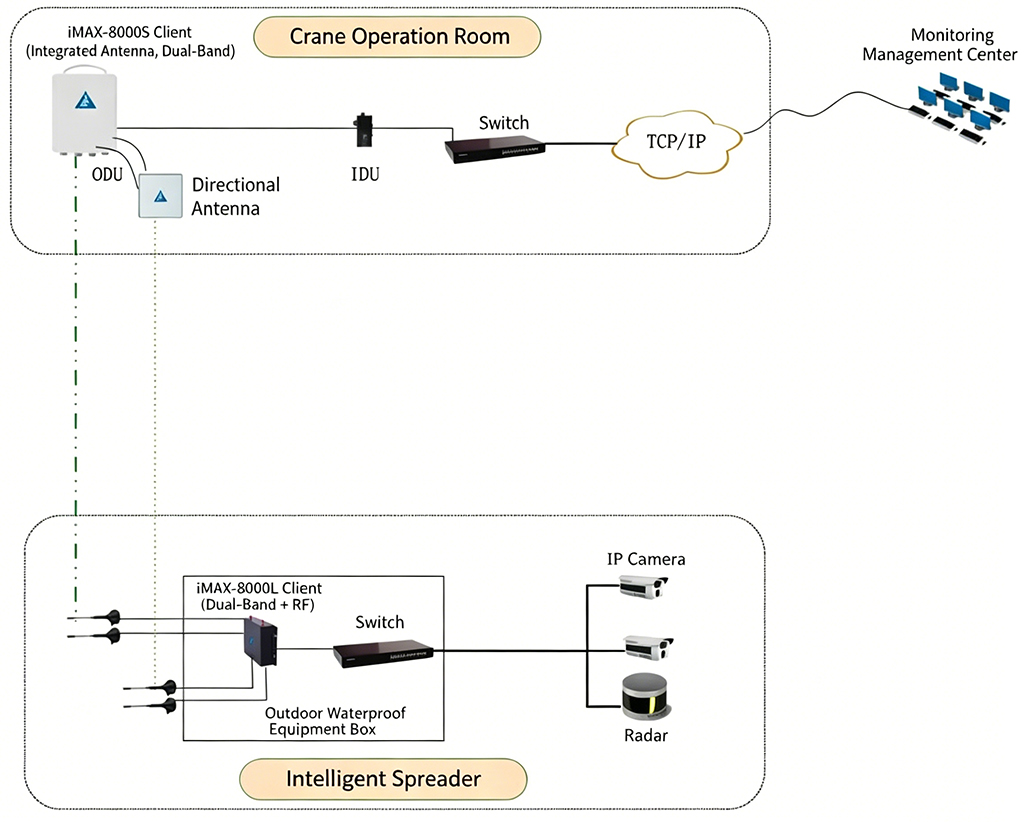
Intelligent spreaders are indispensable components for the intelligent upgrading of most cranes. Fitted with cameras, LiDAR and other sensors, spreaders are equipped with built-in functions including attitude sensing, automatic twistlock alignment, weight monitoring and fault self-inspection, which are core requirements for high-precision lifting operations.
Although the communication distance of spreaders is short, repeated hoisting operations make wired networking solutions such as optical cables vulnerable to aging and damage with high overall costs.
Intelligent spreaders require free rotation and operate under harsh working conditions with heavy vibration and intense electromagnetic interference. If devices like wireless bridges are used for wireless connection, frequent link disconnections will occur due to signal interference and mechanical movement, failing to meet the requirement of continuous network access for intelligent spreaders.
Guoxin Longxin installs dual-mode iMAX private network equipment on crane trolleys, and compact, lightweight, low-power indoor dual-mode iMAX private network devices on spreaders. The dual-band, dual-mode multi-antenna design enables stable networking for spreaders at low cost.
Supported by sufficient bandwidth, the system can simultaneously transmit high-definition attitude videos of spreaders, as well as high-bandwidth data from millimeter wave or LiDAR, helping remote operators accurately judge operating conditions.
The system can interconnect with RCMS or remote control & unmanned operation platforms to realize automatic early warning and fine adjustment for overload and abnormal attitude, meeting the requirements of high-precision and high-safety lifting operations.
(III) Network Architecture for Crane Electronic Fence Management
Leveraging the high-precision transmission and positioning capabilities of the private network, the system supports configurable fixed electronic operation fences and temporary dynamic operation fences to mark hazardous working zones for cranes.
Communication-sensing integrated devices collect and exchange real-time location data of cranes and working vehicles, accurately identifying safe zones to prevent dangerous behaviors such as boundary crossing and illegal lingering. Early warning signals will be pushed instantly to avoid crane operations exceeding safe areas.
The system supports hybrid networking of video, data and voice services. With the QoS priority mechanism, safety warning data is transmitted preferentially to achieve zero-latency response, effectively preventing cranes from driving out of safe zones and improving on-site safety management capacity.
(IV) Digital Twin Visualization Networking
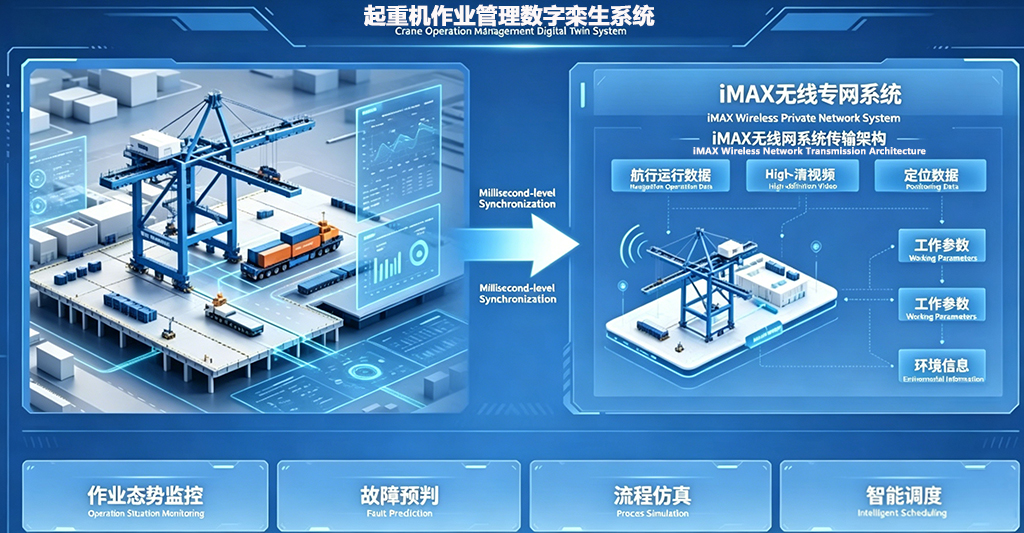
Digital twin systems reconstruct 3D simulations of crane operating status and working procedures, which impose strict requirements on bandwidth, latency and data synchronization.
Taking the iMAX wireless private network system as the core transmission carrier, this solution transmits massive real-time data including crane operation data, high-definition videos, positioning information, working parameters and environmental data. It realizes millisecond-level synchronization between physical equipment and virtual models. The abundant bandwidth supports full-site data aggregation and real-time 3D rendering, enabling crane operation situation monitoring, fault prediction, process simulation and intelligent dispatching. It facilitates digital, visualized and intelligent management of the entire crane operation workflow.
(V) Networking for Dual-Crane Lifting Coordination
Dual-crane tandem lifting is widely adopted for hoisting extra-large and ultra-heavy components. Such operations feature high difficulty and safety risks, requiring two cranes to maintain highly consistent attitude, travelling speed and load bearing force, which imposes stringent demands on communication latency, synchronization and reliability.
This solution adopts the iMAX wireless private network or MESH self-organizing network architecture to enable real-time data exchange between the two cranes, realizing synchronous transmission of coordination data including load weight, spreader attitude, travelling speed and lifting height.
The system supports precise clock synchronization and millisecond-level response for command linkage, eliminating safety hazards such as asynchronous operation, uneven force bearing and component tilting.
In addition, dual-link data mirroring is deployed to greatly strengthen anti-interference performance in harsh environments including shipyards. For customers with stringent reliability requirements for equipment, multiple devices can be deployed to realize device-level hot standby redundancy, eliminating the risk of single-point link disconnection and ensuring smooth, safe and controllable dual-crane coordinated lifting throughout the whole operation.
Case videos of dual-crane synchronous tandem lifting are available on our official WeChat Channel.

V. Summary

Although the crane networking system only accounts for a small proportion of the total investment in crane intelligent control projects, the network serves as the fundamental foundation of the whole intelligent control system. Any network failure may trigger total system collapse, which makes the reliability, security and stability of wireless networks extremely critical.
It is no exaggeration to state that many system integrators adopt low-cost, unreliable wireless products, which trigger various network faults and become the core cause of project failure or unfinished construction.
For knowledge about wireless network reliability design including route planning and network redundant architecture design, please refer to our articles How Important Is Routing Technology for Wireless Systems? and How to Ensure High Reliability of Wireless Network Systems?
Crane networking projects (especially remote control projects) must guarantee network security to prevent severe accidents caused by system intrusion and hijacking. To learn about network security guarantee measures, please check the article Never Ignore Cybersecurity — You Cannot Afford the Consequences.
Moreover, we provide dedicated solutions and case collections for the most common overhead traveling crane networking scenarios in factories, which can be found in Wireless Private Network Solution for Intelligent Control of Overhead Traveling Cranes and High-Reliability Private Network Case Collection for Intelligent Overhead Cranes.
In conclusion, most crane wireless networking projects require customized design tailored to users’ actual site conditions. Relying on our premium wireless network products, proprietary technologies and years of accumulated project experience, Guoxin Longxin’s core competency lies in delivering customized, cost-effective, highly reliable and maintenance-free networking solutions for customers.
0
希望看到您的想法,请您发表评论x