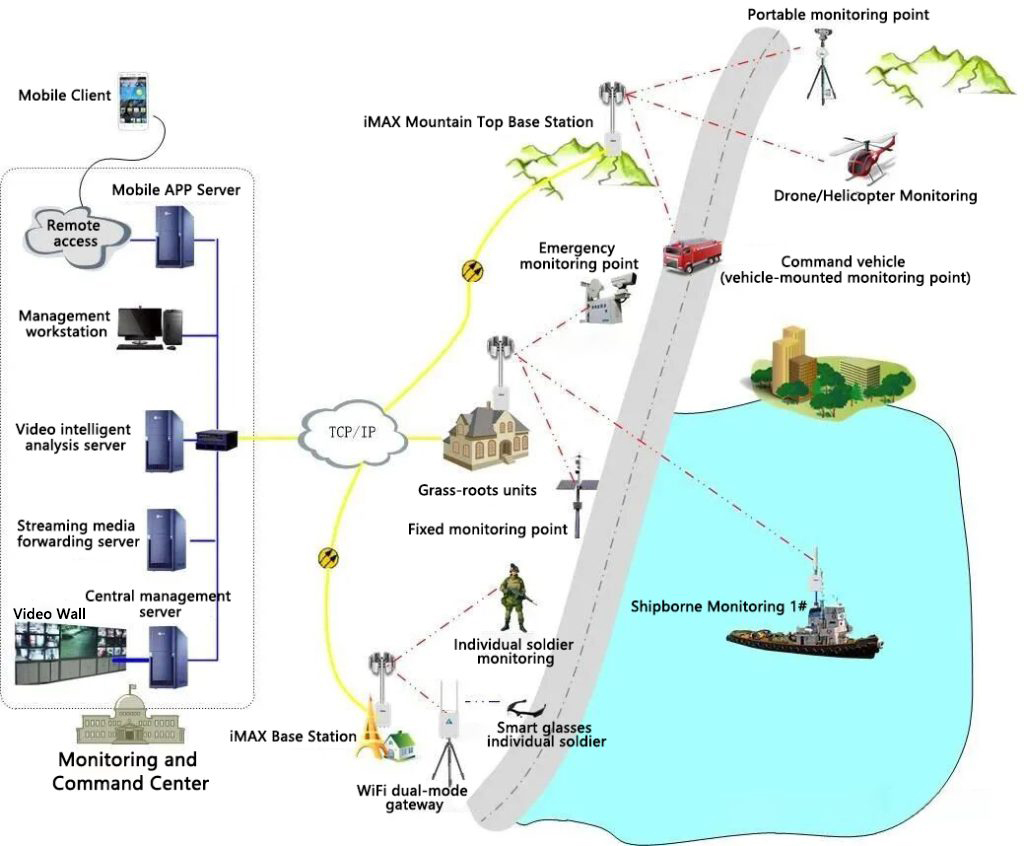
With the development of the economy and society and the intensified impact of global climate change, extreme weather events occur frequently, and the drought and flood situation has become more complex. Strengthening emergency management and improving the ability to prevent and handle emergencies is a major issue bearing on the overall economic and social development of the country and the safety of people’s lives and property. It is an important part of building a harmonious socialist society, a key embodiment of adhering to people-oriented governance and governing for the people, and a crucial aspect of fully performing government functions and further enhancing administrative capacity. By strengthening emergency management and establishing and improving social early warning mechanisms, emergency response mechanisms for unexpected incidents and social mobilization mechanisms, we can prevent and minimize unexpected incidents and their damages to the greatest extent, safeguard public life and property safety, uphold national security and social stability, and promote the comprehensive, coordinated and sustainable development of the economy and society.
The Chinese government has always attached great importance to flood control and drought relief work, which implements the administrative chief responsibility system. Flood control and drought relief work requires the scientific scheduling of water resources. For long-term development, it is imperative to strengthen the construction of flood control and drought relief infrastructure, promote the rational utilization and protection of water resources, and improve the level of disaster prevention and mitigation. It is also necessary to enhance weather forecasting and disaster monitoring and early warning, strengthen duty performance during flood seasons, dam patrol and hazard inspection, and emergency hazard mitigation to avoid casualties. The integrated application of scientific and technological means represented by the Internet of Things is indispensable for improving the level of flood control and drought relief.
Specifically, for flood control and drought relief, advanced information technologies such as broadband communication, networking, digital video surveillance and intelligent control should be widely applied at key locations including river courses, dykes, reservoirs, canals and pumping stations. We should fully collect and utilize relevant information resources to directly support decision-making for flood control, drought relief, disaster reduction, the comprehensive management of water resource development, utilization, allocation, conservation and protection, as well as water environment protection and governance, so as to raise the level of scientific management. In particular, the construction of real-time flood early warning systems based on big data and cloud computing is of great significance for flood control and disaster mitigation.
In the construction of water conservancy emergency IT and intelligent systems such as watershed flow intelligent management systems, flood control and drought relief emergency command systems, flood early warning and monitoring systems, and emergency rescue command and dispatch systems, Guoxin Longxin aims to solve the following key challenges for integrators and users in the water conservancy and emergency industries:
Guoxin Longxin’s network systems are primarily designed to address the critical “networking difficulty” in emergency management for disaster relief. In disaster-stricken areas, regular basic telecommunication means (e.g., mobile phones) are often damaged. Relying solely on the emergency repair capacity of telecom operators can hardly meet the needs of disaster relief, and a private network system independent of public networks is essential to guarantee disaster relief operations. The iMAX 5G Wireless Metropolitan Area Network (MAN) system is one of the ideal solutions for such applications.
Information points for flood control and drought relief (e.g., dykes, pumping stations, rainfall stations, hydrological stations, sluice gates, etc.) are mostly scattered and located in remote areas, while the data volume is generally small. For most of these points, wired optical networks are not suitable for networking and data transmission in terms of economy, ease of operation and system feasibility.
Although telecom operators’ 4G/5G technology can meet the needs of small-data, non-real-time transmission, it has significant limitations, as follows:
➊ Prohibitive operational costs: Monthly rental fees accrue continuously during system operation. In particular, HD video services incur exorbitant traffic charges based on data package billing, which are simply unaffordable. Moreover, real-time HD video surveillance for water conservancy facilities cannot be supported by 4G/5G technology, and a broadband private network access system is a must.
➋ Unreliable signal coverage: Data transmission relies on operators’ cellular networks, which are restricted by base station deployment. Communication quality and reliability cannot be guaranteed in remote rural and wild areas—precisely the most critical areas for flood control and drought relief. Constructing a highly reliable and large-capacity private network is therefore inevitable for flood control and drought relief work.
➌ Poor security and reliability: Exclusive use of a private network is the first choice for flood control and drought relief systems. Systems relying on third-party networks such as telecom operators during disasters cannot be deemed emergency networks at all. In addition, connecting to the open Internet via public networks faces the threat of cyber intrusion, and system security cannot be guaranteed without a professional security team.
Based on the above analysis, 4G/5G technology is only suitable as a backup communication means for the system. The adoption of a “private network for exclusive use” broadband wireless MAN private network is the most suitable networking and transmission solution for water conservancy emergency informatization construction, especially in outdoor reservoir and river course environments. As the most mature and cost-effective broadband wireless solution in China and even globally, Guoxin Longxin’s iMAX Wireless MAN private network (virtual private network) solution is undoubtedly the optimal choice.
Taking the flood control and drought relief dyke monitoring system as an example, the design concept is as follows:
In response to the basic needs of flood prevention and control, water conservancy bureaus and emergency management bureaus need to deploy watershed management monitoring points along river courses, rivers and irrigation canals, and build networked digital video surveillance systems or watershed water conservancy management systems. Through such systems, all-round real-time monitoring of river basins is not only a necessity for flood prevention, disaster control and dam protection, but also an essential means to reduce labor input in daily work. Its unique requirement lies in the long coverage of watersheds, which demands a long-distance, high-bandwidth and large-capacity wireless solution to meet operational needs.
Typical application topology diagram for river dyke early warning and command is shown below:
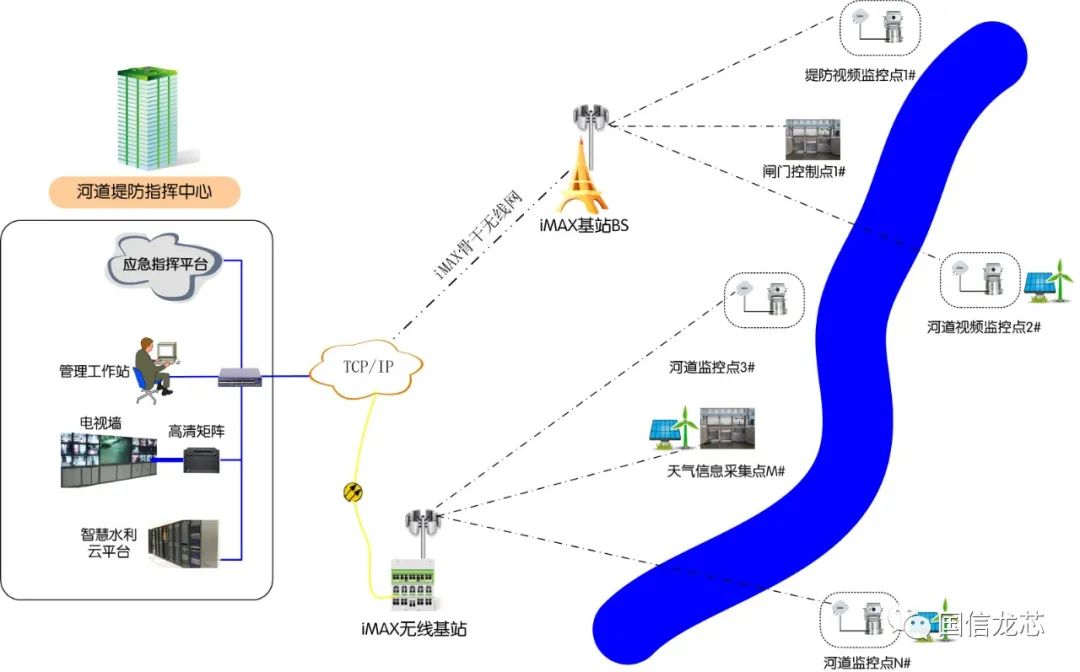
Monitoring and detection points are often located in remote areas, and many operate as unattended information nodes in harsh environments. Only the iMAX transmission system—featuring high reliability, ultra-long transmission range and non-line-of-sight wireless capability—can meet such operational requirements.
The iMAX 5G Wireless Metropolitan Area Network (MAN) communication system is designed to build wireless cities and enable ultra-long-distance outdoor network interconnection, with all product series delivering extended transmission ranges. Among the portfolio, the iMAX-6000 series serves as the urban backbone network; the iMAX-8000H/S series functions as the edge access network; for WiFi terminal access, specialized WiFi devices such as the iSAP-2450 and iMAX-ACG600 are available; and for telecom operator 4G LTE access or backup, the iMAX-4GW300 dual-mode wireless gateway system (supporting both iMAX wireless MAN and 4G LTE) is offered.
In accordance with the communication characteristics of the water conservancy industry, the wireless private network system must meet the following core technical requirements:
■ Transmission Range: Under line-of-sight conditions, even the compact iMAX 5G dedicated communication system with integrated antennas can easily achieve 10-kilometer radius coverage in point-to-multipoint mode, and a maximum transmission distance of 100 kilometers in point-to-point mode.
■ Transmission Bandwidth: The iMAX-8000H is a 600 Mbps point-to-multipoint communication system; the iMAX-8000S is a 100 Mbps point-to-multipoint communication system; the iMAX-6000 series provides 150/300/600 Mbps bandwidth for backbone networks; and the FibeAir series delivers ultra-high bandwidth of 1G to 20Gbps and above for backbone network applications.
Guoxin Longxin’s Huanyou low-frequency wireless MESH mobile communication system is a highly customized private network solution with superior security, reliability and performance, ideally suited for rapid mobile networking in emergency management scenarios.
The system comprises airborne radios, handheld radios, vehicle-mounted radios, manpack radios, fixed base stations, command consoles and a dispatch platform. It adopts a MESH wireless ad hoc networking mechanism and also supports point-to-point or point-to-multipoint bridging. The typical operating frequency is the 1400MHz band (RF modules ranging from 200~5800MHz are customizable on demand), and the system includes custom antennas, mounting fixtures and related accessories (product frequency band, housing, interfaces, etc., can all be custom-developed).
Notably, the Flybird1400 UAV wireless terminal is specially customized for UAV integration. Operating at a typical frequency of 1.4GHz (lower frequencies such as 580MHz are customizable), it leverages centerless mesh network technology and the long-transmission advantage of low frequencies—enabling UAV flight control up to 60 kilometers and HD video transmission over a typical range of 20–30 kilometers. It is therefore perfectly suited for UAV patrols in emergency scenarios and the construction of ultra-long-distance emergency communication private networks.
Guoxin Longxin has recently launched a dedicated UAV private network terminal compatible with DJI M300 and similar models (with OSDK interface), which directly fulfills the interconnection needs between UAVs and base stations/command centers. This highly customized product features enhanced ease of operation.
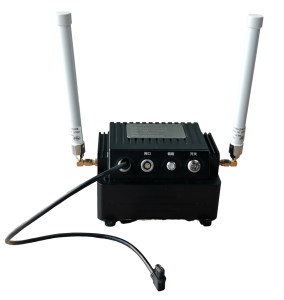
Given the extensive application of DJI M300 UAVs in the government and enterprise sector, it is evident that the high-performance Flybird1400 boasts excellent application prospects.
Guoxin Longxin’s 4G or 5G dual-mode wireless gateway is a powerful tool for enabling remote online water monitoring system networking over practical wide area networks (WANs). By deploying the iMAX-4GW300 or iMWB-5GW1000 to build a WAN-based cloud interconnection system, monitoring data such as water quality, pressure and flow in water supply networks, operation and management data, and video surveillance information can be accessed via Internet broadband, dedicated lines or 4G LTE networks, facilitating convenient centralized management and scientific operation.
The iMAX-4GW300 is a dual-mode wireless gateway system supporting both iMAX wireless metropolitan area network (MAN) and 4G LTE technologies. It can serve as an integrated switching gateway platform for multiple access methods, including optical fiber access (with FiberDC-IDU configuration), LAN interconnection, MPLS dedicated line access, Internet broadband access, iMAX wireless MAN private network access, and 4G Internet access.
This solution is a cloud platform-based Internet solution, allowing users to opt for a private cloud, public cloud or hybrid cloud. Through VPN tunnel encryption technology, scattered nodes such as sensors, cameras and electric valves on pipeline networks are integrated into a single network over the WAN. Moreover, Guoxin Longxin’s solution is constructed with a hardware VPN device-centric architecture of VPN server + VPN gateway, which undoubtedly delivers superior reliability and security.
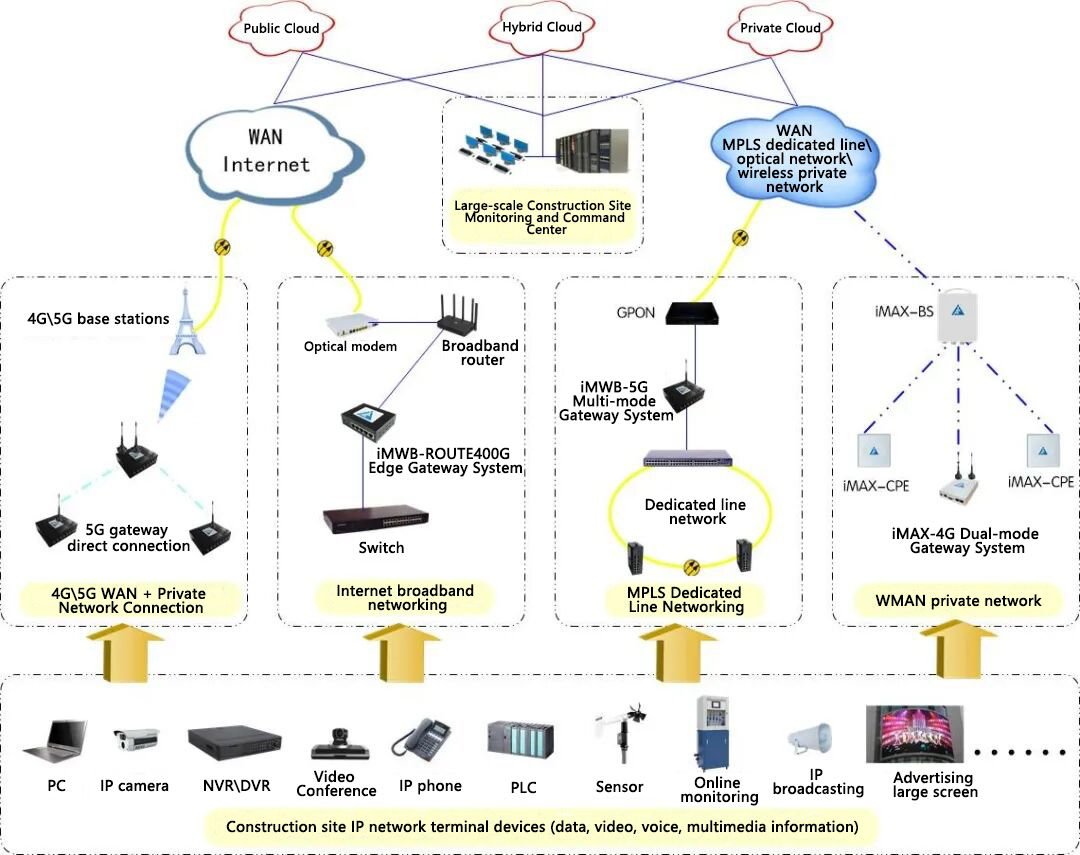
- Surveillance videos can be transmitted back to the water affairs monitoring center on demand, enabling real-time awareness of conditions at each information collection point for timely accident detection and prediction.
- For multiple information collection points on the same street or in the same area, the proprietary wireless WMAN private network mode of iMAX-4GW300 can replace optical fibers to achieve relay connection of adjacent collection points (provided line-of-sight requirements are met), thereby reducing the networking costs of information collection points.
- This solution accommodates diverse network access requirements, and prioritizes the security of the transmission network through VPN, data encryption and network isolation. The system features excellent environmental adaptability, with its quality advantages more prominent under extreme temperature, high corrosion and harsh natural conditions.
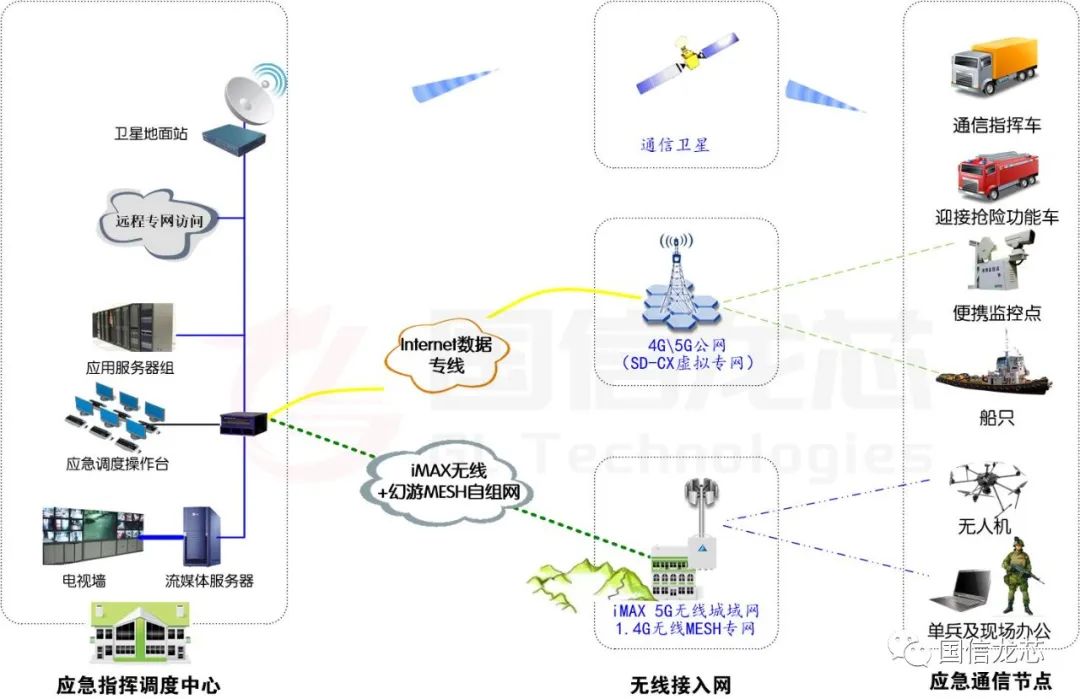
In emergency communication scenarios, a single technical method can hardly meet the all-weather operation requirements of various scenarios (forest fire prevention, flood, landslide, earthquake, etc.). No single technology is perfect, and each has its application limitations. So, how to build a truly reliable and practical emergency communication network?
Based on years of project experience, Guoxin Longxin proposes a multi-routing solution that integrates the above-mentioned technologies and even satellite mobile communication technology – namely, “superimposing” the above technologies to realize “multi-network convergence” networking for different services by setting priorities and multi-routes.The topology diagram for multi-network convergence application is shown below:
Guoxin Longxin’s lithium solar power supply system addresses the critical “power supply difficulty” in emergency management for disaster relief and rescue operations.Basic power supply is often disrupted at disaster sites, and emergency repairs by power departments can hardly meet the urgent need for real-time disaster situation assessment. A temporary emergency off-grid power generation system independent of municipal power supply is essential to guarantee disaster relief efforts, and the iPower lithium new energy system is one of the optimal solutions.
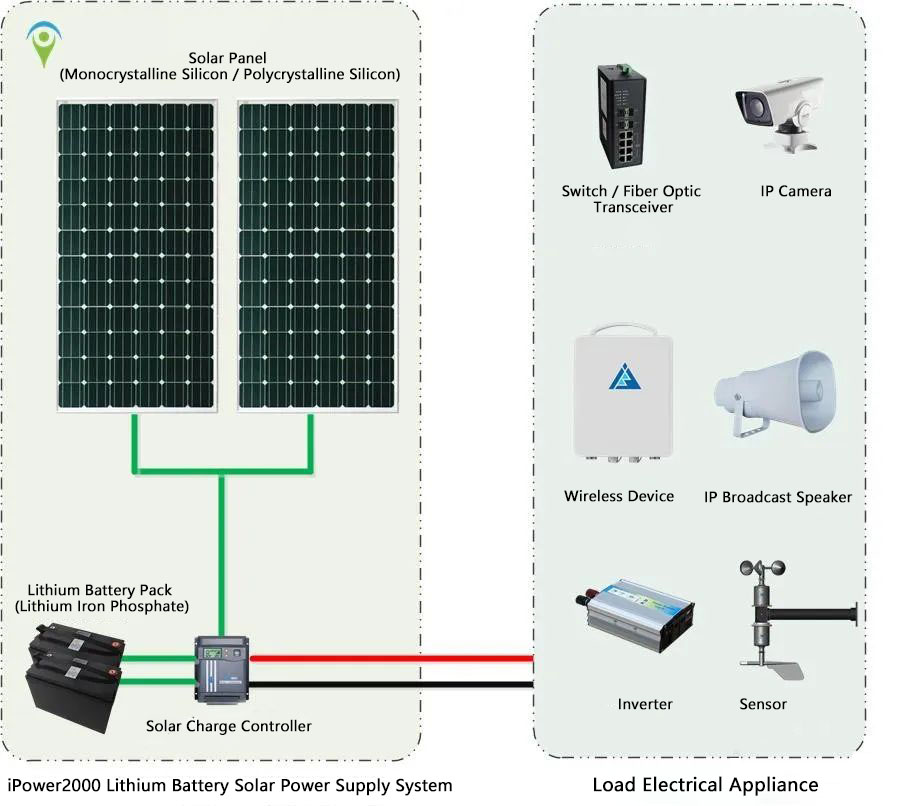
It is important to emphasize that this system not only enables rapid deployment for emergency use, but also supports fixed installation for long-term operation.
The mobile systems supported by Guoxin Longxin’s remote integrated command solution for disaster relief emergency management include a variety of mobile terminal points, which can be called a fully mobile solution.
- Vehicle-mounted (shipborne/airborne) real-time mobile points feature fast mobility and emergency deployment, enabling real-time mobile operations.
- Portable mobile video surveillance point systems and movable surveillance point systems are customized products developed by Guoxin Longxin according to specific user needs, serving as a powerful supplement to fixed-point surveillance systems.
- Individual soldier systems mainly realize local storage of real-time video and audio from frontline disaster relief personnel, and support real-time network transmission within the coverage of iMAX wireless base stations or 4G/5G networks.
Mobile vehicles, ships (vessels), helicopters (UAVs, airships), etc., serve as temporary forward communication nodes or even temporary command centers, requiring two-way audio and video transmission. Therefore, the wireless mobile terminals installed on board are also extremely critical.
The most common ones are vehicle-mounted mobile nodes, rescue shipborne nodes and UAV airborne nodes. Taking UAVs as an example, Guoxin Longxin’s low-frequency MESH system has been specially developed with a dedicated UAV terminal for the widely used DJI M300 UAV, which is a powerful tool for achieving ultra-long-distance video transmission of dozens of kilometers for UAVs. The figure below illustrates the UAV.
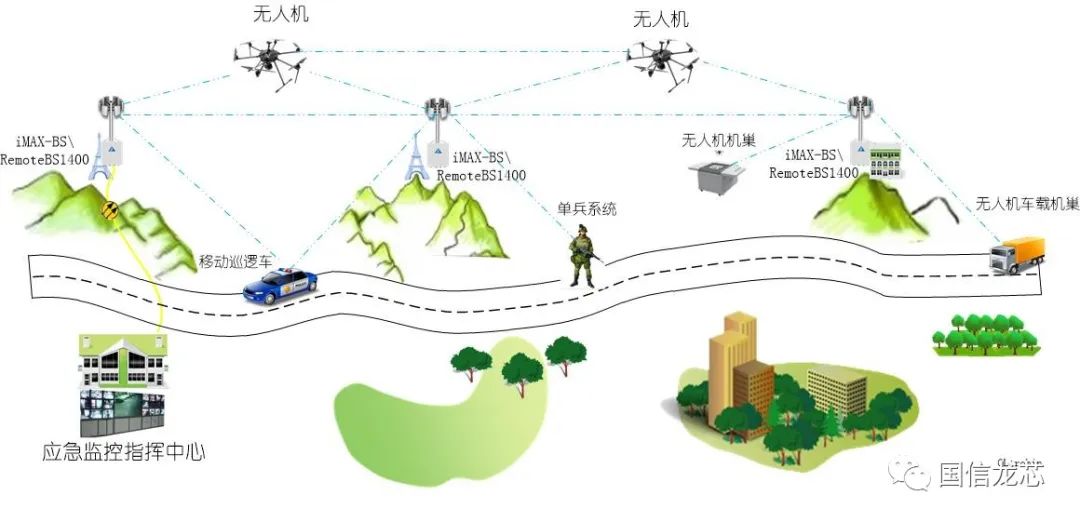
Given that vehicle-mounted, shipborne and mechanical mobile communication systems impose higher and highly diverse requirements on wireless communication, they must be tailored to specific needs accordingly. Details are not elaborated herein, and for specific project requirements, please consult the technical department of Guoxin Longxin.
Portable mobile node systems and detachable surveillance node systems adopt a nomadic mobility mode, which is essential as an effective supplement to fixed nodes in disaster relief scenarios.The physical diagram of the portable mobile surveillance node integrated with an IP HD camera and wireless CPE is shown below:
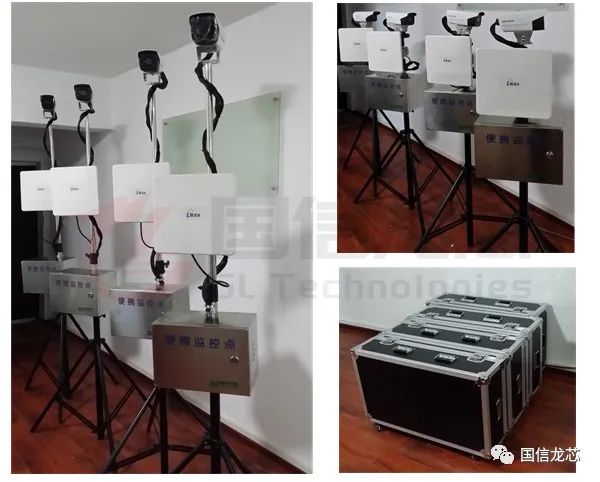
The iPMVS Portable Surveillance Node System and iCMVS Detachable Surveillance Node System are each composed of an IP HD video surveillance camera, an iMAX wireless MAN terminal or 4G dual-mode terminal, a high-performance lithium power host, and supporting tripods. Despite their integrated configuration, they can be neatly packed into cases and relocated on demand. Thanks to professional integrated design, the systems are adaptable to outdoor working conditions (rainproof, wide temperature tolerance, etc.), and simultaneously address HD video surveillance, power supply and IP network connectivity needs, making them an ideal choice for temporary emergency deployment of video surveillance nodes.
Guoxin Longxin’s individual soldier surveillance nodes feature a backpack-type design or a compact waist-worn design, designed to meet the requirement of transmitting on-site visuals back to the command center when individuals, teams or robots conduct operations deep in disaster-stricken areas.
Unlike many manufacturers that rely entirely on telecom operators’ 4G networks for communication, Guoxin Longxin’s individual soldier surveillance nodes adopt a WMAN + 4G LTE dual-mode communication architecture, or the Huanyou low-frequency MESH ad hoc network system. Within the coverage of the wireless private network, the high-bandwidth, low-latency and large-capacity wireless MAN is prioritized for transmission. Outside the private network coverage, 4G LTE can be used to access telecom operators’ networks and further connect to the Internet. This multi-mode design further enhances the reliability of network transmission.
The individual soldier system is equipped with a tactical helmet, a helmet-mounted pinhole IP camera, a mini NVR with a mobile hard drive, and a high-power lithium battery, primarily fulfilling the needs of single-person mobile video recording and transmission. Meanwhile, seamless network interconnection lays a solid foundation for the expansion of the individual soldier system, and additional functions can be further developed according to user requirements.
It is important to emphasize that the cameras adopted by Guoxin Longxin for the above mobile terminals are widely compatible with mainstream products from Hikvision, Uniview, Tiandy, Dahua, Keda and other leading manufacturers. After the collected audio and video streams are transmitted to the backend platform via the iMAX wireless MAN or 4G network, centralized integrated storage and browsing are realized, with convenient search and retrieval functions available. This represents in-depth integration, rather than simple assembly.
Based on years of technical expertise and project experience in successfully delivering such projects, Guoxin Longxin can tailor the optimal wireless private network system design for flood control and drought relief emergency command, and provide customized solutions for users.