
Digitalized and unmanned vehicle operations have become an essential requirement for government‑enterprise clients. However, reliable, secure and low‑cost network connectivity for autonomous driving is frequently overlooked. Without robust network support, intelligence and unmanned operations become water without a source and a tree without roots.
In practice, many government‑enterprise clients hit the same bottleneck when deploying intelligent vehicle dispatching, remote vehicle control and unmanned vehicle projects: poor network performance. Difficulties and high costs in network access have become major constraints holding back the implementation of Internet‑of‑Vehicles projects.
For Internet‑of‑Vehicles scenarios, mobility dictates that wireless technologies are the primary option. The three major wireless categories — Wireless Local Area Network (WLAN), Wireless Metropolitan Area Network (WMAN) and Wireless Wide Area Network (WWAN) — each feature distinct strengths, weaknesses and use cases, enabling customized project‑specific deployments.
Wireless Local Area Network: Best‑known implementation is Wi‑Fi. Its coverage spans only hundreds of meters. It suits small‑scale indoor vehicle connectivity, and is unsuitable for large‑scale park‑wide deployments or heavy‑duty vehicle networking projects.
4G/5G public WWAN: Operated by telecom carriers, these networks are architected for consumer internet access. They cannot satisfy stringent production‑grade, dispatching‑grade and safety‑grade requirements of government‑enterprise vehicles. Public 4G/5G suffers from coverage gaps, fluctuating bandwidth, insufficient reliability and inadequate data security. It struggles to support core workflows such as vehicle dispatching, remote monitoring and unmanned operations. In addition, traffic expenses remain substantial. Public WWAN is only viable for geographically dispersed civilian or operational vehicles where private networks cannot be deployed (via “virtual private network” overlay). It is not recommended for government‑enterprise clients operating within fixed target zones.
For fixed‑zone networking in industrial parks, port terminals and mining sites, even high‑investment 4G/5G private networks lag behind WMAN private networks in availability and cost‑effectiveness. In short, building a dedicated WMAN private network for exclusive use delivers a genuinely viable park‑based Internet‑of‑Vehicles solution.
Drawing on extensive real‑world project experience, Guoxin Longxin delivers a government‑enterprise wireless private‑network solution for Internet‑of‑Vehicles built upon the three above‑mentioned wireless technologies. The solution fits diverse scenarios including fixed‑site industrial parks, field transit, emergency rescue, fleet formation and unmanned operations. It addresses core networking pain‑points and establishes solid underlying infrastructure for vehicle intelligence and unmanned transformation.
I. Why Wireless Private Networks Fit Government‑Enterprise Internet‑of‑Vehicles
Network requirements for government‑enterprise work vehicles differ fundamentally from private passenger vehicles. Consumer vehicles mainly serve entertainment‑oriented internet access. By contrast, networks for government‑enterprise work vehicles directly impact production safety, dispatching efficiency and stability of unmanned operations. Shortcomings of public networks get drastically amplified in industrial operational contexts.
❌ Incomplete coverage: Mines, port terminals, forest zones and construction sites are remote locations with inherently weak 4G/5G public‑network signals and heavy physical obstructions. Public‑network blackouts occur frequently. Loss of connectivity once vehicles enter blind spots is unacceptable for government‑enterprise operations.
❌ Poor stability: Congestion during peak hours and signal fluctuations cause stuttering in video backhaul and excessive latency for control commands. Public networks fail to deliver long‑term consistent performance required by government‑enterprise systems.
❌ Low‑grade security: 4G/5G public networks lack physical isolation. Production data and dispatching information risk theft and interference. Compromised network security creates severe hazards that may endanger personnel lives and property assets.
❌ Exorbitant ongoing costs: Cumulative traffic fees and leased‑line charges over long‑term operation outpace total ownership costs of self‑built private networks. Government‑enterprise vehicle fleets operate round‑the‑clock; recurring public‑network fees become financially burdensome.
A qualified government‑enterprise Internet‑of‑Vehicles private network must satisfy ten core capabilities:
✅ Full‑area gap‑free coverage with continuous stable signals across all operational scenarios ✅ 7×24‑hour uptime, anti‑interference and stable connectivity under harsh environmental conditions ✅ Physically isolated private network with encrypted data transmission for full security governance ✅ High‑bandwidth high‑concurrency support for simultaneous transmission of video, voice, sensor readings and control commands ✅ Centimeter‑level positioning plus motion‑attitude perception to enable intelligent safety supervision ✅ Seamless high‑speed roaming hand‑off: zero packet loss for fast‑moving cross‑zone vehicles ✅ Unified access for vehicles, machinery and human‑carried terminals to enable coordinated dispatching ✅ Light‑weight on‑vehicle deployment, no complex civil‑works, low‑cost implementation ✅ Industrial‑grade vibration‑resistant hardware built for extreme on‑vehicle working conditions ✅ Centralized cloud‑based visualized management and control for streamlined operation & maintenance
To summarize, government‑enterprise Internet‑of‑Vehicles demands high reliability, security and stability. Performance depends not only on selected technologies and hardware products but also thoughtful network architecture planning. Deploy WMAN private networks whenever feasible; public‑network‑based virtual private networks serve as supplementary capacity.
Network security is paramount for Internet‑of‑Vehicles, especially autonomous‑driving scenarios involving vehicle control. Cyber‑hacker intrusion may lead to out‑of‑control vehicles and catastrophic safety consequences. Conventional 4G/5G connects to the global internet; theoretically hackers anywhere worldwide may gain remote access and seize vehicle control. Only physical isolation — disconnecting from the public internet via geographically bounded dedicated private networks for exclusive mission‑critical usage — can guarantee true network security. For details on network isolation, refer to the article Network Security and Physically Isolated Private Networks for Government‑Enterprise Network Deployments.
4G/5G combined with SD‑CX private‑cloud technology can enhance public‑network security through “virtual private network” overlays. See How to Achieve Low‑Cost Remote Interconnection Using 4G/5G? for relevant solution details.
Besides security, reliability of wireless systems matters greatly for autonomous driving scenarios. Guidance on building highly‑reliable wireless networks can be found in How to Ensure High Reliability of Wireless Network Systems?.
II. Five Core Product Lines for Precise Cross‑Scenario Adaptation
No one‑size‑fits‑all generic solution exists. Hardware equipment and networking logic differ for distinct use‑cases. Guoxin Longxin’s five proprietary core products support flexible combinations and matching to cover nearly all government‑enterprise vehicle‑operation scenarios.
1. iMAX Wireless Metropolitan‑Area Private Network — Private Metropolitan Network for Fixed‑Site Parks
Applicable scenarios: Mines, port terminals, freight yards, industrial parks and other closed or semi‑closed fixed‑site operational zones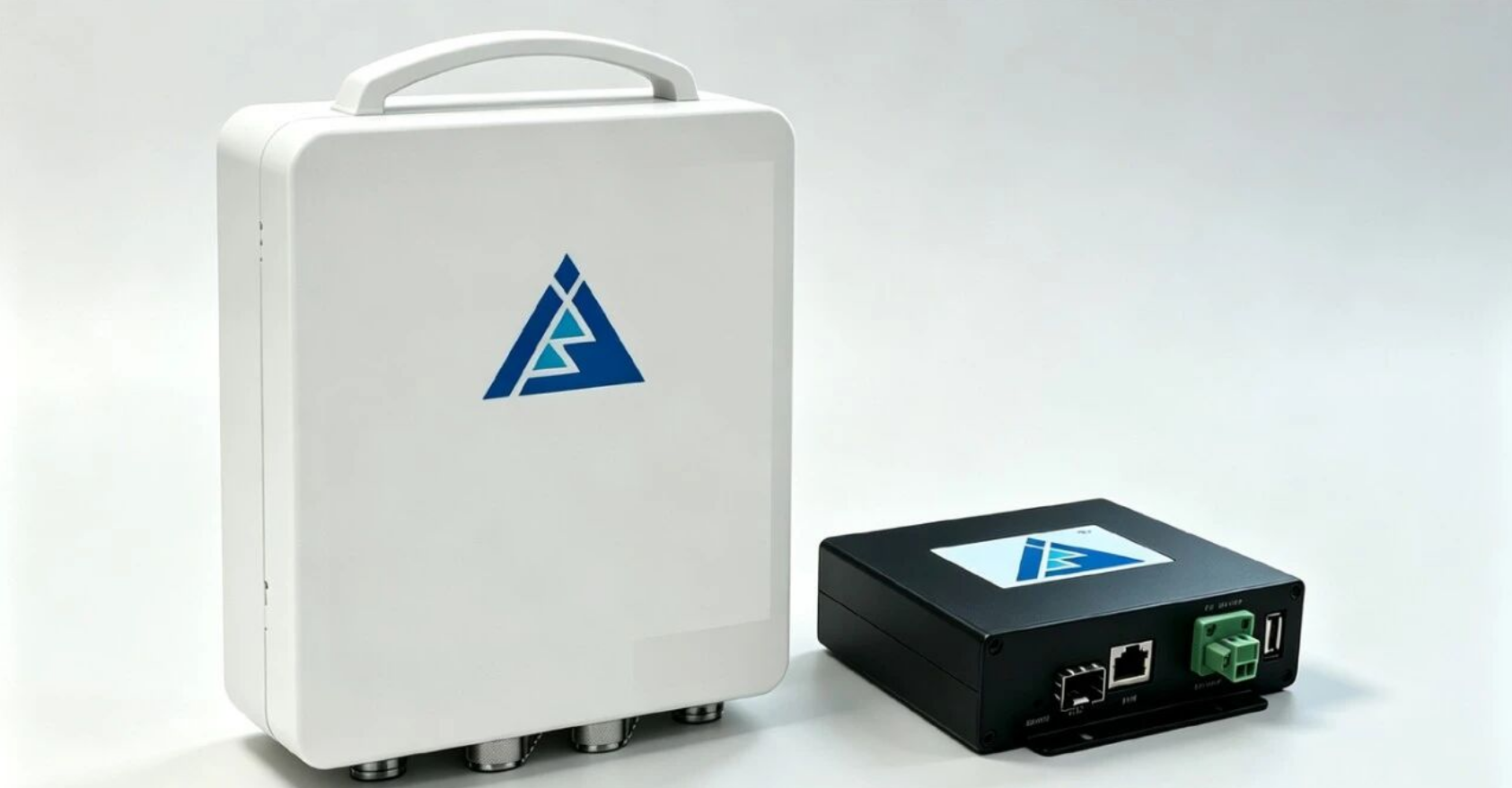
Acting as the backbone of the overall solution, this system adopts self‑developed proprietary protocols. It features physical isolation from external networks and fully exclusive bandwidth. Advanced multi‑link technology mitigates electromagnetic interference and dust‑caused signal attenuation. It supports seamless high‑speed roaming with near‑zero packet loss for year‑round stable service. Capital expenditure is one‑off with zero recurring traffic charges. It constitutes the preferred networking option for unmanned vehicles and work‑fleet dispatching in fixed‑site deployments.
2. 4G/5G Dual‑Mode Gateway System — On‑Site Stability Plus Wide‑Area External Coverage
Applicable scenarios: Logistics trucks, engineering vehicles and other assets requiring cross‑regional transit
Adopting a dual‑link intelligent hand‑off architecture of “private‑network priority, public‑network gap‑filling”. Inside the park, the dedicated private network delivers low‑latency high‑security operations. Once vehicles exit private‑network boundaries, the system automatically switches to 4G/5G public‑network gap‑filling, constructing virtual private networks through SD‑CX technology. Dual‑network fusion ensures uninterrupted connectivity throughout journeys.
The model iMWB‑5GW2000D supports long‑range coverage via 700/800 MHz low frequencies with maximum reach of 30 km. IP67 heavy‑duty enclosure enables deployment in harsh field, offshore and port‑terminal environments.
3. Huanyou Low‑Frequency MESH Ad‑Hoc Network — Dedicated Communications for Emergency Rescue
Applicable scenarios: Fire‑fighting operations, disaster relief and other temporary infrastructure‑less or on‑the‑move communication missions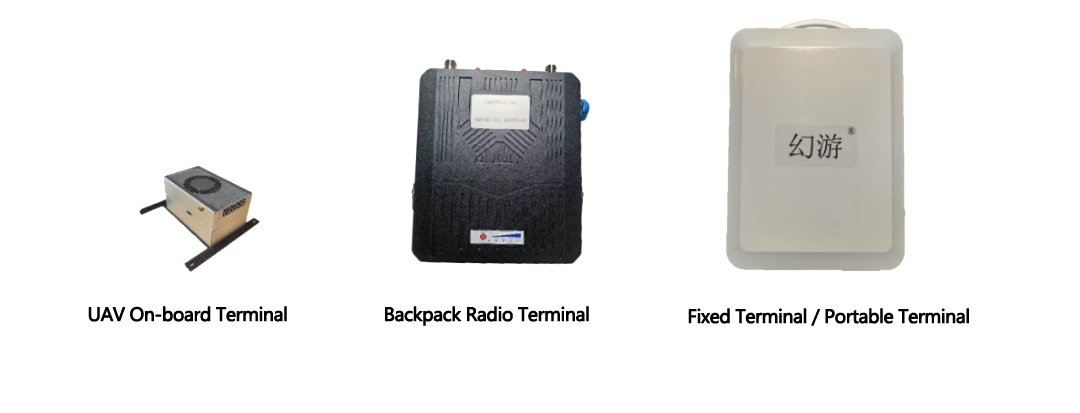
Typical operating frequency at 1.4 GHz (customizable below 6 GHz). Leveraging low‑frequency diffraction capabilities, it requires neither base‑stations nor public‑network access. Self‑networking completes within 8 seconds after power‑on. Radio waves penetrate building walls and diffract around mountainous rubble. Links self‑heal upon failure, solving public‑network collapse and signal blackouts common in disaster zones. It interconnects UAVs, handheld terminals and command boxes to build an integrated ground‑air emergency‑communication system.
4. ICSE1000 Sensing‑Communication Integrated Terminal — Core Terminal for Unmanned Vehicles
Applicable scenarios: Unmanned container carriers, autonomous mining trucks and special‑purpose unmanned work vehicles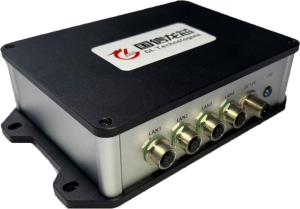
A single unit integrates three major functions: private‑network communication (optional onboard 4G public‑network module), BeiDou centimeter‑level RTK positioning and vehicle motion‑attitude sensing. It replaces stacks of discrete legacy devices, with compact footprint, low power draw and rugged vibration‑resistant construction. It collects real‑time vehicle position, attitude and velocity data, supporting track playback, geofencing and cross‑boundary alarms. It serves as the fundamental hardware platform for remote‑control and fully‑autonomous unmanned missions.
5. iMAX‑8000M Multi‑Mode MESH Converged System — Fleet‑Formation Enabler
Applicable scenarios: Long‑haul transport convoys, yard vehicle formations and groups of unmanned vehicles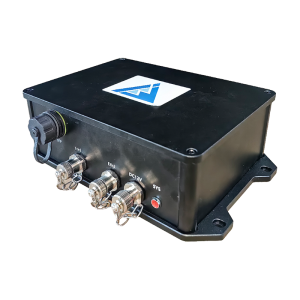
An industry‑first dual‑function converged device overcoming traditional networking limitations: it combines high‑bandwidth 5 GHz private‑network performance alongside MESH mesh‑network benefits. Operating on dedicated private spectrum, it reliably transmits high‑definition video, dispatching instructions and vehicle telemetry. In curves, canyons and obstructed terrain, multi‑hop cascading works automatically. Vehicle nodes act as relay points with link self‑healing capability. This single hardware delivers multi‑mode multi‑link redundancy, simple roll‑out and minimal operational overhead, eliminating communication drop‑offs for long‑range platooning fleets.
III. Six Typical Deployment Scenarios for Wireless Private‑Network Solutions
1. Internet‑of‑Vehicles for Fire‑Rescue Operations: Sustained Communications amid Disruption, Full Visualized Command
Fire and disaster‑response sites feature heavy radio interference and physical obstruction, frequently causing total public‑network breakdowns. Wireless metropolitan‑area networks can be purpose‑deployed. Two MESH‑based options satisfy fire‑engine networking requirements according to project priorities:
- Huanyou Low‑Frequency MESH System: Builds infrastructure‑free self‑healing emergency networks to deliver real‑time transmission of site video, voice intercom, personnel positioning and dispatching commands.
- Strengths: Excellent non‑line‑of‑sight propagation performance. Easy integration with auxiliary hardware including man‑pack stations, handheld radios, UAV airborne modules and intelligent command enclosures for rapid emergency‑site roll‑out.
- Limitations: Higher procurement expense, relatively modest total bandwidth and limited network capacity. Node count for one incident site generally does not exceed 32 units.
- iMAX‑8000M Multi‑Mode MESH System: For large‑scale complex rescue missions, deploy this system as redundant backup alongside other networks to eliminate network stalling and disconnection entirely, achieving “clear visuals, reliable voice, responsive dispatching” at disaster scenes.
- Strengths: Roughly half or lower capital cost compared with Huanyou low‑frequency systems, while delivering over 10‑times higher aggregate bandwidth and virtually unlimited node capacity for government‑enterprise clients.
- Limitations: Inferior non‑line‑of‑sight propagation versus Huanyou low‑frequency MESH; less convenient integration with external mobile terminals such as drones.
Schematic diagram of a typical MESH networking topology for fire trucks is shown below: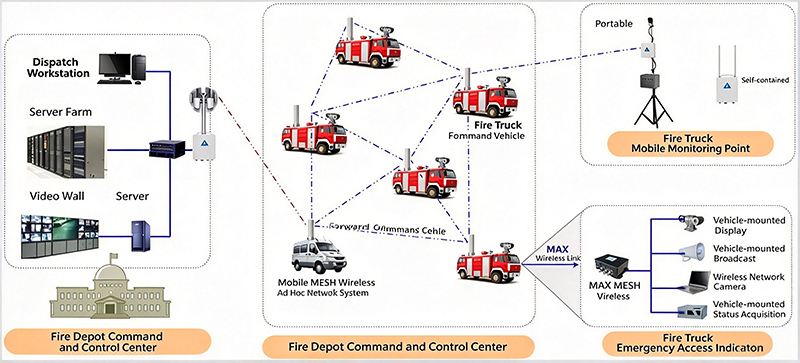
For fire‑engine projects demanding high‑precision positioning, add the ICSE1000 sensing‑communication integrated terminal to accomplish communications, centimeter‑grade positioning and attitude perception within one hardware unit.
For specialized requirements, custom Huanyou low‑frequency MESH tri‑band tri‑mode hardware combines 1.4 GHz MESH together with dual‑mode iMAX modules to implement multi‑network converged communications (1.4 GHz / 2.4 GHz / 5 GHz).
2. Low‑Speed Autonomous Logistics Vehicle Networking: Full‑Area Seamless Intelligent Dispatching
Logistics vehicles circulate between industrial yards, trunk‑route highways and urban roads. No single network balances stability, coverage and cost‑efficiency.
Adopt the architecture of iMAX private network plus 4G/5G dual‑mode connectivity. Inside the facility, private networks guarantee stable unmanned dispatching and equipment monitoring with reliability and cost advantages. During off‑site transit, seamless 4G/5G public‑network fallback ensures gap‑free continuous connectivity. Hardware withstands dust and vibration within logistics yards and supports large‑scale deployment to advance fleet unmanned‑intelligent transformation.
The schematic diagram of dual‑network convergence for low‑speed logistics IoV application is shown below: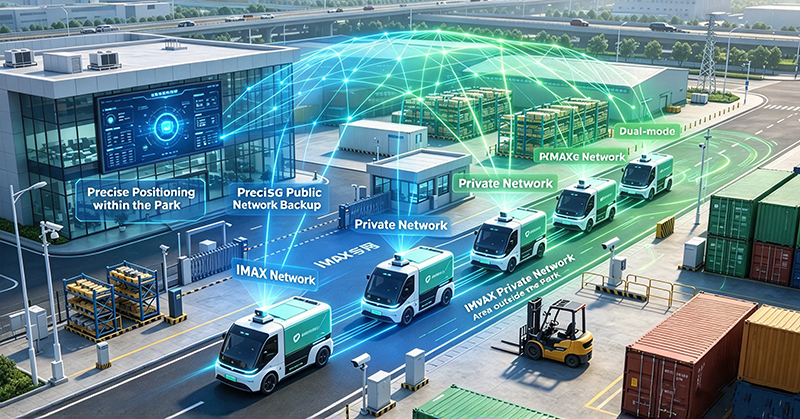
3. Private‑Network for Port‑Area Autonomous Container Carriers: Zero Stuttering & Zero Packet Loss Supporting High‑Frequency Unmanned Operations
Port‑site AGV, IGV and unmanned container carriers execute 24‑hour high‑frequency missions. Remote‑control workflows impose extremely strict latency and stability requirements.
Centered around the iMAX wireless metropolitan‑area private network, hot‑standby routing and data‑mirroring technologies enable seamless hand‑offs for high‑speed moving vehicles without mission interruptions, assuring connectivity reliability for unmanned equipment.
Where both ultra‑reliable private‑network access and high‑precision location‑and‑motion status data are needed, deploy the ICSE1000 sensing‑communication integrated system. It delivers dependable connectivity, centimeter‑level positioning and attitude‑sensing in one box to underpin full‑scale port‑site unmanned operations.
The schematic diagram of typical networking application for port automated container trucks / IGV / AGV is shown below: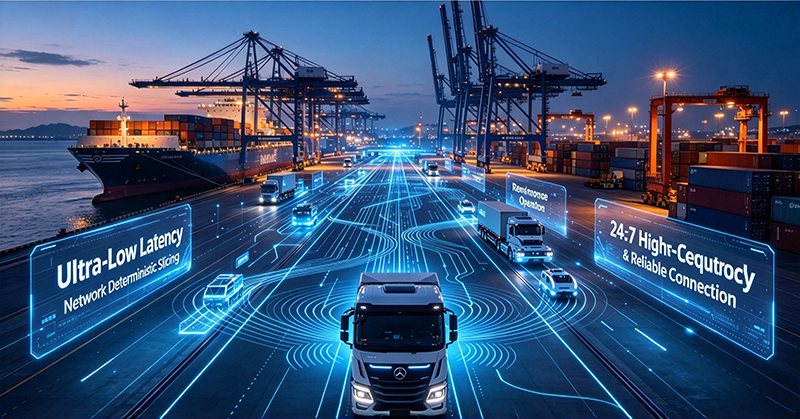
4. Special‑Purpose‑Vehicle Dispatching Private‑Network: Secure Isolation and Accurate Supervision
Hazardous‑material haulage, security escort vehicles and municipal sanitation fleets face mandatory requirements for data security and trajectory oversight.
Standard dispatching deploy private‑network plus public‑network dual‑mode architectures. Within operational zones, encrypted isolated private networks prevent data leaks. Outside facility boundaries, public‑networks deliver universal coverage, augmented by SD‑CX private‑cloud virtual‑private‑network overlay for enhanced security. For unmanned high‑precision supervision scenarios, fit ICSE1000 integrated terminals. Instead of stacking multiple discrete devices, this unit delivers precise positioning, track playback, geofence alarms and stable remote‑control capability.
The schematic diagram of special vehicle networking application with private network plus public network (virtual private network) is shown below: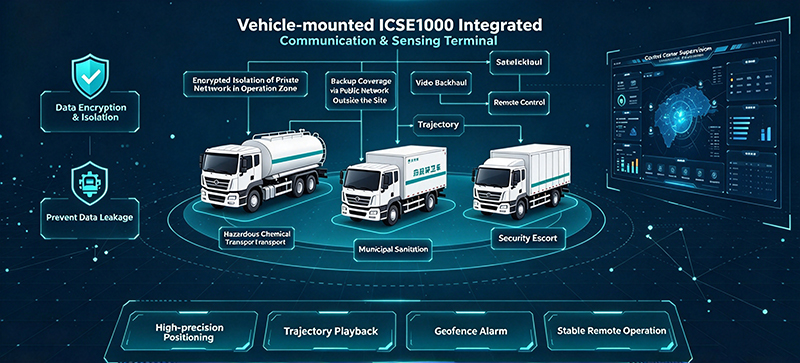
5. Mining‑Site Vehicle Networking: Ruggedized and Stable for Extreme Working Conditions
Mines feature heavy dust loads, intense electromagnetic interference and complex terrain obstructions. Public‑networks cannot satisfy production‑grade demands. For overseas mines in particular, 4G/5G signal coverage is often absent.
Build dedicated industrial‑grade iMAX private networks, optionally paired with sensing‑communication terminals or iMAX‑8000M multi‑mode MESH systems for flexible networking layouts. Physically‑isolated private networks resist interference and sustain steady round‑the‑hour service. They support video surveillance, remote dispatching and unmanned‑vehicle control for mining trucks, loaders, drill rigs and excavators, coping with harsh mine‑site environments and advancing mine‑site intelligent‑unmanned transformation.
The schematic diagram of private network application for unmanned mining truck networking at mine site is shown below: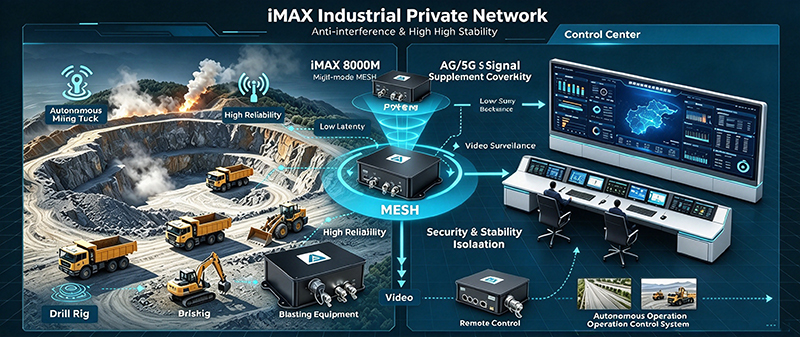
6. Fleet‑Convoy Private‑Network: Dual‑Network Redundancy to Eliminate Platoon‑Wide Communication Drop‑Offs
Long‑haul autonomous heavy‑truck convoys travel through curves and canyon‑obstructed terrain. Single‑network setups deliver minimal fault tolerance.
Deploy the iMAX‑8000M multi‑mode MESH converged system as core equipment to implement a redundant architecture combining high‑bandwidth private‑networks and self‑organizing MESH. On open stretches, private‑networks handle high‑throughput data transmission. When encountering obstructions, the system automatically switches over to MESH ad‑hoc networking with multi‑node relay and self‑healing.
Install converged hardware as backbone nodes aboard key vehicles; ordinary vehicles join the network via sensing‑communication terminals. Resultant mesh topology ensures single‑point hardware failures will not disable the whole convoy, drastically improving network robustness and maintaining uninterrupted communications across journeys.
The schematic diagram of private network application for vehicle platoon MESH networking is shown below: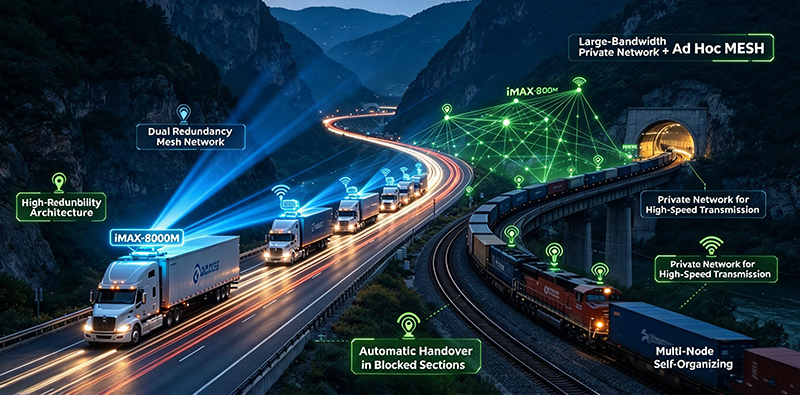
For select specialized fleet‑convoy projects, designers may implement dual‑frequency multi‑ring‑network structures combining Huanyou 1.4 GHz MESH plus iMAX 5 GHz hardware, balancing network resilience, performance and total‑cost‑of‑ownership. Consult Guoxin Longxin technical department for project‑specific engineering designs.
IV. Solution Summary: Dedicated Networks Underpin Government‑Enterprise Vehicle Unmanned Transformation
Intelligent and unmanned upgrades for government‑enterprise vehicles should prioritize building stable, secure, fully‑covered communication infrastructure before purchasing field hardware and application software.
Guoxin Longxin’s wireless private‑network solution for Internet‑of‑Vehicles leverages flexible combinations of its five core product families. It systematically resolves well‑known industry pain‑points: public‑network coverage gaps, connection stalling and disconnections, security vulnerabilities and excessive operational expenses. It serves diverse vertical‑sector environments: mines, port terminals, fire‑emergency response, logistics, special‑mission vehicles and vehicle platoons.
Whether for current‑day intelligent dispatching and safety monitoring or future‑oriented remote‑control and fully‑autonomous unmanned workflows, one dedicated private‑network (or virtual private‑network overlay) supports full‑lifecycle digital and intelligent upgrades for government‑enterprise vehicle fleets.
This article concentrates on networking solutions for wheeled ground transport vehicles. For networking for construction‑machinery remote‑control and autonomous‑driving applications, please consult Networking Solution for Remote‑Control and Autonomous‑Driving Construction Machinery.
Guoxin Longxin specializes in industrial‑grade wireless private‑networks, delivering trusted communication infrastructure supporting government‑enterprise vehicle unmanned industrial upgrading. When plagued by difficult or costly vehicle networking, choose Guoxin Longxin!