
Against the accelerated global digital transformation, services such as remote work, online education, smart agriculture and tele‑medicine generate rigid demand for rural broadband access. Nevertheless, rural areas outside China are commonly confronted with practical challenges including private land ownership, sparse population, scattered households, extensive mountain‑forest obstructions and complex meteorological conditions (heavy rain, dense fog, seasonal signal blockage caused by vegetation growth). Particularly in less‑developed countries and regions, rural broadband is still at the stage of pursuing basic connectivity. Solutions deployed in mainland China are often ill‑suited for such scenarios.
Traditional fiber‑optic networking requires trenching or pole erection together with negotiations with numerous private landowners. Negotiations may drag on for years. Civil engineering, land acquisition and pipeline expenses lead to extremely high costs with severely imbalanced input‑output per subscriber. Ordinary single‑microwave or line‑of‑sight (LOS) wireless solutions suffer from poor link stability, widespread coverage dead zones and high outage risks. Complaints over rural broadband keep surging. Operators struggle to meet nationwide coverage KPIs and fail to tap into rural markets effectively.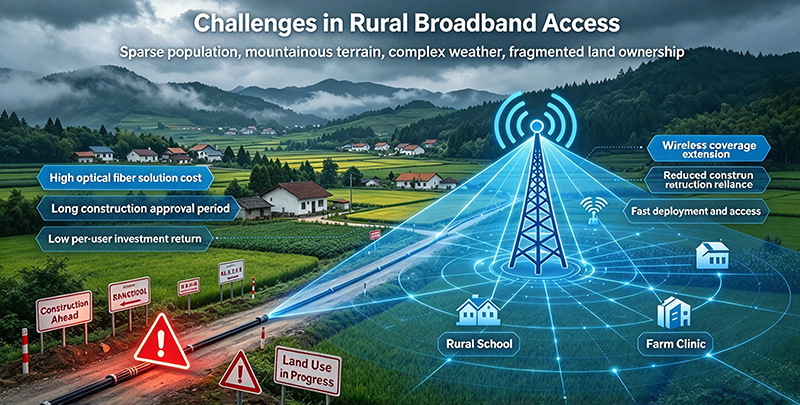
At the Global Development Initiative Digital Cooperation Forum of the 2025 World Internet Conference Wuzhen Summit, the Initiative for Global Development Initiative Digital Inclusion Action was officially released. Promoting inclusive access to benefits from the global digital economy constitutes a key component of the UN 2030 Agenda for Sustainable Development and a shared responsibility of the international community.
For rural broadband projects in less‑developed countries and regions, highly reliable redundant backbones, full‑coverage wireless networking and localised operation‑maintenance services are essential building blocks. Advanced wireless technologies shall substitute fiber optics in fiber‑unreachable zones. Backbone links must feature damage‑resistance and self‑healing capabilities. Customer‑premises terminals need low costs while catering to both household and public‑scenario requirements.
I. Overview of Overseas Rural Broadband Requirements
Rural broadband deployment overseas is generally constrained by critical bottlenecks: private land ownership, terrain‑caused signal blockage, meteorological interference and insufficient local maintenance. Neither conventional fiber optics nor basic wireless solutions can deliver consistent, highly‑reliable digital access.
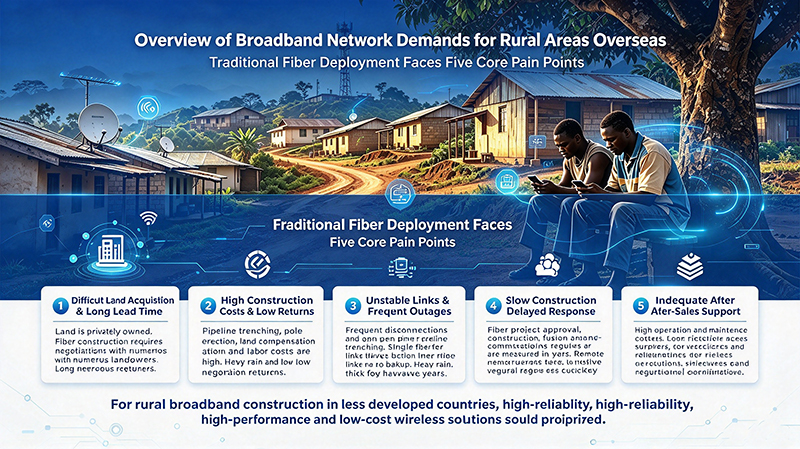
Five core pain points plague overseas rural broadband roll‑outs:
- Difficult and prolonged land acquisition: Land is privately owned. Laying several‑kilometer fiber cables may involve negotiations with dozens of landowners that can take multiple years. Refusals by individual landowners can even halt projects entirely.
- High investment with low returns: Fiber deployment includes pipeline excavation, pole installation, land‑acquisition compensation and labour costs. Extremely low rural subscriber density drives per‑household connection costs far above urban levels, locking operators into sustained losses.
- Unstable links and frequent outages: Relying solely on a single unbacked‑up backbone link. Heavy rainfall, fog and vegetation growth trigger attenuation and disconnection for LOS microwave links. Once failure occurs, entire rural segments go offline, triggering mass user complaints, subscriber churn and substantial financial losses.
- Slow deployment and delayed market response: Fiber projects require years for approval, construction, fiber splicing and commissioning. They cannot rapidly fill broadband gaps or support fast market expansion and user acquisition.
- Inadequate after‑sales support and high O&M costs: Remote overseas rural sites are far from technical headquarters. Cross‑border business trips consume substantial time, visa and travel expenses. Spare‑part cross‑border shipments take weeks. Accessing remote villages proves difficult. Language and regulatory barriers further complicate services. Extended service outages severely harm operator reputation and economic performance.
Development models are shaped by national conditions. Especially at the basic‑connectivity stage, mechanically replicating China’s fiber‑based broadband operation model yields poor outcomes. The above‑mentioned challenges dictate that rural broadband in most less‑developed nations must prioritise wireless solutions featuring high reliability, strong performance and low costs.
II. Technical Selection for Wireless Systems
For overseas rural broadband operations, available radio spectrum resources shall be fully leveraged. Products and technologies must be selected according to performance‑cost requirements of individual scenarios. Drawing on Guoxin Loongson’s field experience, three product families serve distinct use‑cases:
1. FibeAir High‑Frequency Microwave Products – for 4G/5G base‑station backhaul and broadband service backbones
Operating frequency: 6‑42 GHz. Fully outdoor all‑in‑one design supporting GE / 10 GE electrical and optical interfaces. Under 1+0 configuration with 224 MHz channel bandwidth and 2048 QAM modulation, throughput reaches 4.5 Gbps. Channel spacing options: 14 / 28 / 56 / 112 / 224 MHz. Supports XPIC and spatial‑diversity configurations: 1+0 / 1+1 / 2+0 / 2+2. Compliant with SyncE and 1588v2 TC/BC clock synchronisation; SyncE clock offset ≤ 2 ns. Supports jumbo frames up to 9600 bytes for seamless interworking with existing optical equipment.
60 GHz millimetre‑wave systems and E‑band millimetre‑wave systems may be adopted for short‑range ultra‑high‑bandwidth backbone applications.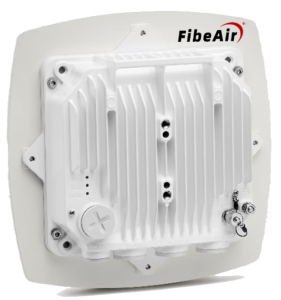
2. iMAX Non‑Line‑of‑Sight (NLOS) Microwave Products – hot‑standby redundant backbones for base stations & long‑range NLOS networking
The iMAX‑6000 series is a wireless metropolitan‑area network backbone system delivering 150 / 300 / 600 Mbps, meeting requirements for long‑distance outdoor high‑bandwidth, high‑reliability IP interconnections. It achieves a maximum bandwidth of 500 Mbps × N and communication distances exceeding 100 km. Rich wireless‑MAN security and reliability features strike an optimal balance of high throughput, ultra‑long reach and robust performance.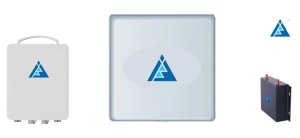
Software‑tunable ultra‑wide frequency band: 4.9‑6.0 GHz. Real NLOS transmission enabled by MIMO, OFDM and antenna‑diversity technologies. Dynamically‑adjustable channel bandwidth: 20 / 40 / 80 MHz; transmit power 27 dBm. Supports static routing, RIPv2, OSPFv2, BGP, OSPFv3 and VRRP virtual hot‑standby routing protocol for redundant failover, seamless roaming and link‑bandwidth aggregation. Security mechanisms include AES‑128 encryption, VLAN, VPN and firewall. Fully‑outdoor IP67 enclosure; operating temperature: −40 ℃ ~ +60 ℃. Base‑station units come with native fibre interfaces plus three Gigabit Ethernet ports. NTP clock synchronisation and IPv6 are supported.
3. BreezeAir WLAN Products – high‑capacity edge broadband access for rural households
Software‑configurable operating bands: 2.4 GHz and 5 GHz (6 GHz band available upon customisation). Compliant with open international IEEE 802.11 be / ax / ac / n standards. Multiple wireless devices can be flexibly combined according to user requirements:
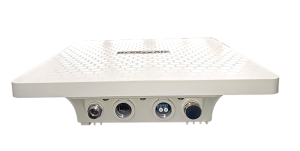
- BreezeAir W7X Industrial‑Grade Bridge (highest‑performance): Throughput up to 1.2 Gbps; channel bandwidth 20 / 40 / 80 / 160 / 320 MHz. Supports AP / PTP / PTMP networking modes. All‑in‑one or split‑unit form factors optional. IP67 ingress protection.
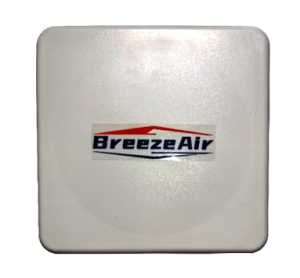
- BreezeAir W5E Industrial‑Grade Bridge (mid‑tier): Throughput up to 400 Mbps; channel bandwidth 20 / 40 / 80 MHz. Supports AP / PTP / PTMP networking modes. All‑in‑one or split‑unit form factors optional. IP67 ingress protection.
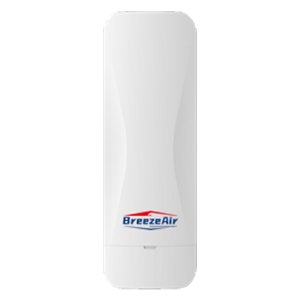
- BreezeAir5000‑Lite Industrial‑Grade Bridge (cost‑optimised entry‑level): Throughput up to 400 Mbps; channel bandwidth 20 / 40 / 80 MHz. Supports AP / PTP / PTMP networking modes. All‑in‑one or split‑unit form factors optional. IP67 ingress protection.
Products of different performance tiers correspond to different cost levels and fit distinct scenarios. FibeAir high‑frequency microwave carries the highest cost and serves high‑bandwidth backbones. iMAX NLOS microwave costs moderately less with slightly reduced bandwidth; it exhibits strong immunity to weather and superior NLOS capability, suited for backbone ring networks, hot‑standby redundancy or NLOS access scenarios. BreezeAir wireless bridges feature the lowest cost for high‑volume edge household access.
III. Overseas Rural Broadband Wireless Private‑Network Solution
Tailored for full‑scenario broadband access requirements across overseas rural regions, this dedicated wireless private‑network solution features zero land acquisition, rapid deployment, high reliability, full‑range coverage and easy maintenance:
- Zero civil engineering & zero land acquisition: End‑to‑end wireless links eliminate trenching and fibre‑cable laying. Negotiations with private landowners are completely avoided. Deployment timelines shrink from years to days.
- Backbone zero‑outage: Primary FibeAir high‑frequency microwave link paired with hot‑standby redundant iMAX NLOS microwave link. The two links use fully independent physical routes and frequency bands. Millisecond‑level lossless failover upon primary‑link failure, transparent to end‑user services.
- Zero blind spots for all terrains: FibeAir high‑frequency microwave delivers Gbps‑class high‑bandwidth backhaul for open‑land core villages. iMAX NLOS microwave penetrates woods and hills to cover remote dead zones. BreezeAir APs mounted on towers deliver dual‑purpose coverage for households and public venues.
- High‑concurrency access: A single base station supports simultaneous connections for more than one hundred rural households for lag‑free video conferencing, office work and live‑streaming.
- Fast localised O&M: Country‑level authorised local partners worldwide provide on‑site engineers, local spare‑part warehouses, native‑language support and three‑tier hierarchical maintenance, cutting fault‑response time by 80 %.
Guoxin Loongson’s dedicated overseas rural broadband solution adopts a three‑tier converged fully‑wireless architecture that integrates backbone backhaul, regional coverage and terminal access. It delivers concise architecture, flexible deployment and strong scalability.
- Dual‑microwave complementary backbone layer: FibeAir high‑frequency microwave (high‑speed high‑capacity primary link) + iMAX NLOS microwave (backup link for dead‑zone coverage and hot‑standby redundancy). Parallel dual‑path operation with automatic failover drastically boosts overall network uptime.
- Tower‑based aggregation‑coverage layer: Reuses operators’ existing communication towers to mount outdoor intelligent BreezeAir base‑station APs. These APs receive dual‑path signals from the backbone and extend coverage radius without constructing new towers.
- Multi‑mode terminal access layer: Roof‑mounted CPE units deliver in‑home broadband for rural households. Sector signals from APs provide ubiquitous Wi‑Fi for public spaces including plazas, schools and village committees to satisfy diverse digital‑service demands.
- Localised after‑sales service system: Authorised national service providers stock spare parts locally, offer on‑site response, native‑language communication and scheduled inspections to resolve cross‑border maintenance pain points.
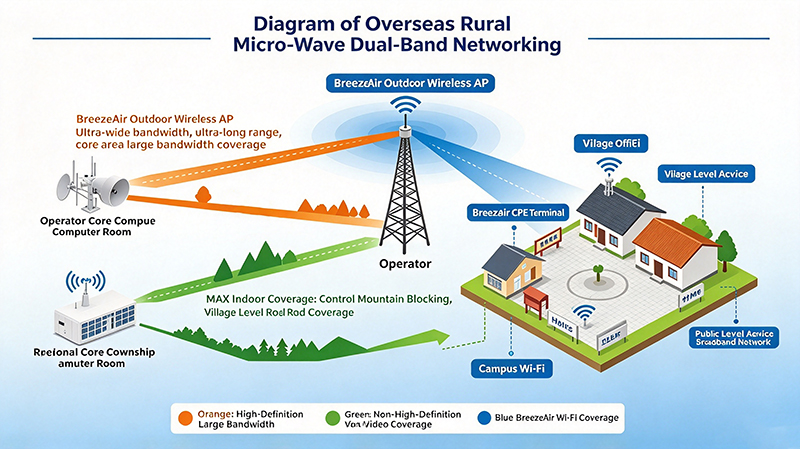
Three‑Tier Networking Architecture
1. Backbone Layer – High‑Reliable Private Network with Dual Medium‑&‑High‑Frequency Microwave
As the operational core backbone, any failure may trigger large‑scale outages, hence absolute reliability, safety and stability are mandatory. This heterogeneous dual‑microwave architecture combines FibeAir high‑frequency microwave (primary link) and iMAX NLOS microwave (hot‑standby backup). It leverages the high bandwidth of high‑frequency microwave and the long‑reach advantage of medium‑frequency microwave while optimising overall system costs.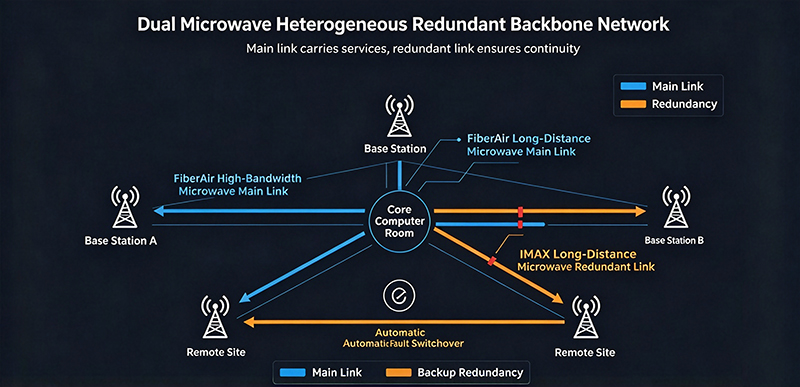
FibeAir provides multi‑Gbps LOS backhaul to bear routine core traffic. iMAX offers long‑distance, NLOS and weather‑resilient performance as a 1+1 hot‑standby channel. The system monitors packet loss, latency and rain‑fade signal‑to‑noise ratio of the primary link 24 / 7. Degraded metrics trigger millisecond‑level automatic switch‑over to the backup link without user‑perceivable service interruption. The two links feature fully independent physical routes, frequency bands and propagation modes to eliminate correlated‑failure risks and guarantee “zero‑outage” backbone performance.
2. Aggregation‑Access Layer – Low‑Cost Specialised Wi‑Fi Bridge Networking
Outdoor intelligent BreezeAir base‑station APs are installed high on existing operator communication towers within target regions. Tower elevation mitigates signal obstruction by buildings and trees and expands coverage radius. APs aggregate dual‑path signals from upstream FibeAir primary links and iMAX backup links and act as central radio transmitters for entire rural zones. Site deployment is simplified; costs for new‑tower construction are avoided, enabling fast area‑wide signal roll‑out.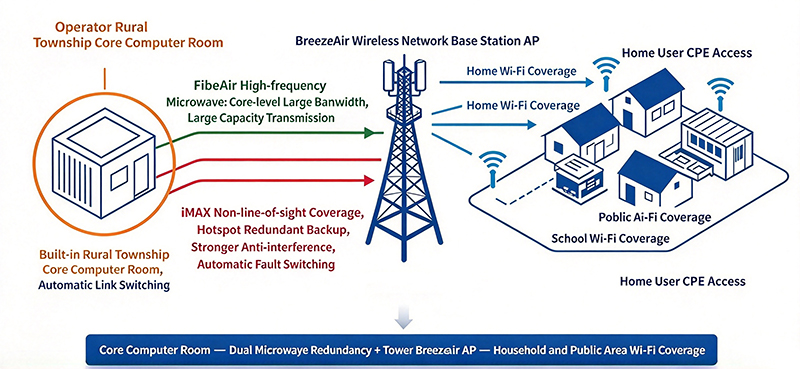
3. User‑Side WLAN Extension
Wireless signals radiated by tower‑mounted BreezeAir base‑station APs serve two terminal‑coverage scenarios:
- Household indoor coverage: Compact roof‑mounted CPE receivers capture directional signals from tower APs and convert them into in‑home broadband and whole‑house Wi‑Fi. Detached and scattered homesteads can be individually connected without indoor cabling.
- Rural public‑venue coverage: Sector signals radiated by tower‑mounted APs or multi‑mode CPE units installed on lampposts / rooftops deliver Wi‑Fi coverage within a hundred‑meter radius for plazas, schools, village committees and clinics. It supports online classes for teachers and students, public internet access for villagers and remote government‑service processing.
This solution directly addresses four key overseas rural pain‑points:
- Land‑acquisition challenge: Fully‑wireless deployment without excavation bypasses private‑land negotiations and drastically shortens project timelines.
- Stability challenge: Heterogeneous dual‑microwave hot‑standby architecture with independent primary‑backup links. Millisecond‑level failover during heavy rain or vegetation‑caused blockage ensures backbone continuity.
- Coverage challenge: FibeAir LOS high‑bandwidth capacity combined with NLOS diffraction‑penetration capability of iMAX delivers full coverage across dense villages and isolated remote homesteads.
- O&M challenge: Local spare‑part warehouses, resident engineers, native‑language support and three‑tier maintenance deliver fast response and reduce long‑term operating expenses.
IV. Summary
Discarding fibre‑cable deployment and single‑link wireless architectures entirely, this four‑in‑one solution integrates: FibeAir high‑frequency microwave (high‑speed primary backbone backhaul), iMAX NLOS microwave (dead‑zone coverage & hot‑standby redundancy), tower‑mounted BreezeAir APs (regional coverage), and multi‑mode CPE units (household & public‑venue access). It mitigates four prevalent industry bottlenecks for overseas rural broadband: difficult land acquisition, unstable links, insufficient coverage and lagging maintenance services.
Heterogeneous dual‑microwave hot‑standby redundancy guarantees backbone zero outages. NLOS technologies achieve terrain‑agnostic full coverage. Localised after‑sales systems sustain long‑term stable operation. Low‑cost edge WLAN deployment substantially cuts total system expenditure, filling the final gap for telecom‑service operations in less‑developed countries and regions.
For 4G / 5G base‑station backhaul solutions for telecom operators, please refer to Wireless Communication Solution for 4G / 5G Base‑Station Backhaul of Telecom Operators.
Featuring lightweight architecture, rapid roll‑out, high reliability and low maintenance expenditure, the complete system represents a cost‑effective and highly implementable optimal solution for global overseas rural broadband projects. Operators and system integrators worldwide are welcome to contact us for customised rural‑coverage solution proposals.